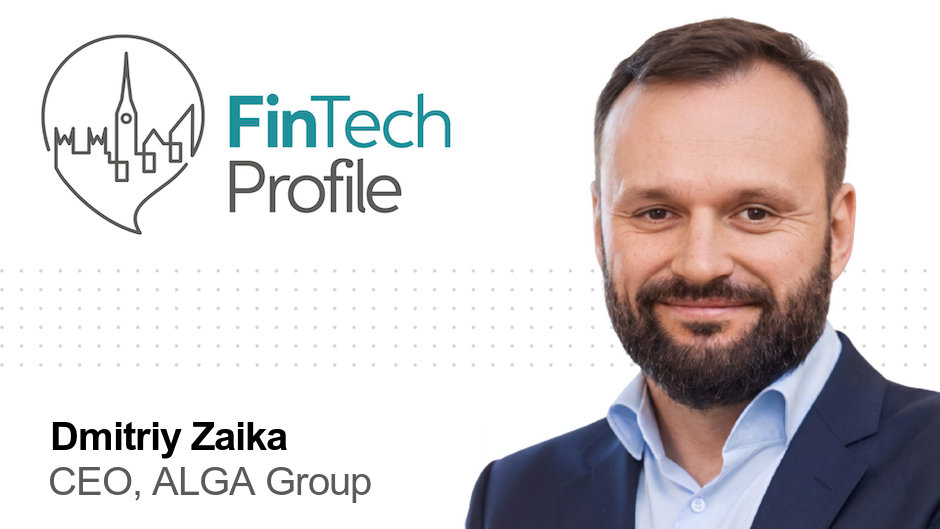
Dmitriy Zaika, CEO, ALGA Group
Dmitriy Zaika discusses building Central Asia's digital ecosystem, combining telecoms with fintech to drive financial inclusion across Kyrgyzstan.
Today we're delighted to speak with Dmitriy Zaika, CEO of ALGA Group, a diversified technology group in Kyrgyzstan that has evolved from the country's largest mobile operator into a comprehensive digital ecosystem spanning connectivity, payments, banking and commerce. With nearly 30 years' experience across Central and South Asian telecoms markets, Dmitriy shares his insights on building financial services around established customer relationships, the dissolving boundary between telecoms and banking, and why innovation doesn't only flow from large markets to small ones.
My questions are in bold - over to you Dmitriy:
Who are you and what's your background?
I have spent nearly 30 years in telecommunications across Central and South Asia, almost two decades of that time as a CEO. Alongside my executive roles, I have served for more than a decade on the boards of several of Central Asia's largest telecommunications companies.
My career spans the markets of Kazakhstan, Nepal and Kyrgyzstan, where I have led companies through periods of expansion, market development and strategic change. In 2008, I took on the challenge of launching O! in Kyrgyzstan. What began as a new mobile operator has grown into the country's largest and evolved into a digital ecosystem spanning fintech, banking and commerce.
Today, as CEO of ALGA Group, my focus is on scaling this ecosystem and shaping its next stage of growth.
What is your job title and what are your general responsibilities?
As CEO, I lead the executive team that is responsible for the day-to-day management of the Group and for delivering its strategy, under the oversight of our Board of Directors.
In practice, most of my time goes into two things. The first is making our businesses – mobile and broadband connectivity, payments, banking and commerce – work together around the customer, while each keeps its own operational and regulatory responsibilities. The second is making sure we keep investing in Kyrgyzstan: in networks, in useful services and in local talent.
Can you give us an overview of your business?
ALGA Group is a diversified technology group in Kyrgyzstan. We bring together mobile and broadband connectivity, digital payments, banking and commerce, with one aim: to make everyday digital services more accessible and convenient for people and businesses across the country.
Connectivity is where we started. O! is the country's largest mobile operator, and its 4G network reaches 99.8% of Kyrgyzstan's population; Saima Telecom provides fibre broadband. We continue to invest in both, including in smaller and harder-to-reach communities.
Financial services came next: through O!Bank and our digital payment services, more people and businesses can access everyday banking and payments. In commerce, we operate O!Market, an online marketplace; O!Store, our offline retail chain; and O!Travel for travellers.
Customers reach all of this through My O!, the Super App that brings our services together in one place. The services are built around an established relationship with customers and designed to work together, rather than as separate products.
Tell us how you are funded?
ALGA Group is privately held. Our long-term shareholder is Visor International, a Central Asia-focused private investment firm, which has supported the Group's development from the original telecom business through the expansion into financial services and commerce.
We have grown through sustained investment in our operating businesses and selective acquisitions – Saima Telecom broadband fixed Internet and TV provider in 2019 and Halyk Bank Kyrgyzstan in 2024, which became O!Bank – rather than following a traditional venture-capital model. Telecommunications provided an established base and customer relationships; this, alongside shareholder capital, has supported investment in complementary financial and digital services.
Having a long-term shareholder allows us to take a long view and to keep investing in Kyrgyzstan's digital infrastructure, services and local skills.
What's the origin story? Why did you start the company? To solve what problems?
The origin story is a telecoms story rather than a fintech one. Kyrgyzstan is where our journey began more than 15 years ago: when we launched mobile telecom in 2009, our job was to connect people. Once O! had become the country's largest operator, the next step was to do more for the customers we already had.
The phone reached people before the bank did. According to the World Bank's Global Findex, around 45% of adults in Kyrgyzstan had a bank account in 2021; by 2024 it was 72%.
So we built step by step, each time in response to what customers needed: payments in 2016, lending in 2019 and, with the acquisition of a bank in 2024, full banking services.
The problem we set out to solve is access. Essential financial services should not depend on how close someone lives to a bank branch. If people already have a phone in their hand, the services should come to them.
Who are your target customers? What's your revenue model?
Our customers are people and businesses across Kyrgyzstan, and for many of them the relationship starts with O! mobile or Saima broadband. I think of it as a journey rather than a set of segments: a subscriber starts using My O! Super App, makes a payment, opens an account with O!Bank and later shops on O!Market.
Each step deepens the relationship and makes everyday life a little simpler for the customer. We do not have to win those customers from zero, and that is the main difference between our model and a standalone fintech.
Revenue is diversified across connectivity, payments, banking and lending, and commerce. Our focus is on improving the value and usefulness of those services for customers, while growing each business responsibly.
If you had a magic wand, what one thing would you change in the banking and/or FinTech sector?
I would make trust portable.
A customer who has already been securely identified should not always have to start from zero each time they use another financial or digital service. With the customer's consent and the right safeguards, greater interoperability between identity, payments and financial systems could remove a huge amount of friction.
The same principle applies across borders. People in Central Asia travel, trade and send money between neighbouring countries every day. Together with partners, we have started to make that easier: My O! users can pay in Kazakhstan by scanning Kaspi QR codes, and transfers to Uzbekistan through Uzum Bank are instant. A magic wand would make that the default across the region rather than the exception.
What is your message for the larger players in the Financial Services marketplace?
Scale matters, but scale and engagement are not the same thing. A mobile operator has a daily relationship with its customers, and that is what turns digital services into part of people's everyday routines. My message to larger institutions is to work with the platforms that already have that relationship rather than trying to rebuild it.
There is also a lesson from smaller markets. Kyrgyzstan is one of Central Asia's fastest-growing economies, and in a country of our size you can connect telecoms, payments, banking and commerce end to end and see very quickly what works. Innovation does not only flow from large markets to small ones.
Where do you get your Financial Services/FinTech industry news from?
From a mix of sources. The international business press gives me the global picture and, because I come from telecoms, I follow GSMA research on how mobile operators around the world are moving into financial services. Closer to home, I read Central Asian business media.
Some of the most useful insight does not come from the news at all. It comes from conversations with partners, customers and our own product teams.
Can you list 3 people you rate from the FinTech and/or Financial Services sector that we should be following on LinkedIn, and why?
Mikheil Lomtadze, CEO of Kaspi.kz. He has shown that a world-class ecosystem can be built in Central Asia, and that payments, a marketplace and financial services reinforce one another inside one app.
Martha Sazon, President and CEO of Mynt, the company behind GCash in the Philippines. GCash grew out of a telecoms group and now serves tens of millions of people – the clearest proof I know that an operator's customer base can become a platform for financial inclusion.
Simon Taylor, who writes the Brainfood newsletter. He is very good at explaining in plain language what new developments actually mean for the people who run financial businesses.
What FinTech services (and/or apps) do you personally use?
My O!, every day. If you are building a product, you should use it the way your customers do.
I also make a point of trying other super-apps and financial apps from our region and beyond. Sometimes a small feature or design choice in someone else's product makes you think differently about your own.
What's the best new FinTech product or service you've seen recently?
Rather than a single product, the development I am watching most closely is AI-powered payments and agentic commerce: an AI agent that can not only help a customer find something, but also decide and pay on their behalf within limits the customer has set.
The most important questions are not technological. They are about trust, consent and control: who gave permission, what can the agent do, and how easily can the customer change those limits? The companies that answer those questions properly will be the ones people trust with their money.
Finally, let's talk predictions. What trends do you think are going to define the next few years in the FinTech sector?
First, the boundary between telecoms and banking will keep dissolving, especially in emerging markets. In Kyrgyzstan, nobody built thousands of branches to bring people into the financial system – the phone did the work.
Second, fintech itself will become less visible. Payments, lending and banking will sit inside the things people already do on their phones – shopping, travelling, paying bills – rather than requiring a separate financial journey.
Third, AI will move from helping companies understand customers to helping customers act, and trust will matter more than the technology itself.
Fourth, in Central Asia, cross-border payments will become ordinary. A customer from Kyrgyzstan paying in Kazakhstan or Uzbekistan from one app will soon be normal rather than newsworthy. For markets like ours, that is the next step in digital and financial inclusion.
Many thanks to Dmitriy for taking the time to share his insights with FinTech Profile. You can learn more about ALGA Group on their website.