Johan Jardevall, CEO, AccessPay
Johan Jardevall discusses how AccessPay is transforming corporate payments, the need to fix basic infrastructure before AI, and why corporate banking needs to catch up with consumer expectations.
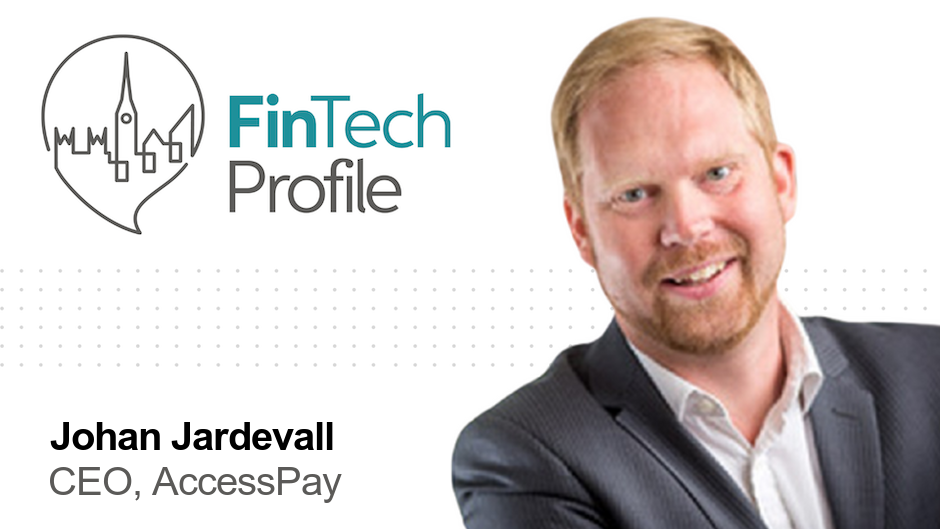
Today we're delighted to speak with Johan Jardevall, CEO of AccessPay, the UK's leading corporate-to-bank connectivity platform. With more than 25 years in technology and a track record of scaling B2B software businesses, Johan shares his insights on why corporate payments remain surprisingly manual, how AI can transform finance once the foundations are right, and what the future holds for treasury teams navigating an evolving payments landscape.
AccessPay is a returning company: we first profiled its then-CEO Anish Kapoor in September 2024.
My questions are in bold - over to you Johan:
Who are you and what's your background?
I've spent more than 25 years working in technology, across consultancy, enterprise software, AI and business leadership. I actually started very early: at 15, I developed and sold my first piece of commercial software to a Swedish regional health authority to help with the recruitment of nurses. That experience taught me something that has stayed with me throughout my career – technology has to solve a genuine problem for the people using it.
After completing a Systems Analysis degree at Lund University in Sweden, I moved to Copenhagen and began working across software consultancy and product delivery, before relocating to London. I subsequently joined Episerver, now Optimizely, where I helped transform the business into more of an enterprise software player and later became global head of sales.
I eventually realised I wanted to move beyond sales leadership and run companies. Since then, I've been CEO of several B2B software businesses, including marketing technology company Wiraya, AI-powered industrial robotics business Smart Robotics and, most recently, Person Centred Software. A lot of my career has involved taking businesses through periods of change, commercialising products, building teams, scaling operations and working with private equity investors.
What attracted me to AccessPay was the scale of the problem it is solving. I saw a strong underlying product and an opportunity to help finance teams automate how they move money and make much better use of their financial data.
What is your job title and what are your general responsibilities?
I'm CEO of AccessPay. My role is to lead the company through its next phase of development while maintaining the strong customer focus that has always been central to the business.
My priorities are centred on customers, people and sustainable growth. That means listening closely to the organisations we support, understanding what they need from us next, investing in the technology and capabilities that can deliver those outcomes, and ensuring we have the right team and organisation in place to scale successfully.
I also spend time speaking to customers at different levels of their organisations. It's important to hear from senior decision-makers such as CFOs and heads of treasury, but I'm equally interested in the people actually using our technology day-to-day. That's often where you get the clearest understanding of what is working and where there is still friction to remove.
Can you give us an overview of your business?
AccessPay is a Manchester-based corporate-to-bank connectivity platform. In simple terms, we connect organisations' finance systems directly to their banks, helping finance and treasury teams automate payments, improve cash visibility and manage bank connectivity with greater control and resilience. Today, we support organisations across more than 100 countries.
More than 1,000 organisations use AccessPay, from charities and high-growth businesses to multinationals, and our platform connects to more than 11,000 banks worldwide. What sets us apart is that we are bank-agnostic: customers can connect their ERP or treasury system to all of their banks through one platform, rather than managing a different portal, file format and integration for each one.
The opportunity now goes beyond automating the movement of money. We can help customers support more transaction types, improve international payments, strengthen fraud prevention and give finance teams greater insight into where their cash sits and how it is being used. Over time, better use of transaction data and technologies such as AI can also help treasury teams become more predictive and proactive rather than simply reporting on what has already happened.
Tell us how you are funded?
AccessPay is backed by Accel-KKR, a global private equity firm specialising in enterprise software. In March 2026, Accel-KKR made a majority investment in the business to support our next phase of growth, including expanding our services for enterprise customers, investing in product innovation and exploring strategic acquisitions. Prior to this, AccessPay was supported by growth investors including Beringea, which led a £9 million funding round in 2019 to help develop our platform and grow the team.
For me, having an investor with deep experience in enterprise software is particularly important given the nature of our business. Bank connectivity and payments are critical infrastructure for our customers, so they need confidence that their technology partner is financially strong, reliable and committed to the long term. Accel-KKR's backing gives us the opportunity to accelerate our growth while continuing to invest in our technology, our people and, most importantly, the service we deliver to customers.
What's the origin story? Why did you start the company? To solve what problems?
I wasn't a founder of AccessPay, but the problem it was created to solve is one that really resonated with me when I joined the business. AccessPay was established in Manchester in 2012 to address a fundamental gap in corporate finance: the lack of seamless connectivity between businesses' finance systems and their banks. Anish Kapoor, who led AccessPay as CEO for more than a decade and is now our Chairman, built it into a trusted platform for finance and treasury teams, and I'm fortunate to be building on very strong foundations.
What surprised me when I first came across AccessPay was just how much of that problem still exists today. Businesses have invested millions in sophisticated ERP and treasury management systems, yet the final step of actually moving money often remains surprisingly manual. Finance teams are still uploading payment files into banking portals, moving data between systems and relying on processes that are time-consuming and prone to error.
Having spent much of my career helping businesses use technology to solve complex problems, I saw a real opportunity to change this. AccessPay provides the infrastructure that connects these systems directly to banks, making payments more automated, secure and transparent. For me, it's about solving a fundamental problem that has been overlooked for too long and giving finance teams the tools they need to work more efficiently and strategically.
Who are your target customers? What's your revenue model?
We work with organisations that need to manage complex corporate banking and payment environments. That can mean a CFO or treasury team managing multiple banks, accounts, currencies and jurisdictions, or a business that has grown through acquisition and inherited a fragmented estate of banking relationships and finance systems.
One of the things I've noticed since joining AccessPay is just how varied our customers are. They range from charities such as Amnesty International UK collecting money from individuals, to large organisations managing payroll across 27 countries. What connects them is the need to move money securely and reliably, maintain control and visibility, and reduce the manual work involved in interacting with their banks. ITV is a good illustration of the scale involved: by connecting its ERP, treasury and HR systems directly to its banks through AccessPay, it now manages cash and payments across around 300 entities in 20 countries without adding headcount, with 95% faster reconciliation and intraday visibility of its cash.
NSG Group is a good example of the type of problem we can solve. Its treasury operations had become highly decentralised, with subsidiaries managing different banking relationships and manual processes. Working with AccessPay, it created a global payment factory, rolled out to subsidiaries in 30 countries, that automated payment processing, improved cash visibility and provided a more scalable, bank-agnostic infrastructure. The project has subsequently delivered significant operational efficiencies, including thousands of hours of annual time savings.
Our revenue model scales with each customer's use case, the number of transactions they process and the complexity of their bank connectivity, so as their payment operations grow, our relationship grows with them.
If you had a magic wand, what one thing would you change in the banking and/or FinTech sector?
I'd close the gap between the technology businesses use to manage finance and the technology they use to actually move money.
It still surprises me that corporate payments remain so manual. We live in a world where consumers can make payments from their phones almost instantly, yet inside large organisations the process can still involve people creating files, logging into banking portals and manually moving information between systems.
There's also a danger that the industry becomes distracted by the next technology trend before solving some of these fundamental problems. Everyone understandably wants to talk about AI, but some organisations are considering sophisticated AI use cases while they still can't move money automatically. My magic wand would be to fix that underlying infrastructure first. Once you have reliable connectivity, automation and high-quality data in place, technologies such as AI become much more useful because you have the foundations to apply them properly.
What is your message for the larger players in the Financial Services marketplace?
Don't mistake complexity for inevitability.
Corporate banking and payments have accumulated layers of legacy technology, manual processes and different ways of doing things over many years. But that doesn't mean businesses should simply accept that moving money has to remain complicated.
The opportunity is to make the corporate experience much closer to what people now expect as consumers: connected, automated and responsive. That doesn't mean ripping everything out and starting again. It means making existing finance systems and banking infrastructure work together more effectively.
And to the banks themselves: corporate connectivity is a shared challenge, not a competitive moat. Corporates increasingly want to work with multiple banks through one consistent, automated experience, rather than a different portal, file format and onboarding process for each. The banks that embrace open standards, modern APIs and partnerships with connectivity providers will find it easier to win and keep corporate relationships.
I'd also encourage larger organisations to think beyond automation as simply a way of reducing manual work. Once finance teams have reliable connectivity and better access to transaction data, they can start using that information to understand cash more effectively, improve forecasting and move treasury from a reactive function towards a much more proactive role within the business. That, for me, is where this market gets really interesting.
Where do you get your Financial Services/FinTech industry news from?
The Financial Times is my main source for the wider picture. Payments and treasury don't exist in isolation, and the FT covers the markets, interest rates, regulation and issues that are on the minds of the CFOs we work with.
For industry-specific news, I turn to Finextra. It's one of the best ways to keep track of what's happening in transaction banking, payments infrastructure and open banking, and a useful read on what banks and fintechs are actually building rather than just announcing.
Can you list 3 people you rate from the FinTech and/or Financial Services sector that we should be following on LinkedIn, and why?
Simon Taylor, co-founder of Fintech Brainfood: Simon has a rare ability to explain the plumbing of financial services – payment rails, stablecoins, the economics of infrastructure – in a way that is sharp and accessible. His weekly newsletter is essential reading for anyone in this space.
Chris Skinner, author and banking commentator: Chris has been writing about the future of banking for longer than most of us have been in fintech. He's good at stepping back from the hype cycle and asking what technology change really means for banks and their customers.
What FinTech services (and/or apps) do you personally use?
Having lived in Sweden and the UK, I've seen a few different routes to the same destination. In Sweden, Swish is simply how people pay each other. It's so embedded in everyday life that nobody thinks of it as fintech any more, which is the best compliment a payments product can get.
In the UK, I use Starling for day-to-day banking; the real-time notifications and spending visibility are things I wish more corporate banking experiences offered. Revolut is my go-to when travelling, for multi-currency spending without the usual FX friction.
Using them is a constant reminder of how high consumer expectations have become, and how far behind many corporate finance processes still are.
What's the best new FinTech product or service you've seen recently?
Commercial Variable Recurring Payments (cVRP), which went live in the UK in June 2026 through the new UK Payments Initiative scheme. It isn't a single company's product, but it's one of the most significant developments in UK payments for some time.
cVRP allows businesses to collect variable, recurring payments directly from a customer's bank account via open banking, with the customer setting limits and able to see and cancel permissions from their banking app.
It isn't ready for most corporates yet. The first wave is limited to a handful of regulated sectors and is built around consumers paying businesses, with mandate limits and consent models that don't yet fit how most corporates collect and make payments. I expect that to change over the next couple of iterations of the scheme.
What interests me most is what it signals: account-to-account payments are becoming faster, more programmable and richer in data. That is exactly the direction corporate payments need to move in, and it raises the bar for the infrastructure that connects businesses to their banks.
Finally, let's talk predictions. What trends do you think are going to define the next few years in the FinTech sector?
1. AI and automation will transform finance, but businesses need to get the basics right first
AI will undoubtedly play a bigger role in corporate finance, but I think we're still some way from seeing it manage payments and cash autonomously. Many businesses are investing in AI while still relying on manual processes to move money between their systems and banks. Before they can realise the full benefits of AI, they need to get the foundations right: reliable bank connectivity, automated processes and accurate, accessible data. Once those are in place, AI can genuinely add value in areas such as cash flow forecasting and helping businesses make smarter financial decisions.
2. Cybersecurity and fraud prevention will become even more critical
As AI makes cyberattacks and fraud attempts increasingly sophisticated, businesses will need to rethink how they protect their financial operations. I expect we'll see much greater scrutiny of technology providers and a stronger focus on preventing fraud before payments are made. One of the biggest vulnerabilities remains the reliance on manual processes, particularly when sensitive payment information is shared via email or moved between systems. Automating these processes and ensuring data flows securely between finance systems and banks will be essential to reducing risk.
3. Stablecoins could reshape payments, but adoption will take time
Stablecoins are attracting growing interest, particularly for their potential to make cross-border payments faster and more efficient. However, I don't expect widespread corporate adoption in the immediate future. There are still important questions around regulation, accounting and how stablecoins will work alongside traditional currencies. For now, businesses should be exploring the opportunities and understanding what they might mean for their operations. Ultimately, whether we're talking about stablecoins or other emerging payment methods, organisations will need flexible, connected financial infrastructure that can adapt as the market evolves.
Many thanks to Johan for taking the time to share his insights with FinTech Profile. You can learn more about AccessPay on their website.