Tom Borgers, Co-founder and CEO, Walapay
Tom Borgers discusses Walapay's mission to simplify global payments through one API, supporting 180+ countries and processing $2.5 billion annually.
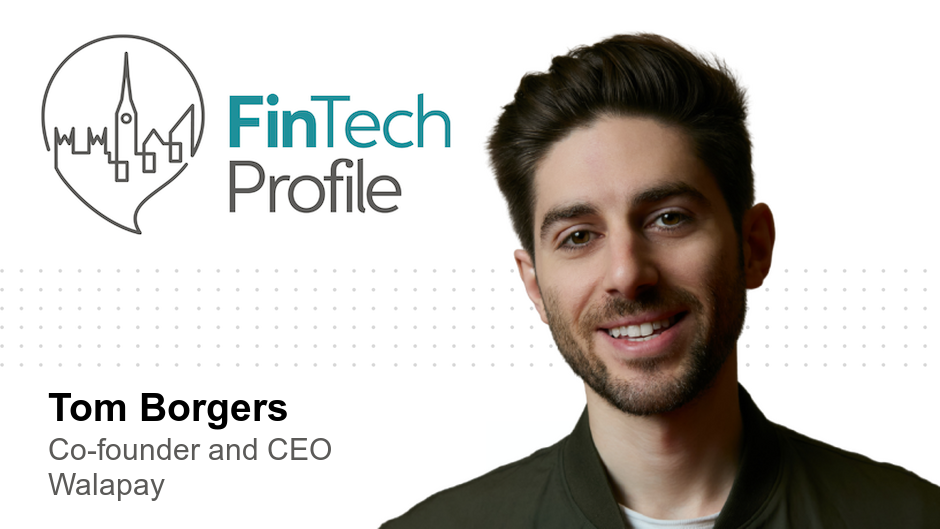
Today we're delighted to speak with Tom Borgers, co-founder and CEO of Walapay. Walapay provides fintechs, payment providers, and financial institutions with a single API for multi-currency accounts, collections, foreign exchange, and payouts across 180+ countries and 60+ currencies. The company recently raised $4.6 million in seed funding led by Generative Ventures and is processing $2.5 billion in annual payment volume.
My questions are in bold - over to you Tom:
Who are you and what's your background?
I'm Tom Borgers, co-founder and CEO of Walapay. My brother Dimitri and I grew up moving around the world (between Europe, the US, Japan, Singapore), so cross-border payments were a familiar frustration for us. Sending money from the US to Europe, or from Europe to Japan, felt like a minor inconvenience at first. It also made us curious about the system underneath. That curiosity pulled me toward Bitcoin around 2013, then Ethereum, and eventually stablecoins through my years at ConsenSys.
What is your job title and what are your general responsibilities?
I'm co-founder and CEO of Walapay. My work spans company strategy, product direction, customer needs, and our banking and infrastructure relationships. A lot of the job comes down to deciding where we need to build deeper capabilities ourselves and where a partner can help us serve customers better. I also spend time with customers and our team to understand where payment flows break down, then work through what needs to change in the product, the payment routes, or the local infrastructure behind them.
Can you give us an overview of your business?
Walapay is a global payments infrastructure built from the rails up. Through one API, fintechs, PSPs, financial institutions, marketplaces, and global businesses can issue multi-currency accounts, collect funds, convert currencies, and make payments through bank rails and stablecoins. We also provide customer onboarding and compliance tools, along with treasury services. The difference is that we work on the infrastructure behind the API, including local payment connections, banking relationships, licensing, compliance, and liquidity.
Tell us how you are funded?
Walapay announced a $4.6 million seed round in October 2026, led by Generative Ventures. Commerce Ventures, Polygon Labs, Verda Ventures, NGC Ventures, FGV Capital, AAF Management, Jsquare, Knollwood Investment Advisory, Contribution Capital, Reflexive Capital, Big Brain Holdings, Seven Capital Ventures, and other investors also participated. The capital goes into three areas: licensing, banking, and people. We'll expand our licensing footprint, deepen our banking partnerships, and grow the team as we work toward bringing more banks and financial institutions directly onto modern payment rails.
What's the origin story? Why did you start the company? To solve what problems?
My brother Dimitri and I started Walapay after seeing how difficult it could be to move money across borders. We first explored crypto infrastructure and wallets through 3mint. As we spoke with hundreds of marketplaces, businesses, contractors, freelancers, and other payment users, the problem became clearer. It wasn't only the front end. The hard part was getting money through the last mile, into a local account and currency, through a local bank. We believed the better approach was to build deeper into the infrastructure, while using modern rails to connect those pieces. That is what Walapay is designed to do.
Who are your target customers? What's your revenue model?
Our strongest demand comes from platforms. On one side, fintechs such as remittance companies, neobanks, and dollar-access apps serve customers in volatile-currency markets. On the other, PSPs and merchant acquirers need settlement, multi-currency accounts, and ways to move funds across markets. We work with customers including Kast, Nuvei, and Bastion. We make money on transaction fees, FX, and increasingly on treasury yields. Our goal is to enable our customers to grow as fast as possible; we take a very small cut of what our customers make, aligning our interests.
If you had a magic wand, what one thing would you change in the banking and/or FinTech sector?
I know this is impossible, but I would have one global regulatory regime for money movement. Every new market can become a new infrastructure project. Licensing, banking access, FX liquidity, account structures, local rails, and operational requirements all vary from country to country. Those requirements have a purpose, but the process can also make useful services slow and costly to build. Clear, consistent rules across jurisdictions and more consistent connections between regulated providers would help companies serve customers while keeping strong compliance controls in place.
What is your message for the larger players in the Financial Services marketplace?
I'd tell them to treat new payment rails as tools that can work alongside the banking system. Banks have relationships, local reach, and controls that remain important. Stablecoins and other digital asset rails can help with speed, settlement, or access in specific payment flows. The transaction should determine the rail. Start with a clear use case, then test which combination of banking rails, stablecoins, and liquidity sources gives customers the right mix of speed, cost, reliability, and compliance.
Where do you get your Financial Services/FinTech industry news from?
I am a voracious consumer of fintech news. Everything from the major publications (Bloomberg, Financial Times, WSJ) to trades (Axios, PYMNT, etc.), newsletters (shout out to Fintech brainfood), to podcasts (Odd Lots, Fintech Takes, Tokenized)... and of course, Twitter.
What FinTech services (and/or apps) do you personally use?
Recently I've been a big fan of the Robinhood Gold Card. In a similar vein, KAST – a Walapay customer – has been building a great stablecoin-centric card program, built to be used anywhere around the world
What's the best new FinTech product or service you've seen recently?
One recent development I've been following is the Mastercard and Borderless.xyz Crypto Credential pilot for stablecoin payments. Walapay is one of the initial payment operators. What interests me is the shared trust layer. A payment provider may have completed its own customer checks, but the next provider in the chain still needs a way to assess that work. The pilot looks at how participants can share identity and compliance signals across payment flows.
Finally, let's talk predictions. What trends do you think are going to define the next few years in the FinTech sector?
I think the distinction between fiat rails and blockchain rails will matter less and less to the people using them. Businesses should be able to move money globally without having to think about the rails underneath. The biggest shift will come when banks and financial institutions start using these rails directly, which could reduce some of the layers that companies like ours now need to connect the two systems. We're also preparing for AI-driven payments. We see them as another market our existing infrastructure can serve, rather than a separate product. That market is still at an early stage, so there is a lot of work ahead.
Many thanks to Tom for taking the time to share his insights with FinTech Profile. You can learn more about Walapay on their website.