Charis Thomas, Chief Product Officer, Aqilla
Charis Thomas discusses Aqilla's people-focused approach to mid-tier finance software, AI's role in automation, and why collaboration beats competition in FinTech.
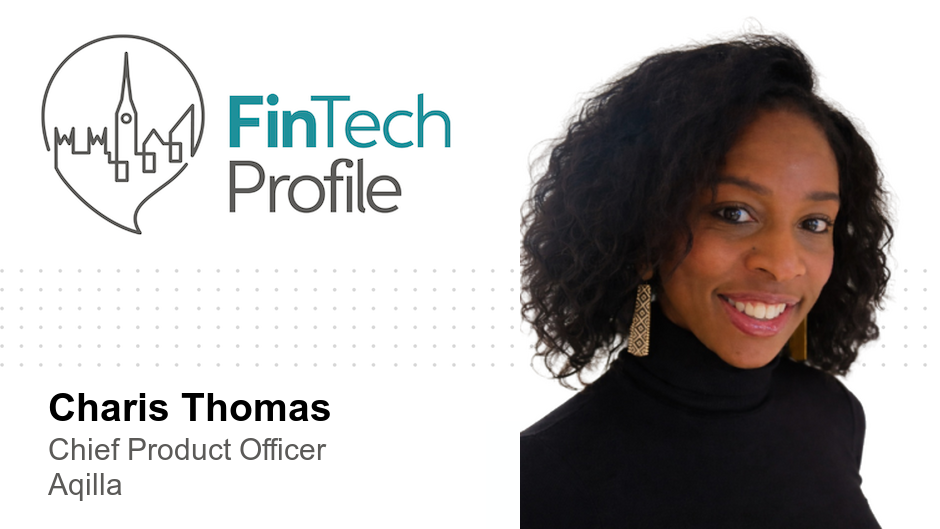
Today we're delighted to speak with Charis Thomas, Chief Product Officer at Aqilla. With a background spanning accounting, government, and technology, Charis brings a unique perspective on how finance software should serve real business needs rather than chase trends. In this interview, she shares her views on AI autonomy, the future of accounting roles, and why the largest financial institutions need to think beyond their next commercial opportunity.
My questions are in bold - over to you Charis:
Who are you and what's your background?
I studied accounting and computing at university before completing my ACCA exams. I guess the expectation was that I'd join one of the Big Four. I'd proven that I was good at adding up, but I wanted the numbers to add up to something more than profit. So, I chose a different path and spent a considerable amount of time working in government and the third sector.
I've always understood the importance of financial reporting and the accompanying legal obligations. But during that time, I started to focus less on compiling reports. I was more interested in how organisations could use information from finance and the wider business to operate more efficiently.
Later, I moved into systems accounting, which became my bridge between finance and technology. That led me to businesses including PayPoint and Zoopla. By then, I was thinking more broadly about how technology could help businesses better understand their information, make more informed decisions, and achieve better outcomes. That's really what led me to Aqilla.
What is your job title and what are your general responsibilities?
I'm Aqilla's Chief Product Officer. I'm responsible for our company's long-term product strategy and roadmap, as well as user experience, customer support, and elements of quality assurance. It's a broad remit, but everything connects to the same questions: what does the customer want, what do they need, and what are they trying to achieve?
These are important distinctions. Customers often tell us what they want, but that doesn't always get to the heart of what they actually need. I've often explained the difference to my children like this: "You're hungry, right? You want sweets, but what you need is proper food."
It's much the same with product development—and AI is a good example. A customer might say they want AI, but what they really need is to work faster, reduce manual effort, or make better decisions. Our job is to understand that need and solve it with the right technology, rather than delivering new technology for its own sake.
I also keep one eye on the future. We need to consider how much autonomy we give AI within our platform. That's a question that's preoccupying me and, I dare say, a lot of other software company CPOs right now.
Can you give us an overview of your business?
Aqilla is a UK-based company. We celebrated our 20th anniversary this year. Today, our platform is best described as a mid-tier finance system for organisations that have outgrown entry-level software. It's designed to flex as our customers grow and evolve, connecting and automating core business functions including finance, purchasing, HR, distribution, and manufacturing.
Our technology is important, of course, but we think of ourselves as people-focused rather than technology-centred. We want to understand our customers and continue solving their problems for as long as they need us. That quest for answers doesn't stop when somebody buys our product. It also shapes how we deliver ongoing support. If a customer has a problem, they can pick up the phone and speak to somebody in the UK who will help them work out how to solve it. In fact, I still take those calls myself, so I hear about customer issues first-hand.
Who are your target customers?
We're best suited to organisations that want more from their financial data than an entry-level system can provide. That's typically mid-sized organisations, growing businesses, and multi-entity business groups. The thing they have in common is that their financial reporting and accounting needs are becoming more sophisticated. They want a solution that adapts to how they operate rather than forcing them into a rigid model.
If you had a magic wand, what one thing would you change in the banking and/or FinTech sector?
I'd make the sector more collaborative and interoperable. Competition is valuable because it drives innovation, but too many products are still designed to work in isolation. Software providers sometimes drift into areas outside their core strength when the customer would be better served by several specialist providers working together. Instead, I'd like more FinTech companies to focus on the customer need they are genuinely equipped to solve, do it exceptionally well, and collaborate openly when someone else can add more value.
Our collaboration with Sharperlight is a good example. It gives customers access to specialist reporting and business intelligence capabilities within our platform without us trying to build everything ourselves.
What is your message for the larger players in the Financial Services marketplace?
Use your scale to protect a fair economy. FinTech businesses generally focus on what their customers genuinely need to keep the economy running. However, I believe the largest financial institutions have an additional responsibility because they already possess considerable wealth, reach, and influence. They should look beyond the next commercial opportunity and focus on issues that are bigger than any one organisation. My message is simple: you've grown big enough; now make sure you're solving the right problems.
Where do you get your Financial Services/FinTech industry news from?
I don't have a single go-to source. There's so much information available, so I tend to start with a particular subject or problem I'm interested in and research it online. That might lead me to the Financial Times, Finextra, LinkedIn, or a niche publication I haven't encountered before. I'm not particularly loyal to any one platform. My role sits at the intersection of finance and technology, so I don't limit myself to Financial Services news. I follow the wider technology conversation, too.
Can you list three people you rate from the FinTech and/or Financial Services sector that we should be following on LinkedIn, and why?
Sandie Small Duberry is Deputy Governorship Chief Information Officer to the Prudential Regulation Authority at the Bank of England. I picked Sandie because I've watched her navigate a complex, highly regulated environment and operate confidently at the bank's most senior levels. What I rate most is her leadership. She brings business strategy, regulation, and technology together while leading significant change within one of the UK's most important financial institutions.
Nina Mohanty is the founder and CEO of Bloom Money, which creates financial products for diaspora communities. I chose her because she begins with the lived experience of a specific customer group and builds around needs that mainstream Financial Services have often overlooked. Her work matters on a wider level too. As technology makes finance increasingly global, serving diaspora communities well can build financial resilience, connect economies, and contribute to a fairer global market.
Ezechi Britton MBE is a phenomenal FinTech entrepreneur, investor, and technology leader. He co-founded Neyber—a FinTech business—and later became the founding CEO of the Centre for Finance, Innovation and Technology. I really rate the breadth of his experience. Ezechi understands how to build a FinTech company, support founders, and bring businesses, government, and regulators together. He is also a strong advocate for making technology and entrepreneurship more inclusive.
What FinTech services and/or apps do you personally use?
I've used Snoop and Wealthify to bring my finances together in one place, and I find that consolidated view really useful. Monzo is still one of my favourites from a user-experience perspective. Whoever is responsible for its UX deserves a medal! They consistently innovate, but, more importantly, make those innovations incredibly easy to use.
What's the best new FinTech product or service you've seen recently?
One of the most interesting FinTech products I've come across recently is Quartz, a newly launched AI-powered personal wealth management platform.
What caught my attention is its ambition to make personalised financial guidance more accessible. By bringing together information across bank accounts, savings, pensions and investments, it aims to give customers a complete picture of their financial position, supported by an AI assistant that helps them understand their options and make more informed decisions.
From a product perspective, I find the shift from simply presenting financial information to delivering contextual, personalised intelligence particularly exciting.
Finally, let's talk predictions. What trends do you think are going to define the next few years in the FinTech sector?
The defining tension will be between automation and accountability. AI agents will take over much of the routine processing within finance, while e-invoicing will accelerate the automation of invoicing, tax reporting, and other administrative work. I genuinely believe that financial operations could become a team of one in many organisations—and, in some areas, require very little day-to-day human involvement at all.
That will inevitably affect jobs. In five years, many businesses are unlikely to need people to process their books. As a result, some of the roles built around that work will disappear. That's going to be an emotionally difficult transition, but it's one consequence of automation.
That said, the accountants who remain will be able to add greater value. Their day-to-day work is also likely to become more varied. Some will move into more sophisticated analysis, tax, and international complexity. Others will work much more closely with technology, monitoring AI agents, evaluating their outputs, and making sure the systems can be trusted. The profession won't disappear, but routine processing will no longer be its centre of gravity.
The future we create will depend on how much decision-making we're prepared to hand over. An AI agent might initiate a payment, reject it because it conflicts with company policy, or flag it as suspicious. If it makes the wrong decision, somebody must still be responsible. In finance, that responsibility is likely to sit with the accountant. The clue is in the name.
Many thanks to Charis for taking the time to share her insights with FinTech Profile. You can learn more about Aqilla on their website.