Ross Sinclair, Founder/CEO, EIP
Ross Sinclair discusses EIP's shared-success model for embedded insurance, Virtual TPAi claims automation, and why parametric insurance will go mainstream.
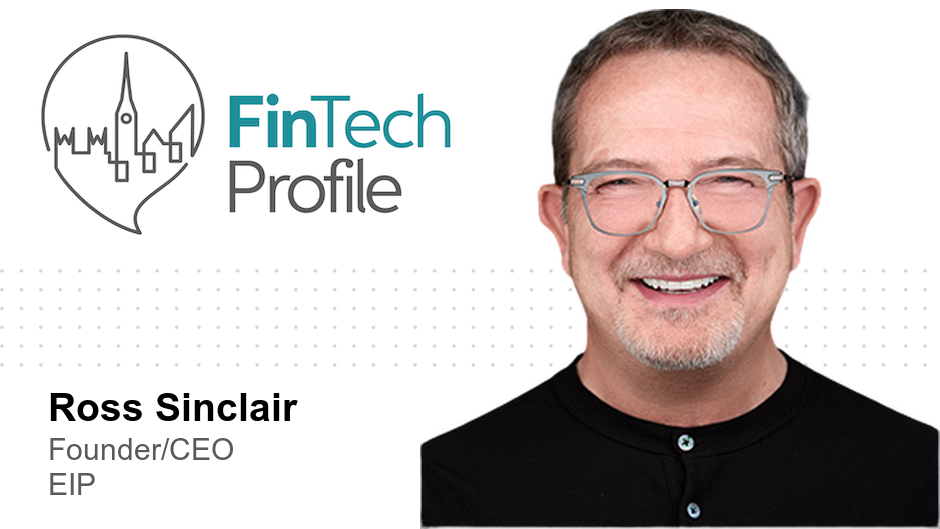
Today we're delighted to speak with Ross Sinclair, Founder and CEO of EIP, an embedded insurance specialist combining over 20 years of industry expertise with AI-accelerated development to help organisations build, test and scale insurance products quickly.
My questions are in bold - over to you Ross:
Who are you and what's your background?
I started out in the UK insurance market, working as both a broker and an underwriter, which led me to my role as Insurance Managing Director at Carphone Warehouse, which was then Europe's largest retailer of mobile phones.
While there, I helped to build the insurance business, which ultimately generated more than £100m in annual profit across 13 countries in Europe.
Since then, I've launched insurance programmes in more than 30 countries and, in 2004, founded EIP with my business partner Terry Alford, who I'd worked with at Carphone Warehouse. We began as a specialist consultancy focused on embedded mobile and device insurance, before evolving into a technology-led insurance business.
What is your job title and what are your general responsibilities?
As CEO of EIP, my role is mainly to set the strategy of the business, make sure we are backing the right opportunities and give the team enough clarity and freedom to execute well.
I also spend a lot of time with clients, partners and the wider market. Insurance is changing quickly, particularly as AI gains traction in the sector, so a large part of the job is looking ahead and identifying ways to better serve our clients and remain relevant.
Can you give us an overview of your business?
EIP is an embedded insurance specialist that partners with organisations to build, test and scale insurance products.
What makes EIP's model different is that we're not just providing a platform or handing over technology. We work with our clients to identify an insurance opportunity, build the product, get it into market quickly and agree upfront what success looks like. We remove the cost barriers to implementation, which means together with the client, we can test the opportunity without taking on the usual high upfront development cost or committing to a large transformation programme.
If the product performs, we can scale it. If it doesn't, we stop it and take the learning into the next opportunity. That might sound simple, but it changes the economics quite significantly, creating a more viable way to test product ideas.
A big part of our advantage comes from experience. We have spent more than 20 years working across insurance, technology and embedded distribution, so we understand the practical challenges that can slow products down. We are now combining that experience with AI-accelerated development to shorten the journey from idea to live proposition.
Each product we build adds to our understanding of what works, what doesn't, how customers behave and where the strongest opportunities are, which helps both us and our clients make better decisions on the next products we develop.
Earlier this year we launched Virtual TPAi. It is a first-of-its-kind AI tool that offers end-to-end automation of insurance claims processing and decision-making. The voice-led AI agent performs the role of a third-party administrator (TPA) and can handle 20 concurrent human-like conversations 24/7. When processing a claim, the agent submits the information it has gathered from the customer to EIP's 'rules engine' on the back end, where an automated decision is made, either by approving the claim or referring to a human for review. This ensures decisions remain transparent, compliant and auditable.
Tell us how you are funded?
EIP has grown since 2004 without any external funding so far. This has made us hugely disciplined, as it's meant we have always had to focus on whether something creates real commercial value rather than whether it sounds good in a presentation deck.
We're proud of the value we've created over the last two decades, how we've continued to evolve and adapt and look forward to continuing our growth trajectory into the AI era and beyond, backed by deep experience and proprietary data gathered over 20 years.
What's the origin story? Why did you start the company? To solve what problems?
When Terry and I worked together at The Carphone Warehouse, we both saw first-hand how much specialist knowledge was needed to design and launch successful mobile insurance programmes, and there was a clear opportunity to help other organisations do the same.
EIP began as a consultancy, but as we worked with more clients, it became obvious that technology was one of the biggest barriers to getting new insurance products into market. So, we pivoted into building a sophisticated cloud-based platform that would function as a central hub that connected different parts of the insurance ecosystem. This reduced the lead time to market, implementation costs and provided flexibility to easily switch a supplier without disrupting other partners.
Who are your target customers? What's your revenue model?
We tend to work with organisations that already have an established customer base and want to explore how insurance can add value to that relationship. That can include neobanks, retailers, telecoms companies, insurers, MGA's, brokers and other large consumer businesses.
Our newer model is increasingly based on shared outcomes. This approach enables us to validate smaller opportunities, aligns our incentives with the clients and keeps us focused long term.
If you had a magic wand, what one thing would you change in the banking and/or FinTech sector?
I'd make it easier for businesses to test ideas without committing to a huge transformation programme. Discovering an idea doesn't work can be just as useful as discovering it does, providing you understand why and use that information to help you decide what to do next, and this should not be a reason to deter future innovation.
More businesses should give teams the freedom to experiment on a smaller scale and build on what works, rather than trying to solve everything in one go. That doesn't mean taking unnecessary risks or compromises though, and there need to be clear controls in place to protect customers and ensure accountability.
Ultimately, if we could take away some of that fear of getting it wrong, then I think we would see more people putting new ideas forward, and testing ones that might otherwise never get off the ground.
What is your message for the larger players in the Financial Services marketplace?
Being ambitious about AI innovation is important, but being sceptical of hype is also essential. True success means starting with a genuine customer problem or operational pain point and then assessing how automation can help, rather than just adopting AI for the sake of it.
AI needs to remove the burden of unnecessary work and streamline processes, it should not be given unfettered decision-making authority. Clear controls and human oversight need to remain in place. This is very much the case in the insurance industry, but I think the same goes for all aspects of financial services.
Where do you get your Financial Services/FinTech industry news from?
I read all the big national and Tier One publications, like the Financial Times, but I get a lot of the latest insurance news from the trade publications. Reuters own a great subsidiary publication called The Insurer, which I like because it has a dedicated section on parametric insurance – one of the key up-and-coming trends in the sector.
Can you list 3 people you rate from the FinTech and/or Financial Services sector that we should be following on LinkedIn, and why?
Simon Torrance: Shares thought-provoking and very insightful posts and publications on Agentic AI and AI strategy that even I can understand!
Nigel Walsh: Nigel is one of the more engaging voices in insurance technology. Particularly relevant to AI, claims automation, insurance transformation and Insurtech and states his unenviable mission as wanting to 'make insurance loveable'
Simon Taylor: Simon provides really strong commentary on fintech disruption, embedded finance, payments and AI. He is also particularly good at identifying where financial services are heading.
What FinTech services (and/or apps) do you personally use?
I'm a big fan of Revolut – their app is great at simplifying day-to-day personal and business banking. It is easy to see why their success has been exponential. I still cling onto PayPal – yes, it's expensive, and there are competitors that have overtaken it in many ways, but I use it for larger online purchases where there is any uncertainty. Their customer service is also great and every time I've had a problem with a vendor, Paypal immediately refunds me.
In Spain, where I live, I use the MutuaMas app from my car insurer Mutua Madrileña. It's not common for a big insurer to have a slick customer app, but theirs is well laid out, intuitive and with comprehensive functionality that's actually very useful.
What's the best new FinTech product or service you've seen recently?
I like Weather Promise. It allows consumers or distributors to access insurance against adverse weather when booking a holiday.
The real beauty of this is that it's parametric – you don't need to make a claim. If the rainfall reaches a certain level, then you receive an automated payout straight into your bank account.
Why this works so well as an embedded insurance is that it does three things. Firstly, it is directly relevant to the underlying product. Secondly, it enhances the underlying product (gives you peace of mind when booking) and finally it delivers on the promises by automating claims payout. This last point is particularly important as it avoids customer quibbles as the insurance offering is built into the point of purchase.
Finally, let's talk predictions. What trends do you think are going to define the next few years in the FinTech sector?
I think the next few years will be less about who can shout the loudest about their technology, and more about who can prove that it actually works - and we're already seeing that in InsurTech.
There has been a lot of money invested in the sector and some very ambitious valuations, but investors are becoming much more focused on sustainable economics. Businesses are going to have to demonstrate that their technology can generate revenue, improve margins or materially improve the customer experience, because the era of growth at any cost is becoming much harder to justify.
AI will obviously be a big driver of that, and we're moving quickly from experimentation to operational deployment in customer service, claims, fraud and underwriting. Voice-led and agentic AI will be especially interesting, because they can automate far more of the customer journey than the chatbots we've become used to.
But insurance is a highly regulated industry, and firms can't just hand claims decisions over to an opaque and probabilistic AI model and hope for the best.
As a result, I expect deterministic rules engines to become increasingly more common within the industry. Configured by the insurer themselves according to the policy terms, ensuring that all decisions are predictable, auditable and in line with regulations.
I also expect parametric insurance to become much more mainstream. These policies agree the potential payout upfront and tie it to measurable triggers. For example, if floodwaters reach a set depth at an agreed location or wind speeds exceed a defined threshold, a payment is released providing some immediate customer support. This means there is no dispute about the material losses or impact before the initial payout arrives. I've always liked these policies because they address the one part of the insurance process that has historically been onerous for customers: the claims process. Automatic, trigger-based payouts remove friction from claims, but the challenge will be making these products simple enough for customers to understand and trust.
Many thanks to Ross for taking the time to share his insights with FinTech Profile. You can learn more about EIP on their website.