Joe David, Founder & CEO, Nephos Group
Joe David of Nephos Group discusses bridging traditional finance and digital assets, stablecoin attestation, and the future of real-time financial infrastructure.
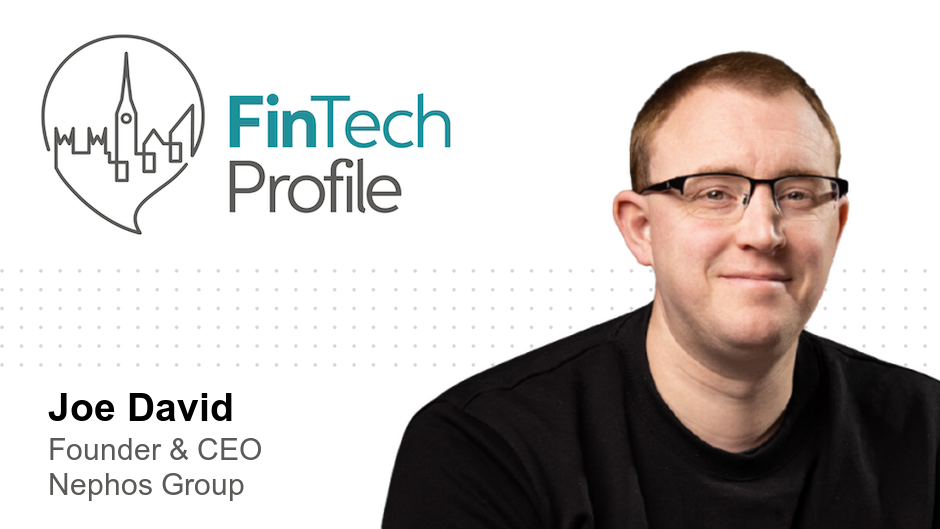
Today we're delighted to speak with Joe David, Founder and CEO of Nephos Group, a UK-founded professional services firm providing accounting, tax and specialist digital-asset services across the UK, UAE and internationally. Joe shares his insights on the convergence of traditional finance and blockchain technology, the importance of independent attestation for stablecoins, and why the gap between financial innovation and regulatory infrastructure needs to close.
My questions are in bold - over to you Joe:
Who are you and what's your background?
I'm Joe David, Founder and CEO of Nephos Group. I'm an ACCA-qualified accountant and took a slightly different route into the industry in that I didn't go to university. Instead, I went straight into accounting and built my experience in the profession before founding Nephos in 2014.
Over the past decade, we've grown from a traditional accounting business into an international professional services group operating across markets including the UK, UAE and South Africa. A major part of that journey has been digital assets. I made the decision relatively early to build specialist capabilities around crypto and blockchain at a time when many traditional accounting firms were reluctant to engage with the sector.
That eventually developed into Myna, our specialist digital-asset arm, and today we work with everyone from entrepreneurs and investors through to blockchain businesses and digital-asset institutions. My focus has always been on bridging the gap between traditional financial infrastructure and emerging technologies, particularly where accounting, regulation, tax and governance need to catch up with innovation.
What is your job title and what are your general responsibilities?
I'm Founder and CEO of Nephos Group, so my role spans both the strategic direction of the business and our relationships with clients and partners.
A large part of my time is spent looking at where financial services are heading and making sure Nephos is building the expertise required to support that evolution. Increasingly, that means areas such as digital assets, stablecoins, international structuring and the changing regulatory environment around financial technology. I also remain closely involved with clients, particularly founders and businesses dealing with complex cross-border or emerging-technology issues.
Can you give us an overview of your business?
Nephos Group is a professional services firm providing integrated accounting, tax and corporate advisory services to businesses, founders, investors and internationally mobile entrepreneurs.
One of our major differentiators is our experience with digital assets. Through our specialist capabilities, we work with crypto and blockchain businesses on everything from accounting and tax through to reporting, compliance, governance and institutional support. We've deliberately built expertise that combines traditional accounting and assurance standards with an understanding of how blockchain infrastructure actually works.
A good recent example is our work with Agant, issuer of the FCA-registered GBPA sterling stablecoin, where Nephos was appointed to provide independent ISAE 3000 proof-of-reserves attestation. For us, this is where the accounting profession is heading: applying established standards of financial assurance to entirely new forms of financial infrastructure.
Tell us how you are funded?
We're entirely self-funded. Nephos Group is founder-owned with no external equity investors and no third-party debt. Every pound and dirham of growth has come from client fee revenue accounting, tax, corporate structuring and advisory fees across our UK, UAE and South Africa entities, with the majority of that income recurring. Where we've needed to fund a new jurisdiction or a new venture, it's been done internally, through retained earnings.That discipline has shaped how we scale, we only invest in areas where we can see a payback.
What's the origin story? Why did you start the company? To solve what problems?
I founded Nephos in 2014 because I believed there was an opportunity to build a more forward-looking professional services business: one that could grow alongside its clients rather than simply reporting on what had already happened.
That philosophy became particularly important with crypto. We took a significant risk in building a dedicated crypto offering at a point when sentiment towards the sector was very different and relatively few established accounting firms wanted to work with digital-asset businesses. But it was clear to me that the underlying technology wasn't going away and that, as the industry matured, companies would need the same standards of accounting, tax, reporting and governance as any other financial business, combined with people who actually understood the technology.
That remains central to what we do today. Innovation in financial services tends to move faster than the infrastructure around it. Our job is to help close that gap.
Who are your target customers? What's your revenue model?
Our clients range from founders, entrepreneurs, investors and high-net-worth individuals through to growing businesses and digital-asset institutions. We work particularly closely with clients whose financial affairs don't fit neatly into traditional boxes, whether because they operate internationally, work with emerging asset classes or are building new forms of financial infrastructure.
Nephos operates primarily as a professional services business, generating revenue through the accounting, tax, advisory and specialist services we provide to clients.
On the digital-asset side, the work can become particularly specialised. Stablecoin issuers, blockchain businesses and other institutions increasingly need support around areas such as proof of reserves, financial reporting, tax, governance and regulatory compliance. That creates a growing role for professional services firms that understand both conventional accounting standards and blockchain technology.
If you had a magic wand, what one thing would you change in the banking and/or FinTech sector?
I would close the gap between the speed of financial innovation and the infrastructure used to account for, regulate and provide assurance over it.
We still too often treat technologies such as blockchain, tokenisation and stablecoins as something sitting outside the traditional financial system. In reality, the two are converging. The question shouldn't be whether we apply robust financial standards to these technologies, but how we adapt those standards so they work effectively in a digital and increasingly real-time financial system.
Stablecoins are a good example. If they are going to play a meaningful role in payments, treasury and settlement, trust cannot be an afterthought. Transparent reserves, independent attestations and clear regulatory standards need to become part of the infrastructure.
What is your message for the larger players in the Financial Services marketplace?
Don't mistake caution for preparedness.
Digital assets are increasingly becoming part of mainstream financial infrastructure. Stablecoins, tokenised assets and blockchain-based settlement are moving beyond experimentation, and that means banks and other large financial institutions need to develop genuine internal understanding of how these technologies work.
That doesn't mean abandoning the principles that underpin traditional finance. Quite the opposite. Accounting, governance, transparency and independent assurance become more important as new technologies scale. The institutions that do well will be those that combine those established principles with a willingness to understand and adopt new infrastructure.
Where do you get your Financial Services/FinTech industry news from?
Two sources I turn to every day: Bloomberg for the macro and financial services picture, interest rates, regulatory shifts, institutional moves, because our clients' structuring and tax decisions are driven as much by the macro environment as by crypto itself. And CoinDesk for the digital asset side: regulation, exchanges, stablecoins and policy developments as they happen.
Given we operate across the UAE, UK and South Africa, I also keep a close eye on primary regulatory sources, VARA and DMCC notices, HMRC, SARS, but for daily news, it's Bloomberg and CoinDesk.
Can you list 3 people you rate from the FinTech and/or Financial Services sector that we should be following on LinkedIn, and why?
Three I'd point people to, all worth following on LinkedIn:
Ronit Ghose, Global Head of Future of Finance at Citi - author of Future Money and probably the best-connected mind in banking on where digital assets, AI and tokenisation intersect. He posts data-driven thinking from an institutional vantage point, which is rare - most crypto commentary is either too niche or too promotional.
Ari Redbord, Global Head of Policy at TRM Labs - a former federal prosecutor and FinCEN senior advisor who's now the most consistently sharp voice on crypto regulation and financial crime policy. He connects the dots between Washington, the UK and the Gulf better than anyone else posting.
Sam Marchant, Partner at 21 Ventures - the voice to follow on MENA fintech specifically. He's documenting the region's growth story in real time: family office capital flows into the GCC, deals like barq's $329.5M Series A, and where founders are actually building. For anyone operating in Dubai or the wider Gulf, he's essential.
The common thread: all three are close to the ground truth - building, funding or analysing it daily - rather than commenting from the sidelines.
What FinTech services (and/or apps) do you personally use?
Quite a lot, which comes with the job. Personally: Starling for my UK banking, Wio here in the UAE, TradingView for market analysis - I'm on it every morning - and crypto-native platforms like Bybit and VALR for trading and moving value between currencies and jurisdictions. Having worked across the UK, UAE and South Africa for years, apps that make borderless money simple aren't a novelty for me, they're a necessity.
Professionally, we run our group on Xero with Dext for data capture and Expensify for expenses - and because we're an accounting practice, we're power users, not casual ones. I also have a soft spot for any fintech that removes friction from cross-border payments and FX, because that's a daily pain point for our clients: founders and HNWIs living and transacting across multiple countries.
The honest test I apply: if a fintech app can't handle multi-currency cleanly, it doesn't survive in my stack.
What's the best new FinTech product or service you've seen recently?
One development I've been particularly interested in is the emergence of properly regulated, fully backed stablecoin infrastructure.
We've recently been working with Agant around GBPA, its sterling stablecoin, where Nephos has been appointed to provide independent proof-of-reserves attestation. What interests me isn't simply another digital currency; it's the infrastructure developing around these products. If stablecoins are going to support real-world payments, treasury and settlement at scale, they need transparent reserves, credible independent assurance and regulatory oversight.
We're moving from a period where stablecoins were primarily discussed as crypto products towards one where they can increasingly be considered part of the broader financial-services infrastructure.
Finally, let's talk predictions. What trends do you think are going to define the next few years in the FinTech sector?
The biggest trend will be the continued convergence of traditional finance and digital-asset infrastructure. I think the distinction between "FinTech" and "crypto" will become increasingly less useful as technologies such as stablecoins, tokenisation and blockchain settlement become embedded within mainstream financial products.
Stablecoins are going to be particularly important. We're already seeing the conversation move beyond trading towards payments, treasury and settlement. As that happens, proof of reserves, independent attestation and regulatory compliance will become baseline infrastructure rather than optional extras.
I also think financial data will become increasingly real-time. Too many businesses are still making decisions based on financial information that tells them what happened weeks or months ago. Better integration between banking, accounting and digital infrastructure should give founders and finance teams a much more immediate picture of their businesses.
Ultimately, the next phase of FinTech won't simply be about creating more apps. It will be about rebuilding parts of the underlying financial infrastructure so that money can move more efficiently while maintaining the trust, transparency and accountability that institutions and consumers expect.
Many thanks to Joe for taking the time to share his insights with FinTech Profile. You can learn more about Nephos Group on their website.