Joe Leung, CTO & Co-founder, LaunchLemonade
Joe Leung discusses building governed AI agents for regulated industries, shadow AI risks, and why token costs are becoming a board-level concern.
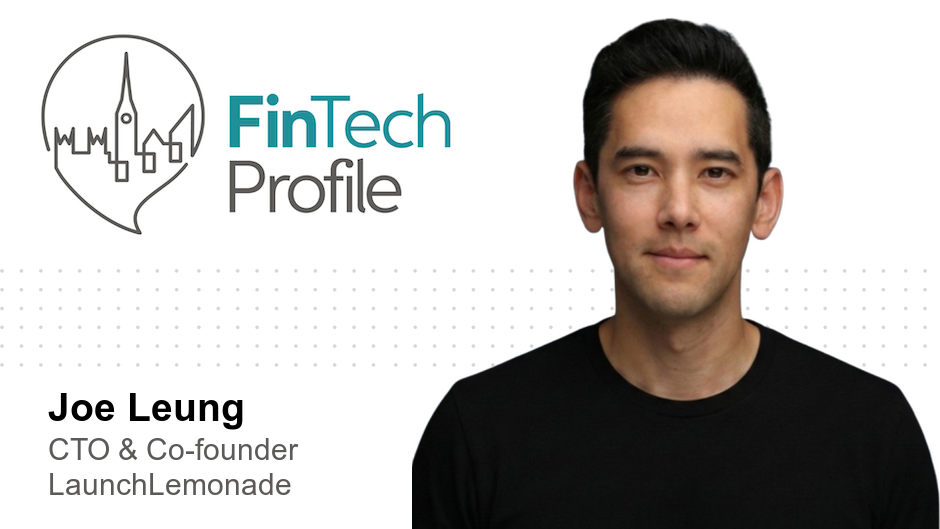
Today we're delighted to speak with Joe, CTO and co-founder of LaunchLemonade, an AI agent platform helping regulated industries build secure AI agents through a governed and connected workspace. With a background spanning aerospace engineering in the Royal Air Force and blockchain infrastructure at JP Morgan, Joe brings a unique perspective on building resilient systems that can be trusted in high-stakes environments.
My questions are in bold - over to you Joe:
Who are you and what's your background?
I'm Joe Leung, CTO and co-founder of LaunchLemonade, and my route into fintech was anything but conventional. I began my career as a commissioned officer and aerospace engineer in the Royal Air Force, where I learned to build and maintain systems that simply have to work reliably under real pressure.
From there I moved into financial services, spending several years at JP Morgan leading work on blockchain infrastructure, zero-knowledge proofs and privacy systems. The thread running through aerospace, banking and now AI is the same: building resilient, high-performance infrastructure that people can depend on. I'd been one of LaunchLemonade's earliest users going full time in 2025.
What is your job title and what are your general responsibilities?
As CTO and co-founder, I own the product and tech vision behind the platform. Day to day, that means keeping LaunchLemonade fast, reliable and scalable whilst ensuring it stays secure and governed enough for regulated firms to trust it with their work.
My current priorities include our cloud architecture, consistent performance across the 50+ AI model variants we support, and the governance layer, audit logs, role-based access and data controls, that financial services customers depend on. I also work closely with our CEO, Cien Solon, on product direction, and with customers on how AI actually fits into their workflows.
Can you give us an overview of your business?
LaunchLemonade turns the AI chaos already happening inside firms into one secure, governed system. Most professional services teams are already using ChatGPT, Copilot, Claude and others in ad-hoc ways their leadership can't see, audit or control and the firm is still accountable for it.
We give regulated firms, accountants, financial advisors, consultants and fractional CFOs, AI agents that handle meetings, email, research and reporting, with governance switched on by default rather than bolted on afterwards. It's no-code, so firms don't need huge engineering lift, and it spans 50+ model variants plus an Agent Store of pre-built, auditable workflows. For firms that want to go further, we also offer consulting, team training and white-label deployments under their own brand.
Tell us how you are funded?
LaunchLemonade was bootstrapped - it began as our founder Cien Solon's social-media experiment in early 2024 and grew organically to more than 6,000 users before we raised any outside capital.
In January 2026 we closed an oversubscribed pre-seed round of around $480,000 from Spring Syndicate, Ventures Together and other investors. That funding is going into scalable cloud infrastructure and the build-out of our agent flows.
What's the origin story? Why did you start the company? To solve what problems?
LaunchLemonade started as Cien's mission to democratise AI agent creation, to put real AI capability in the hands of people who don't have engineering teams. I came at the same problem from the other side: at JPMorgan I saw first-hand how hard it is to deploy innovative tech safely in a regulated environment, where governance, auditability and data control are not optional extras.
The pattern we kept seeing was a bad choice: firms could use powerful but ungoverned consumer AI tools, or commission expensive custom builds that needed large engineering teams. We exist to close that gap, giving regulated businesses governed AI agents they can actually deploy, audit and stand behind.
Who are your target customers? What's your revenue model?
Our customers are regulated professional services firms: accounting practices, financial advisors, advisory and consulting firms, and fractional CFOs. The revenue model is subscription SaaS across tiered plans, with additional revenue from consulting engagements, team training and white-label deployments.
More than 100 firms have run our free 30-second AI audit and the platform has over 6,000 users. A typical example: a firm replaces its midnight audit-prep scramble and the endless "can someone send the recap?" with agents that produce meeting notes, triage email and surface institutional knowledge automatically all visible and auditable in one place.
If you had a magic wand, what one thing would you change in the banking and/or FinTech sector?
I'd remove the false trade-off between innovation and governance. Too often, regulated firms feel they must choose between using cutting-edge AI and staying compliant, so they either move too slowly or let unsanctioned tools creep in under the radar.
I'd make "governance by default" the norm across the sector, so that adopting powerful AI and being fully auditable became the same decision rather than competing ones.
What is your message for the larger players in the Financial Services marketplace?
Your people are already using AI, the only real question is whether you can see it. Shadow AI usage is the risk, not just AI itself.
Rather than banning tools or waiting for the perfect enterprise rollout, give your teams a governed system where experimentation and auditability coexist. The institutions that win won't be the ones with the biggest models; they'll be the ones who made safe AI use the path of least resistance for every employee.
Where do you get your Financial Services/FinTech industry news from?
I read the Financial Times daily for the macro, markets and regulatory picture. On the technology side, I follow the major AI labs' research and product announcements directly, since so much of what will reshape financial services now originates there rather than in traditional finance media.
Can you list 3 people you rate from the FinTech and/or Financial Services sector that we should be following on LinkedIn, and why?
- Simon Taylor - co-founder of Fintech Brainfood and one of the sharpest writers on what's actually happening across fintech and banking.
- Other than that I try to keep my sources technical in nature, so Andrej Karpathy.
What FinTech services (and/or apps) do you personally use?
I use Revolut for banking, FX etc, it's a good benchmark for how seamless a consumer financial experience can be. On the business side I rely on Stripe, which remains the gold standard for developer-friendly payments infrastructure.
Finally, let's talk predictions. What trends do you think are going to define the next few years in the FinTech sector?
Two things, above everything else. The first is governance. As AI moves into regulated workflows, the deciding factor won't be which model is cleverest, it'll be which tools a firm can actually audit, control and stand behind. The institutions that win will treat audit trails, access control and data governance not as compliance overhead but as the thing that lets them adopt AI at all.
The second is the cost of tokens, and it's going up, not down. Headline per-token prices keep falling for a given model, but real bills are climbing fast. Agents that run continuously, reason over many steps and check their own work consume orders of magnitude more tokens than a one-off chatbot query. As firms move from occasional prompts to always-on agents, consumption outruns any price cut. That makes token cost a board-level line item, and it ties straight back to governance once AI spend is material and agents are acting on their own, you need to see exactly what's being run, by whom, and why. Cheap-looking intelligence is only safe to scale if it's also governed and observable.
We'd like to thank Joe for taking the time to speak with us. You can learn more about LaunchLemonade on their website.