Selena Singleton, Head of US Business Development and Partnerships, Longbridge
Selena Singleton discusses how Longbridge is using AI to help investors navigate complex markets with personalized tools that bridge the gap between access and understanding.
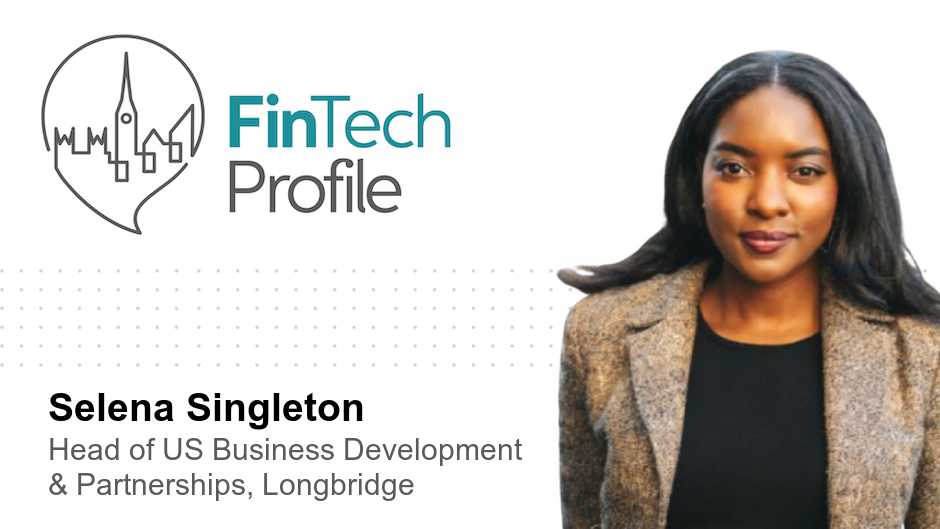
Today we're delighted to speak with Selena Singleton, Head of US Business Development and Partnerships at Longbridge. Selena shares her insights on building an AI-powered investing platform that serves over one million users and manages more than US$15 billion in assets. In this interview, she discusses the gap between market access and investor ability, the future of personalized finance, and why AI should be more than just another feature bolted onto existing platforms.
My questions are in bold - over to you Selena:
Who are you and what's your background?
I'm Selena Singleton, Head of US Business Development and Partnerships at Longbridge. I've built my career at the intersection of financial services and technology, usually in roles where I've had the opportunity to build something new.
Before joining Longbridge, I led strategy within Nasdaq's Corporate Platforms business, where I built and scaled a board engagement program supporting listings growth and retention. Earlier in my career, I helped to rapidly grow Alibaba.com's presence in the US through strategic partnerships. I have also worked with startups while at New York Life Ventures and mentored early-stage founders through the Founder Institute.
I got my bachelor's degree from Howard University and an MBA from Harvard Business School. My career path has not been linear, but I've always been drawn to the challenge of taking an idea from zero to one, bringing the right people together and creating something that can grow.
What is your job title and what are your general responsibilities?
As Head of US Business Development and Partnerships at Longbridge, I lead the partnership and growth initiatives that enable our expansion in the United States.
In practice, that means building relationships that can strengthen our presence in the market, establish credibility, and help us acquire users. It also means building strong data systems and processes to inform future decisions that will fuel long-term growth. I work closely with colleagues across the business to shape our go-to-market strategy
What I enjoy most about the role is that we are still building. I'm not simply stepping into an established playbook; I have the opportunity to help shape how Longbridge enters new markets and lay the foundations for how we grow within it.
Can you give us an overview of your business?
Longbridge is a personalized, AI-powered investing platform that helps investors make sense of increasingly complex markets.
Investors already have access to an enormous amount of information. The harder part is understanding what matters, how it relates to your portfolio, and what you may want to consider next. Longbridge brings research, analysis, execution, and portfolio strategy into one connected experience, rather than expecting investors to piece everything together across several different platforms.
AI is built into that experience from beginning to end, alongside our proprietary trading, clearing and settlement infrastructure. It is there to help investors explore information, understand their options and ultimately make their own informed and empowered decisions with a greater level of confidence.
Longbridge now serves more than one million users, manages more than US$15 billion in assets and processes more than 50 million orders annually. We also hold more than 20 financial licenses and regulatory approvals globally, including across the United States, Singapore, Hong Kong and New Zealand.
What's the origin story? Why did you start the company? To solve what problems?
Longbridge was founded in March 2019 after our founder, Nowa Zhu, noticed how far brokerage platforms had fallen behind other areas of financial services.
Banking and payments had undergone a major digital transformation, yet many brokerage platforms still felt fragmented, outdated, and disconnected from the increasingly global nature of investing. In some markets, accessing international equities involved offline steps or moving between separate systems. Even when people could access the markets they wanted, the overall experience was rarely designed around how they actually consume information and make decisions today.
That highlighted a wider problem that still exists across the industry. Research, market news, trading and portfolio management may be different activities, but they all feed into the same investment decisions. Many platforms still require investors to manage each part separately, gathering information from several sources, deciding what is relevant, and then moving elsewhere to act on it. Having more information available does not make that process any easier.
Longbridge was created to build a more connected end-to-end solution. In 2020, the company made the decision to build its entire trading system in-house, rather than relying on a collection of third-party systems. That gave us the foundation to connect the full investing journey, from discovering and researching an idea through to execution and reviewing the outcome.
Today, we have built a dedicated AI infrastructure layer alongside our proprietary trading, clearing and settlement systems. This allows the experience to become more personalized over time, taking relevant context such as an investor's holdings, preferences and previous decisions into account. Instead of presenting everyone with the same information, the platform can help an investor understand what may matter to them, why it matters, and what they might want to explore next.
The goal is not to remove the investor from the process or make decisions on their behalf. It is to reduce fragmentation, make complex information easier to understand, and give people the context they need to make their own decisions with greater confidence. The belief behind Longbridge remains simple: investing tools should evolve with investors, technology should clarify rather than overwhelm, and global access should never come at the expense of usability or trust.
Who are your target customers? What's your revenue model?
Longbridge is built for next-generation investors who want to learn, not just trade. They are self-directed, digitally native, and looking for tools that help them become more informed and disciplined over time. Longbridge offers a personalized experience that adapts to each investor's goals, preferences, and previous decisions while keeping them in control.
If you had a magic wand, what one thing would you change in the banking and/or FinTech sector?
I would close the gap between access and ability. Hopefully Longbridge is my magic wand.
Financial services has made huge progress in giving more people access to markets, products, and information. That is important, but being able to open an account or place a trade does not necessarily mean someone feels equipped to turn that information into sound decisions.
I would like to see our industry place as much value on helping people understand their options as it does on giving them more options. The best financial technology should help people ask better questions, recognize the relevant risks, and develop confidence in their own judgment. Not every piece of news warrants action.
What is your message for the larger players in the Financial Services marketplace?
AI should not be treated as another feature to add to an existing platform. Its real value will come from rethinking how people experience financial services from beginning to end.
Larger institutions have enormous advantages in the form of trusted brands, deep expertise, and long-standing customer relationships. The opportunity is to combine those strengths with technology that makes their services more personal, intuitive and responsive to individual needs.
That requires more than placing an AI assistant on top of an existing experience. It means considering how AI can support customers across the full journey, while providing clear sources, explaining its reasoning, and keeping the individual in control. The institutions that approach AI in that way will be best placed to turn existing trust into stronger and more valuable customer relationships.
Where do you get your Financial Services/FinTech industry news from?
I usually start with The Wall Street Journal for the bigger financial and business stories, then turn to Seeking Alpha when I want to dig deeper into a particular company or market trend. It's a good balance between understanding the wider picture and exploring what it could mean for investors.
Can you list 3 people you rate from the FinTech and/or Financial Services sector that we should be following on LinkedIn, and why?
Stephen Schwarzman - Co-founder, Chairman and CEO of Blackstone. I'm interested in his perspective on building Blackstone from the ground up and scaling it into a global investment business. He brings a valuable long-term view to leadership, growth, and navigating changing markets.
Carla Harris - Senior Client Advisor at Morgan Stanley. I've had the pleasure of meeting Carla, and I particularly value her practical and honest perspective on leadership, mentorship, and sponsorship. She offers thoughtful advice on navigating financial services and creating opportunities for those coming behind you.
Jamie Dimon - Chairman and CEO of JPMorganChase. I've also had the opportunity to meet Jamie, and he is always worth following for his views on banking, the economy, and where financial services are heading. Having led one of the world's largest financial institutions through significant periods of change, his perspective on long-term decision-making is particularly valuable.
What FinTech services (and/or apps) do you personally use?
I use Apple Pay for everyday purchases and Venmo for sending money to friends and family. What I like about both is how naturally they fit into everyday life. You do not need to be a financial expert to understand how they work; they have adapted to how people already behave and made the experience intuitive. That is what good FinTech should do: make financial tasks feel simpler rather than adding more complexity.
What's the best new FinTech product or service you've seen recently?
Made Card, founded by Alex Song, is a rewards credit card designed specifically for homeowners. Homeownership can be difficult, especially in a city like New York, and Made recognizes that the financial pressure does not end once you have bought the house. A rewards card is obviously not a reason to purchase a home, but it feels like a bright spot for those fortunate enough to do so. The company is still at an early stage, and I'm excited to see where it goes next.
Finally, let's talk predictions. What trends do you think are going to define the next few years in the FinTech sector?
I think personalized finance will be one of the defining trends of the next few years, which is important to distinguish from personal finance. We are already used to technology adapting to us in other parts of our lives, from the content we see to the services and recommendations we receive. We are now beginning to see that same shift in financial services.
As AI develops, financial platforms will become better able to understand someone's goals, preferences, risk tolerance, and previous decisions, and adapt the experience accordingly. Rather than giving every user the same information or generic insights, they will be able to highlight what is most relevant to that individual, explain why it matters, and provide support that becomes more useful over time.
The opportunity is to make finance feel genuinely personal while keeping the customer informed and in control. The platforms that get that balance right will create financial experiences that feel far more intuitive, relevant, and supportive than anything we have today.
Many thanks to Selena for taking the time to share her insights with FinTech Profile. You can learn more about Longbridge on their website.