Jalal Orujov, CEO of Payments, Bir
Jalal Orujov discusses how Bir is building the Caucasus' first integrated banking, payments and e-commerce ecosystem to drive Azerbaijan's digital transformation.
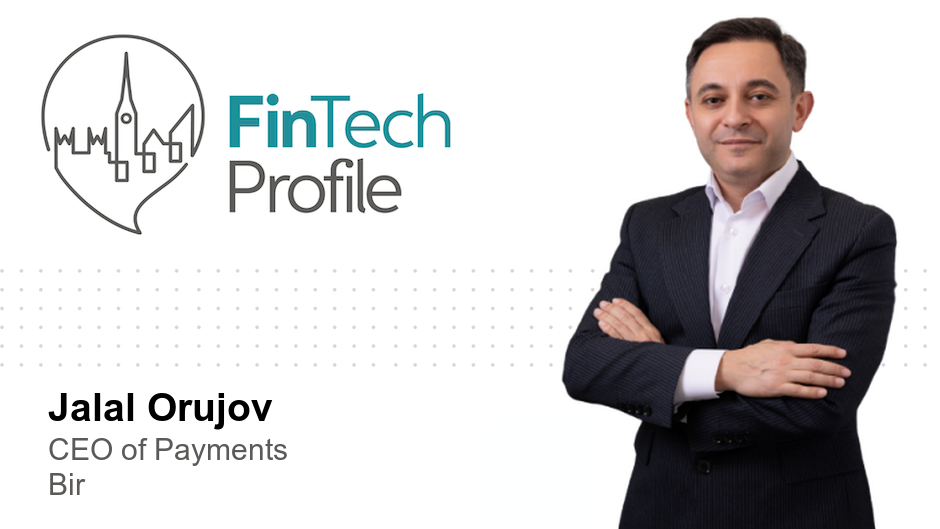
Today we're delighted to speak with Jalal Orujov, CEO of Payments at Bir, the Caucasus' first integrated banking, payments and e-commerce ecosystem. With over 20 years of experience in building payments infrastructure across Azerbaijan, Jalal shares insights on leading a fintech ecosystem that touches nearly half of Azerbaijan's population and processes approximately half of the country's total payments volume.
My questions are in bold - over to you Jalal:
Who are you and what's your background?
I'm Jalal Orujov and I began my career more than 20 years ago at the Central Bank of Azerbaijan, working on building out payments infrastructure in the fast-developing South Caucasus country. Since then, I have focused on banking and fintech at a wide range of public and private institutions in Azerbaijan, which is currently undergoing a rapid transformation from cash-based transactions to digital services, unlocking exciting new opportunities for people to participate in the national economy.
What attracted me to the Bir ecosystem and fintech more broadly was its ability to solve real-world challenges at scale. I help lead the ecosystem's payments strategy, a key part in advancing the digitalisation of Azerbaijan. Payments are the underlying infrastructure that unlocks a much wider journey, creating pathways to financial inclusion, businesses development and broader economic growth.
What is your job title and what are your general responsibilities?
At Bir ecosystem, I lead the strategy for our payments business. That covers everything from cards and digital wallets to our acquiring business, payment terminals and cash services.
The Birbank mobile app is the main digital channel through which most of our customers access our payment services and manage their everyday finances. I'm also responsible for our physical payments infrastructure, including ATMs and a nationwide network of self-service terminals where customers can make payments, top up accounts and access other financial services.
No two days are exactly the same, but my focus always stays on finding better ways to make our customers' lives easier. We constantly look for opportunities to introduce new features, simplify existing processes and improve the overall customer experience so that making payments feels effortless.
An equally important part of my job is building a strong team and culture where people enjoy working together. More than 1,500 talented people from many different backgrounds and areas of expertise work within our Payments vertical, providing a wide range of different perspectives that fuel innovation and drive the future of our business. I believe that our best ideas come when we work together, exchange ideas and challenge assumptions, which is why I have built a team that reflects that philosophy.
Can you give us an overview of your business?
Bir is the Caucasus' first fully integrated banking, payments and e-commerce ecosystem, bringing together some of Azerbaijan's most widely used consumer and merchant platforms under a single umbrella.
Our ecosystem includes Birbank (whose banking app is the highest-ranked among mobile banking apps on Google Play in Azerbaijan), the m10 e-wallet, Milliön payment terminals network, and the Birmarket e-commerce platform.
Bir's strategic partnerships, such as with Trendyol marketplace and BakıKart transport payments solution, have also helped to extend Bir's everyday relevance, reinforcing its position as the backbone of the national digital ecosystem for consumers and businesses.
Together, Bir's services reach more than 5 million users and process approximately half of Azerbaijan's total payments volume.
Whether a customer is making a payment, managing their finances, shopping online or accessing everyday services, we aim to make those interactions fast, secure, intuitive and rewarding.
Azerbaijan's economy is still largely cash-based, which we see as a huge opportunity - our mission is to become the default platform for daily life in Azerbaijan by accelerating digital adoption, financial inclusion and e-commerce penetration across the country.
Tell us how you are funded?
Bir has not raised any external VC funding and has already reached profitability. In 2025, EBITDA exceeded $300 million and the business was net profitable. Our strategy is to compound profitability over the next several years as the ecosystem scales.
Bir's growth outlook is strong. While Azerbaijan is still early in its shift to a digital-first economy, the rails for this have been put in place and adoption is moving quickly. The Bir ecosystem already touches nearly half of the country's population and engagement continues to grow as Bir adds new products and partnerships.
There is also plenty of room for growth ahead, given that cash payments continue to dominate in the country, about a third of the population remain unbanked, and e-commerce only accounts for about 3% of total retail turnover.
What's the origin story? Why did you start the company? To solve what problems?
The Bir ecosystem was created to make essential everyday tasks from banking to shopping simpler and more seamless for Azerbaijan's population, thereby shaping new habits for individuals and businesses, and fuelling Azerbaijan's transition to a digital economy.
Azerbaijan has a highly connected population, strong mobile penetration and growing digital infrastructure, yet it remains a largely cash-based economy with substantial opportunities to expand access to digital financial services and increase e-commerce penetration.
To bridge this gap, the Bir brand was launched in 2025 by bringing together established local players including Birbank, m10 e-wallets, Birmarket e-commerce platform, and Milliön cash-to-digital payment terminals network into a single ecosystem.
By removing friction and creating a more rewarding customer experience within our ecosystem, Bir is working to help accelerate digital adoption while supporting broader economic development. Importantly, we also believe digital transformation should be inclusive - whether through accessibility features such as our sign-language-supported video banking service or through solutions designed for first-time digital users, we aim to ensure that technological progress benefits everyone.
Who are your target customers? What's your revenue model?
The Bir ecosystem is composed of established businesses with an intimate understanding of local needs. It already touches over 5 million users, accounting for nearly half of Azerbaijan's population.
Bir's strategy is to grow profits multifold over the next several years by deepening fintech and e-commerce penetration in the country, introducing exciting new features for individuals and businesses, and increasing engagement frequency of the customer base to drive ecosystem usage.
The trajectory of Kaspi, a fellow ecosystem player operating in a comparable market (Kazakhstan), is a useful precedent for how quickly an integrated model can scale once adoption accelerates.
If you had a magic wand, what one thing would you change in the banking and/or FinTech sector?
If I had a magic wand, I honestly wouldn't change anything. The challenges we face in the market push us to be more creative. They force us to think differently, explore new opportunities and keep looking for better solutions.
Most importantly, they keep us from becoming complacent. They keep us sharp, constantly learning and improving. In a business like ours, I think that's essential.
At the end of the day, our goal is simple: to make our customers' lives easier. And for me, there's nothing more rewarding than finding new ways to do exactly that.
What is your message for the larger players in the Financial Services marketplace?
Bir is already the largest ecosystem player in Azerbaijan, so my message is to larger global players in the banking and payments space.
Consumers increasingly expect the same level of convenience from financial services that they receive from the world's leading technology platforms. They want seamless experiences that integrate naturally into their daily lives rather than having to navigate multiple disconnected services.
The future of financial services will be defined by institutions that successfully combine consumers' daily needs into one seamless digital user experience, which is simple, enjoyable and effortless. Those that fail to build with this in mind will be left behind.
Where do you get your Financial Services/FinTech industry news from?
Every day, I spend some time catching up on the news. I don't really follow a specific fintech website or publication because I prefer to have a broader perspective. I like to understand the bigger picture - what's happening not only in our industry, but also in the economy, our country and across the region. That broader context often helps me make better decisions.
If I had to name one primary source, it would definitely be LinkedIn. I've built a large network over the years, and it's a great place to discover insightful articles, fresh ideas and interesting discussions.
I also follow many of the world's leading fintech companies, digital banks and industry leaders, so I can hear about new trends and innovations directly from the people and organisations driving them. That helps me stay close to what's happening and often gives me an early view of where the industry is heading.
Can you list 3 people you rate from the FinTech and/or Financial Services sector that we should be following on LinkedIn, and why?
Nika Kurdiani – Nika leads TBC Group's business in Uzbekistan and has extensive experience in banking, payments and digital financial services. I value his perspective on building and scaling a digital ecosystem in a fast-growing emerging market.
Marcel van Oost – Marcel is one of the most consistent sources of fintech news and analysis on LinkedIn. His Connecting the Dots in FinTech newsletter is particularly useful for keeping up with new companies, investments and wider industry developments.
Nik Storonsky – As co-founder and CEO of Revolut, Nik has built one of the world's most prominent fintech businesses. He is worth following for his ambitious approach to product development, international expansion and challenging the traditional banking model.
What FinTech services (and/or apps) do you personally use?
In addition to our own Birbank app, I use several other financial apps, both for their practical value and to understand how other providers approach the customer experience.
Revolut is one of the international fintech apps I use. I particularly value the simplicity of its interface and the way it brings everyday banking, payments, transfers and foreign currency management together in one place. From a professional perspective, it is also interesting to follow how Revolut continues to expand its product range while maintaining a consistent digital experience.
At home, I also rely on m10, the Bir ecosystem's digital wallet, for my everyday transactions as well. I appreciate how easy it is to use, including for QR payments and instant cross-border transfers. While it was a pioneer in Azerbaijan, its widespread popularity today hinges on its ability to moves fast and evolve around customer needs.
What's the best new FinTech product or service you've seen recently?
Outside of the Bir ecosystem, two recent experiences really stood out to me.
The first was the World Cup 2026 campaign by ABB, a bank in Azerbaijan, where they tried to connect the excitement around this major global event with everyday banking, creating a fun experience for customers.
The second was a card reissuance journey by PLATA, a digital bank in Mexico. I especially liked how the process was designed and visualised. PLATA managed to turn a fairly routine task into a clear and sleek customer experience.
Both examples show that even familiar banking services can feel fresh and engaging when enough thought is put into the user experience.
Finally, let's talk predictions. What trends do you think are going to define the next few years in the FinTech sector?
I believe three key themes are emerging to shape the next phase of fintech growth.
First, ecosystem-led business models will continue to gain momentum. Consumers increasingly expect banking, payments, shopping and digital services to work together seamlessly, creating opportunities for platforms that simplify everyday life.
Second, AI will move from experimentation to large-scale deployment. We are already seeing AI transform customer service, fraud prevention, personalisation and operational efficiency. Over time, it will become embedded across virtually every financial interaction. Beyond financial services, AI will also play a growing role in connecting consumers to public services, commerce and urban experiences, creating entirely new digital journeys.
Third, frontier and emerging markets will emerge as the new hubs of fintech innovation. The latest advancements in AI and other cutting-edge technologies are giving these markets a unique opportunity to leapfrog legacy infrastructure and become some of the world's most dynamic centres of progress.
I believe that Azerbaijan's experience is going to soon demonstrate how quickly this transformation can happen when technology, consumer demand and ecosystem thinking come together.
Many thanks to Jalal for taking the time to share his insights with FinTech Profile. You can learn more about Bir on their website.