Louise Ferslev, Partner, Angelo Invest
From founding fintech MyMonii to becoming an investor, Louise Ferslev shares hard-won lessons on building in regulated markets and what moves the needle on diversity in Nordic tech.
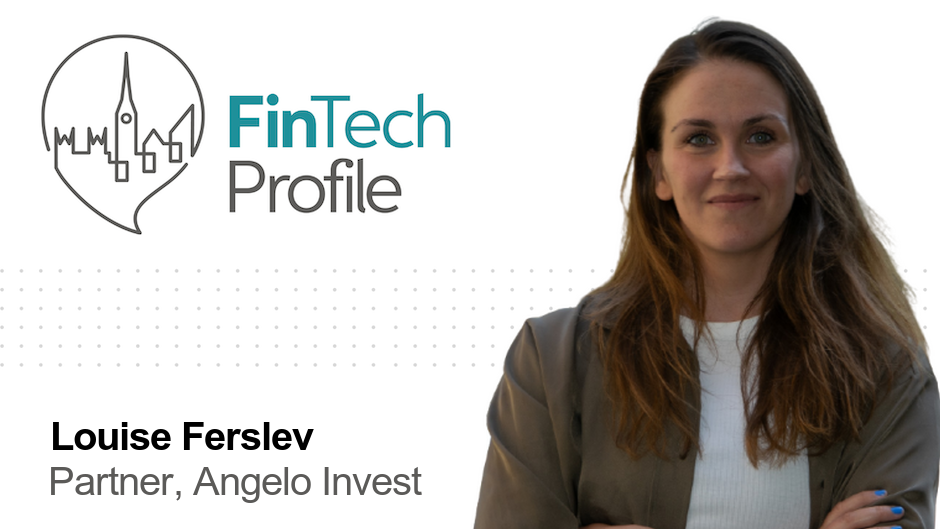
Today we're meeting Louise Ferslev, Partner at Angelo Invest. A founder-turned-investor, Louise built the family money app MyMonii before teaming up with her first backer, Thor, to invest in early-stage Nordic startups.
Over to you Louise - my questions are in bold:
Who are you and what's your background? How did you end up in FinTech, and then on the investing side of it?
My name is Louise Ferslev. I founded a fintech company called MyMonii back in 2015, when I was 25. The users of MyMonii were families with kids from 8 years and up, with a focus on teaching the kids good money habits from an early age and giving them a better user experience than the banks' apps. MyMonii was an allowance app, where the kids could earn, save and spend money. We partnered with big financial institutions like Nets, Mastercard and Visa to give the kids a real card attached to their savings. We also made an investment simulator in the app, so the families could try investing in a safe space without spending real money.
I ended up in Fintech because I started MyMonii from a clear need for a solution like this. Back in 2015, before MyMonii, you could only get a card from age 13, and you had to send an SMS to check the balance. It sounds absurd in 2026, but that was the option. So there was definitely a need for an improved solution. But unfortunately it was hard to make a great business in this space. The costs of having an active card programme were high and the options for earning enough per customer were limited, especially because the banks launched competing products that were far from the quality and user experience of MyMonii, but often gave them to their customers for free. So this was our biggest challenge I would say.
Tell us about Angelo Invest. How did the partnership with Thor come about, and how do you work?
Before I founded MyMonii, I met Thor through an introduction from someone in my network. At the time I had an idea with the working title "allowance card", which later became MyMonii. I learned that Thor also had a version of this idea. He was also investing in different companies as a business angel back then, so he became the first investor in MyMonii. Since then, he kept backing MyMonii with capital and sparring with me on the side while I was in charge of the operations. His role was mostly investor, board member and close sparring partner for me, but he was also in the operations in MyMonii for 3 years. I was the CEO and ran the operations from beginning to end, and Thor had a CCO role when he joined operations.
Thor and I go way back, and the MyMonii journey taught us that we work well together through ups and downs. So 1.5 years ago we decided to join forces again and invest in startups together.
We invest between €60,000-€215,000, and we look for early-stage startups. If a startup needs more capital than our ticket, we have a broad local network of other investors who like to follow our investments. Both professional angels and family offices, but also wealthy private persons who are missing the connection to startup dealflow, but have capital to invest and find it interesting to be part of the startups in the early days.
We aim to invest in 10-12 startups in total and then put all our focus on them. We set aside bi-weekly 1.5-hour meetings in our calendars to help the founders focus on a few important key goals. When they are on track, they don't need sparring that often, but we want to make sure we have time for them when they need us.
You spent eight years building MyMonii before moving to the other side of the table. What does having been an operator give you that you'd otherwise be missing as an investor?
The biggest learning I got from MyMonii was that you can build a product there is a clear need for, which users love and stay active in, but it is not a given that you can also build a good business on it. This might sound obvious, but this is one of my personal key focus areas when looking at cases today: distinguishing between the two. Today, as an investor, I focus more on the opportunity to monetize a product and make good revenue at some point than on a product that people simply love to use. The next step is then the opportunity to make a profit. In MyMonii we were able to get many active users, we could also charge money for the product, but because it was a financial product it required high security, high compliance and it's a very regulated space obviously, so our costs of onboarding a customer were too high, as were the ongoing costs of running a card programme in low volume.
Another important thing I carry with me from being a founder is that I understand what the founders are going through. Both when it's fun and things start to work well, and when you meet obstacles and challenges. I know the great feeling when parts of the company start to work and you reach your goals. It's such an amazing feeling and it's important to celebrate that.
But on the flipside, there are obstacles and challenges most of the time, and I know that feeling as well. So when founders present an obstacle to me, I have most likely tried the same or something similar, so we never panic, because we know that challenges are a part of the game and it's only a matter of how you deal with them, adjust and move on.
The problems we see some founders panic over in the early stage are nothing compared to what Thor and I have been through. So we can always come up with a story about an even worse situation, and it can calm founders to know that their investors have been through it and don't panic in such situations. We have been in their shoes and experienced the same things.
What do you look for in a founder or a startup when you're deciding to invest?
I like a founder who is honest and makes a realistic plan, instead of overselling the case and the funding round. Both Thor and I have built up a good 'bullshit detector' after both having many years in operations ourselves, but also from our network of startups we help. So if founders pump up their case too much, we will eventually figure it out by digging deeper into the numbers. We would rather see slightly lower traction numbers than scratch the surface and find out the numbers are not as good as first explained. Trust in the founders is our highest priority. It is hard to pin down, but it is one of the most important things for us.
We also look for founders who can sell their product and are close to a convincing sales pitch towards customers, or have already found one. If we believe that founders understand how to sell the product to customers, then we find it very interesting.
In my opinion, a founder also needs a good mix of stamina, urgency and patience. They need a natural drive and an urgency to move fast. But results often take time, so they also need the stamina and patience to keep pushing until one day, hopefully, they hit the market right.
Building MyMonii meant dealing with card issuing, bank partners and regulation first-hand. How do you view the relationship between incumbent banks and FinTech today?
I think most incumbent banks are still slow in decision-making and have no urgency at all. They think too passively, in my experience, and it doesn't seem to be changing.
They feel safe and they earn a lot of money no matter what, even if they stay passive. So they are not forced to enter into partnerships with fintechs or acquire them, which I think is a shame. Both the banks, the fintechs and the banks' customers could benefit from more partnerships. The banks have the muscle and the customers; the fintechs have the ideas and better products.
Another thing I learned after many years operating in the financial landscape is that there is an old hierarchy in the field. The players with a high level of licenses and card volume have more power than the smaller players. We experienced a partner of ours misusing that power, which impacted our company in many ways, as well as our customers and our new partners. This might be the biggest learning for me in this space, and I wanted to share it now so upcoming Fintechs are aware of it. I wish there were more pressure on the licensed institutions in a highly regulated space like the financial one, so that smaller players like Fintechs can avoid being squeezed.
What areas of FinTech are you most excited about right now, and what would make you back a FinTech company?
If we were to invest in Fintech, we would be looking for a clear path to revenue and volume. And also that the startup is not too dependent on its partner, if it needs a financial partner. Looking back at MyMonii now, we were too dependent on our partner in the beginning. So I look closely at which dependencies a startup has on others.
In my opinion there is still a lot to be done and improvements to make in payments and infrastructure especially. There is no doubt that AI will change a lot in the financial space as well as in other industries. I believe that AI has the potential to give more power to bank and insurance customers. As an example, I think something like changing banks will be much easier in the future with AI. We already see a change in the way we interact with software through AI agents such as 'Instinct' and 'Muse'. The fact that anyone has access to help like an AI personal assistant has the potential to change a lot in the financial space as well. Because unlike a human bank "advisor", an AI agent can be more objective if you tell it to be. So I predict a future where we ask agents to monitor and keep an overview of our finances, insurances, loans and investments, and help us optimize in the background and/or with our approval.
Can you highlight some portfolio companies our readers should be following?
To be honest I think all our portfolio companies are worth following: Orla, Tuttelu, Vedio, Yaay, Flow, HERD infrastructure and Boilr. If you want to follow which investments we make going forward you can see them here.
You co-founded Women in Tech Denmark. What's your read on where the Nordic tech and FinTech scene actually is on getting women into founding and investing roles, and what genuinely moves the needle?
We are unfortunately not moving in the right direction at the moment. I see the patterns so clearly and when you ask me what moves the needle: that more men start to see these patterns and act differently. That is what can actually move the needle.
We need more people, but especially (sorry to say) middle-aged white men, to understand and accept unconscious bias when it comes to gender, but also when it comes to different cultural backgrounds, skin color, age. We all have unconscious bias, both men and women, and we are not all equal. We are not valued the same way in society today.
If we look at the issue of getting more women into founding and investing roles, there is a huge issue with getting enough capital to female founders. This has always been an issue, and the numbers are not changing. As an example, it is still only 1% of venture capital that backs female-founded companies.
I strongly believe that the goal should be to get to a point where the worst female founders get as much funding as the worst male founders.
It is a vicious circle as I see it. Not enough capital for female founders > less chance for the founders of scaling the business and attracting the best talent > fewer success stories to get inspired by > fewer role models who succeeded > fewer successful exits with female founders > fewer female business angels > fewer new female founders > less capital for female founders. You get the point.
I think the overall responsibility to change this lies with the men who are in powerful positions in the startup and investor field. But of course there are also some things to change for the female founders themselves, even though they have the structures against them: Think big, ask for bigger amounts, expand your network among men (not only women), talk about the future and the potential instead of historical data, take risks.
In our portfolio we unfortunately only have one female-founded company. It's also reflected in our dealflow that far fewer women end up in our inbox (cold outreach and introductions). We wanted to invest in two more female-founded companies where we could bid, but they hesitated and in the end decided to wait or not raise a round after all. So if this picture I have seen is a general issue, then this is of course part of what explains the funding gap.
So it is a complex issue with no simple solution.
For founders keen to talk to you and Thor about investment, what's the best way of connecting?
Feel free to connect with me or follow me on LinkedIn. Thor and I have a website with our contact information and our portfolio.
Send us an email about your startup. We are particularly interested in 1) How are users using the product? Is it needed or nice to have? 2) Is there a path to revenue, so the startup can get control of its P&L? But if you are a founder based in the Nordics, and you have a product ready with a few users/customers, we are happy to jump on an intro call to learn more and follow you.
We often follow founders with bi-weekly meetings over a few months to get to know them and learn how they work before investing.
If you had a magic wand, what one thing would you change in the banking and/or FinTech sector?
There are actually quite a few things I would like to change with a magic wand. But if I have to choose just one, it would be to challenge the duopoly between Visa and Mastercard in the EU, so we get a more diverse and competitive payments landscape.
My main reason for this is that more competition would bring the costs down across the whole value chain. I have seen this first-hand at MyMonii, where the costs of running a card programme were high. Lower costs would benefit the financial institutions that want to issue cards and the merchants accepting card payments. And in the end, the consumers should benefit too.
But it is not only about pricing. I believe more competition would also lead to more innovation in the payments industry. I would also like to see a stronger move towards account-to-account (A2A) payments. With the instant payment infrastructure developing, it makes sense to me that more payments should move directly between bank accounts, instead of relying on the traditional card networks.
So that is where I would use my magic wand: a more open, competitive and innovative payments landscape, with more choice and lower costs for everyone involved.
Many thanks to Louise for taking the time to share her insights with FinTech Profile. You can learn more about Angelo Invest on their website.