Alex Konewko, CEO, Finductive
Alex Konewko discusses Finductive's approach to business payments, the importance of combining technology with human expertise, and how AI and real-time payments will reshape FinTech.
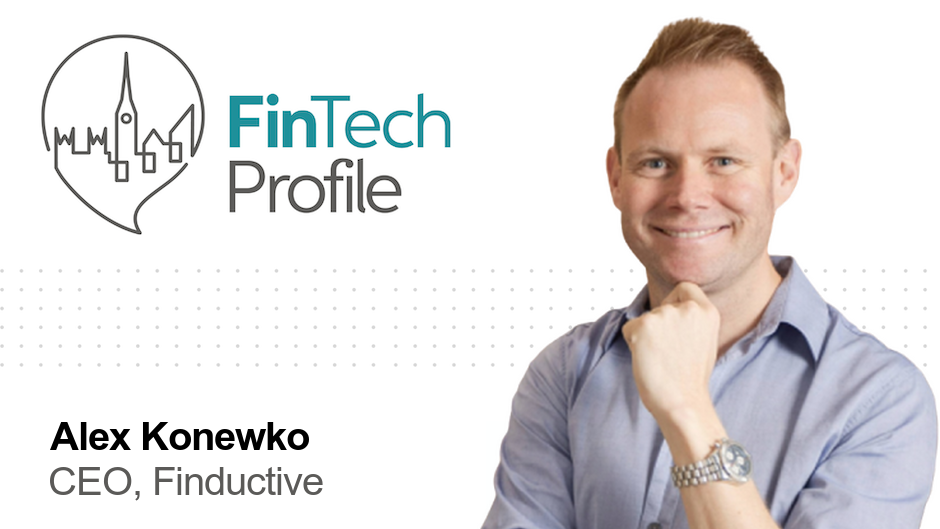
Today we're delighted to speak with Alex Konewko, Chief Executive Officer and Director of Finductive Ltd, an EU-licensed financial institution helping businesses move and manage money worldwide. With over two decades of experience across HSBC, MeDirect Bank Malta, and the FinTech sector, Alex brings a unique perspective on how technology and human expertise can work together to deliver better financial services.
My questions are in bold - over to you Alex:
Who are you and what's your background?
I have spent more than two decades working across banking, financial services and FinTech. I began my career in 2002 with HSBC's in the UK, gaining experience across consumer, corporate and wholesale banking. From there, I moved into senior risk-management roles covering Europe, the Middle East and Africa, with responsibilities spanning credit risk, risk governance, operational risk, regulatory reporting and compliance.
Academically, I hold a BSc in Financial Services from the University of Manchester and am an Associate of the Institute of Financial Services. These experiences gave me a strong grounding in both the commercial side of banking and the governance and risk-management disciplines that allow financial institutions to grow safely.
I subsequently moved to Malta, where I spent around six years as Group CRO and Executive Director of MeDirect Bank Malta. I later worked in financial-services advisory and served as a Non-Executive Director of Convera Malta Financial Limited, part of an international cross-border payments business. I joined Finductive as CEO in 2025.
My career has therefore given me two complementary perspectives. Traditional banking taught me the importance of stability, governance and trust, while FinTech has demonstrated how technology, specialisation and a willingness to rethink established processes can make financial services much more useful to customers. The most effective FinTech businesses use technology to apply those controls more intelligently, reduce unnecessary friction and give their teams more time to focus on the issues that genuinely require human judgement.
What is your job title and what are your general responsibilities?
I am the Chief Executive Officer and a Director of Finductive. My responsibility is to set the company's strategic direction and ensure that our commercial growth, product development, regulatory obligations, financial performance and client experience remain properly aligned.
On a typical day, I may be involved in discussions with clients and banking partners, reviewing product and technology priorities, working with our risk and compliance teams, assessing new markets, or supporting our leadership team with operational and people-related decisions. A significant part of the role is also ensuring that the organisation maintains a culture of accountability, collaboration and customer focus.
In regulated payments, a CEO must continually balance speed with resilience and ambition with control. It is not enough to launch an attractive product; the underlying governance, safeguarding, cybersecurity, operational capacity and customer support must all be capable of scaling with it. My role is not to have every answer personally, but to make sure we are asking the right questions, making informed decisions and removing obstacles for the people delivering our strategy.
Can you give us an overview of your business?
Finductive is a Malta-based, EU-licensed financial institution focused primarily on business payments and cross-border financial services. We provide dedicated IBANs, multi-currency payment accounts, SEPA and SWIFT transfers, real-time foreign exchange, mass payments, debit cards and API-based services.
Our technology allows clients to manage multiple accounts and legal entities through a single login, apply different user permissions and approval levels, execute high volumes of payments, and access their accounts through both web and mobile platforms. We are also a principal member of Mastercard and have launched multi-currency physical and virtual debit cards, giving businesses greater visibility and control over corporate expenditure.
What differentiates us is the combination of scalable technology and genuine sector expertise. Many FinTech propositions are designed almost entirely around self-service. We certainly want routine transactions to be quick and intuitive, but we also recognise that international businesses frequently have complex ownership structures, unusual payment flows or sector-specific requirements that cannot always be resolved by a chatbot or standard workflow.
Every Finductive client is therefore supported by people who can understand the business behind the transaction. Our proposition is not technology instead of people; it is technology that gives our people more time to solve the non-standard cases and support clients properly.
We are not trying to become a traditional bank in miniature. Our strength is specialist payments: understanding how businesses need to collect, hold, convert, control and move money, and doing that securely, efficiently and with a high level of personal service.
Tell us how you are funded?
Finductive is a privately held company and has not publicly announced a conventional institutional venture-capital funding journey. The business has developed with shareholder backing and a disciplined approach to investment, with resources directed towards the technology, regulatory capital, compliance, cybersecurity, operational resilience and people required to build a sustainable financial institution. Our priority has therefore been sustainable growth and long-term client relationships rather than growth at any cost.
What's the origin story? Why did you start the company? To solve what problems?
I did not personally start Finductive, so I would not want to rewrite the company's history. I joined as CEO in 2025, but the reason I joined is closely connected to the problem the founders originally set out to solve.
Finductive began operating in 2019. Its founders had direct experience in payments, iGaming and internationally focused businesses, and had seen how difficult it could be for legitimate companies—particularly those with cross-border operations or specialist business models—to obtain responsive payment services. Traditional account opening could be slow, payment and FX arrangements could be fragmented, and providers did not always understand the sectors they were serving.
The original proposition was to provide these businesses with secure payment accounts, dedicated IBANs, multi-currency capabilities and a modern online experience, while retaining the necessary compliance and risk-management standards. The company initially developed strong expertise in the iGaming ecosystem, but that same underlying challenge exists in many sectors: a perfectly legitimate business can still be too international, too specialised or simply too unfamiliar for a standardised banking model.
That remains highly relevant today. The difference is that Finductive has moved into a new stage of its development. We now support a wider range of sectors, including aviation, maritime and yachting, professional services, corporate service providers, technology businesses, affiliates and international corporate groups.
Our job is not to remove compliance from the customer journey. Compliance is non-negotiable. Our job is to apply it intelligently, explain requirements clearly, use authoritative data wherever possible and avoid asking clients to repeat work that adds no genuine risk-management value. Good compliance should be a design discipline, not an obstacle course.
Who are your target customers? What's your revenue model?
Our target customers are businesses for which payments are part of their operating infrastructure rather than an occasional administrative activity. They may be moving funds across several countries, currencies and legal entities, paying large numbers of suppliers or customers, managing corporate expenditure, or operating in a specialist sector where a detailed understanding of the business model is essential.
This includes iGaming operators and affiliates, corporate service providers and professional firms, aviation businesses, maritime and yachting companies, technology and digital businesses, international SMEs and corporate groups with multiple related entities. These customers typically value dedicated IBANs, multi-currency accounts, SEPA and SWIFT access, foreign exchange, bulk payments, debit cards, API connectivity and the ability to speak with a relationship manager who understands their organisation.
Depending on the relationship and services used, revenue may include account onboarding and administration fees, payment transaction fees, foreign-exchange margins, card-related fees and charges for enhanced or API-enabled services. We aim to make pricing clear and proportionate to the client's requirements and usage. Finductive publishes fee information for relevant products and provides corporate clients with an applicable pricing schedule.
We do not generally identify customers publicly unless they have chosen to discuss the relationship themselves. Confidentiality is part of the trust clients place in a financial institution.
The value we provide can nevertheless be illustrated quite practically. A CFO may use a single login to oversee accounts across several group companies rather than working through separate banking portals. A business can issue cards to employees with individual limits and near-real-time transaction visibility. A company processing high payment volumes can connect its accounting or ERP environment through APIs and reduce manual reconciliation. These are not simply technology features; they reduce operational work, improve control and give management a clearer view of cash and expenditure.
If you had a magic wand, what one thing would you change in the banking and/or FinTech sector?
I would create a trusted, consent-based and portable corporate identity framework for Europe—a form of continuously maintained "KYB passport" for businesses.
A legitimate company currently provides much of the same ownership, director, licence, constitutional and source-of-funds information to every bank and payment provider it approaches. Each institution then performs overlapping checks against static documents, often using slightly different formats and definitions. That creates cost and frustration for customers and institutions without automatically creating better risk outcomes.
A portable profile could connect to authoritative company registries, beneficial-ownership information and other verified sources, while allowing the business to control which institution receives the data. Material changes could trigger updates rather than relying on documents that become outdated the moment they are certified.
Institutions would still be responsible for assessing the customer and understanding its risks; this should not become outsourced compliance. However, it would allow them to spend less time repeatedly collecting basic evidence and more time understanding the actual business model, expected transactions and behavioural risks.
Done properly, this would make onboarding faster and compliance stronger. That is the sort of innovation the industry needs: not fewer controls, but better information and less duplication.
What is your message for the larger players in the Financial Services marketplace?
I do not assume that every capability must be built internally or that every customer should be served through the same operating model.
Large banks possess enormous strengths: trusted brands, capital, infrastructure, geographic reach and deep institutional expertise. Specialist FinTechs and payment institutions bring different advantages, including agility, sector knowledge, faster product development and the ability to design around specific customer problems. Those capabilities are complementary rather than mutually exclusive.
My message to the CEO or CIO of a major bank would be to treat regulated FinTechs as part of the financial-services ecosystem, not simply as competitors sitting outside it. Open, resilient infrastructure and well-governed partnerships can allow each organisation to focus on what it does best.
I would also caution against confusing digitisation with customer-centricity. Moving an existing process onto an app does not necessarily make it a good process, and removing every human interaction does not automatically create good service. Customers appreciate speed and self-service when everything is straightforward, but they value access to an experienced person even more when something is important, unusual or urgent.
At Finductive, we operate through the same wider payment ecosystem as banks, including SEPA and SWIFT, and our banking and technology partnerships are critical to what we do. The strongest future model will combine institutional trust and infrastructure with specialist knowledge, modern technology and genuine accountability to the customer.
Where do you get your Financial Services/FinTech industry news from?
Finextra is useful for the daily pulse of the industry because it combines company announcements with commentary from people working directly in financial services and payments. I also prefer to go directly to primary sources such as the European Central Bank, European Banking Authority, European Commission and Malta Financial Services Authority whenever the subject is regulatory, supervisory or strategically important.
Can you list 3 people you rate from the FinTech and/or Financial Services sector that we should be following on LinkedIn, and why?
Marcel van Oost — Connecting the Dots in FinTech
Marcel is one of the most consistent and well-informed commentators in the global FinTech community. He has a particular ability to identify the developments that matter across payments, digital banking, artificial intelligence, investment and emerging business models, and then explain their wider strategic significance. His perspective as an adviser and early-stage FinTech investor also adds a useful commercial dimension to his daily industry coverage.
Nicolas Pinto — Head of Marketing and Partnerships at RollingFunds
Nicolas produces engaging and accessible content on payments, FinTech and financial-services innovation, particularly within the European and French markets. He is very good at taking subjects such as card-payment infrastructure, embedded finance and B2B financing and explaining them in a way that remains commercially relevant without losing the technical detail. His combination of payments expertise, marketing insight and strong industry engagement makes him well worth following.
Patrick DeBattista — Financial coach, educator and founder of Finance For You
Patrick brings an important perspective to financial services by focusing on financial literacy, wellbeing and the practical impact that financial products have on people's lives. As a CFA holder, qualified accountant and Malta's first full-time financial coach, he combines strong technical knowledge with an ability to make finance understandable and actionable. His work is a valuable reminder that innovation in financial services should ultimately help people make better and more confident financial decisions.
What FinTech services (and/or apps) do you personally use?
First and foremost, I use Finductive's own platform and mobile application. Leaders should experience their product in the same way that a customer does, so I regularly look at the journey from login and account visibility through to payments, approvals and card management. It is one of the most direct ways of identifying both what works and what can still be improved.
I also use services such as Revolut and continue to follow my previous companies closely, including HSBC in the UK and MeDirect Bank in Malta, as well as Apple Pay for everyday payments. Each has helped raise customer expectations around accessibility, transparency and convenience.
What interests me is not any one feature in isolation. It is the way well-designed services remove unnecessary effort and make quite complicated financial infrastructure almost invisible to the user.
What's the best new FinTech product or service you've seen recently?
A product that has recently caught my attention more broadly the application of agentic AI to Know Your Business, or KYB, processes.
Cross-border business verification remains one of the most time-consuming parts of onboarding. Information may be spread across corporate registries, statutory filings, constitutional documents, websites, public records and third-party databases, often in different languages and formats. An agentic AI solution can gather and collate this information, compare it for inconsistencies, map relationships between companies and individuals, and help reconstruct ownership chains across several jurisdictions.
Our KYB tool, for example, uses jurisdiction-specific logic and governed data sources to identify ultimate beneficial owners where conventional registry searches may provide only part of the picture, while tracing its findings back to their sources.
What makes this particularly compelling is that it does not need to replace the compliance professional. With appropriate governance, audit trails and human review, agentic AI can remove a significant amount of repetitive investigative work, identify missing information or potential discrepancies earlier, and allow experienced analysts to concentrate on judgement, risk assessment and genuinely complex cases.
For regulated institutions, the opportunity is therefore not simply faster onboarding. It is the possibility of making cross-border due diligence more complete, consistent and evidence-based, while also creating a much more efficient experience for legitimate businesses. The technology should support accountability rather than replace it, but I believe this will become one of the most valuable practical applications of AI within financial services.
Finally, let's talk predictions. What trends do you think are going to define the next few years in the FinTech sector?
The next few years will not be defined by one product or technology. They will be defined by the convergence of real-time payments, embedded distribution, artificial intelligence, digital identity and tokenised forms of money.
First, real-time will become the default expectation. European regulation has already accelerated the availability of instant euro payments and beneficiary-verification services. Businesses will increasingly expect money to move at any time, with immediate confirmation, clear FX pricing and greater certainty about the intended recipient. The consequence for financial institutions is that real-time money will require real-time liquidity, fraud controls, sanctions screening, customer communication and operational support.
Second, embedded finance will mature from an API feature into a regulated operating model. More non-financial platforms will incorporate accounts, payments, cards, FX and lending into their customer journeys. The successful providers will not simply be those with the easiest API documentation; they will be those that can demonstrate sound governance, safeguarding, resilience, transparent allocation of responsibilities and effective customer protection. Embedded finance will not eliminate regulated financial institutions—it will change where and how customers encounter them.
Third, AI will move from assistant to controlled agent. In the near term, it will improve customer service, document processing, fraud detection, transaction-monitoring and operational decision support. Over time, agents will be authorised to perform more actions, including initiating transactions, managing routine treasury decisions or moving funds within predetermined parameters.
However, accountability cannot be simply delegated to an algorithm. Identity, permission, explainability, data quality and human escalation will become increasingly important. AI will also enhance the capabilities of fraudsters through impersonation, synthetic identities and more convincing social-engineering attacks, so innovation and security will have to progress together.
Finally, specialisation and trust will become more valuable, not less. Technology will make many standard financial functions cheaper and easier to distribute. That means the differentiation will increasingly come from understanding complex customers, resolving exceptions, protecting clients when something goes wrong and giving them confidence that there is a responsible institution behind the interface.
The winners will not necessarily be the companies with the longest list of features. They will be those that combine resilient infrastructure, responsible innovation, regulatory credibility, sector knowledge and human accountability. That is the model we are continuing to build at Finductive.
Many thanks to Alex for taking the time to share his insights with FinTech Profile. You can learn more about Finductive Ltd on their website.