Sean Lynch, CEO, Citysave
Sean Lynch discusses how Citysave is modernising credit union services with Salesforce technology whilst keeping profit with purpose at the heart of financial inclusion.
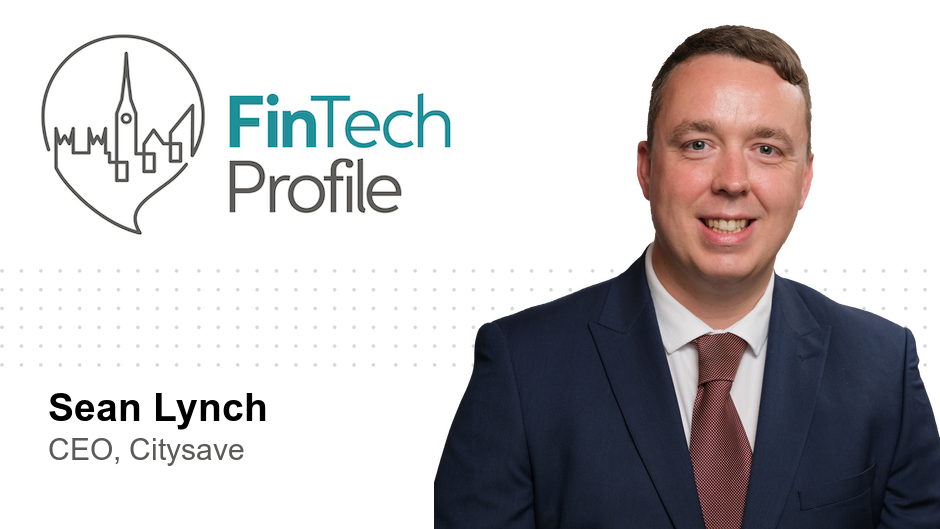
Today we're delighted to speak with Sean Lynch, CEO of Citysave, a Birmingham-based credit union that's challenging perceptions about community finance. With nearly 7,500 members and a new Salesforce-based platform making them the first UK credit union to implement this technology, Sean shares how they're combining modern fintech infrastructure with a 'profit with purpose' model to tackle financial exclusion across the Midlands.
My questions are in bold - over to you Sean:
Can you give us an overview of your business?
Citysave is a long-established credit union and financial co-operative serving Birmingham and the wider region. While we're a business, we often describe it as 'profit with a purpose', because while we are commercially run, everything we do is geared towards improving financial wellbeing in our communities.
Our flagship offering is a workplace savings and borrowing scheme, which allows employees to save directly from salary and, where needed, access affordable loans repaid through payroll deductions. We currently work with around 40 payroll partners across the Midlands region, including major employers such as NHS trusts, universities, housing associations and charities.
Alongside our community focus, we've been investing heavily in modern fintech infrastructure; including a new Salesforce-based core platform and API integrations to help Citysave deliver a digital experience that rivals mainstream providers while staying true to our purpose.
Founded in 1988 and expanded in 2003 to serve people who live or work in Birmingham, Citysave has grown to nearly 7,500 members and manages around £9.5 million on behalf of those members.
Tell us how you are funded?
Citysave is self-funded through the savings our members deposit with us. That money is then lent responsibly to other members, generating income that is reinvested into the business.
That model is important because it means we are not driven by external shareholders or venture capital expectations. Our members' money stays working for local people, and the benefits are shared back into the community.
What's the origin story? Why did you start the company? To solve what problems?
Citysave began with a simple but powerful idea: people helping people. It was originally created to give working people access to savings and fair borrowing at a time when many were underserved by mainstream finance.
That original purpose still defines the organisation today. At its core, Citysave exists to tackle financial exclusion, provide affordable alternatives to high-cost credit, and help people build financial resilience through saving.
What makes the model compelling is that it is rooted in community. Members pool their savings, and that money can then support other members in times of need. It is a practical example of finance being used for social good, not simply to maximise returns for distant shareholders.
Who are your target customers? What's your revenue model?
All credit unions operate around a common bond, and ours is focused on people who live or work in Birmingham and the surrounding area.
Historically, credit unions have often been seen as an option only for people excluded by mainstream finance, but we want to challenge that perception. Citysave can serve a much broader audience; from people looking for a simple savings habit outside their main bank account, to those seeking competitive and ethical borrowing options.
Our revenue model is straightforward: members save with us, we lend that money responsibly, and the income generated supports the running of the business and member returns. It is a circular, community-based model that keeps value local.
If you had a magic wand, what one thing would you change in the banking and/or FinTech sector?
One of the biggest changes I would make is improving the infrastructure and transparency around credit referencing and credit scoring.
At the moment, credit scores are often confusing for consumers. Different agencies use different scoring systems, updates can take weeks to appear, and many people do not fully understand how their financial decisions affect their profile. That can leave consumers locked out of opportunities or making decisions without clear information.
There is a real opportunity for the sector to use technology better here; not just to speed things up, but to improve financial education and help people understand what actions will strengthen their financial position.
What is your message for the larger players in the Financial Services marketplace?
My message would be that community still matters and local, purpose-led finance has a very important role to play.
Big institutions may have scale, brand recognition and large marketing budgets, but they cannot always replicate the trust, locality and community impact that organisations like Citysave can offer.
We believe there is huge value in a model where people can earn locally, save locally and spend locally.
Financial services should not just be about extracting value. They should also be about creating resilience, supporting regional economies and helping people feel connected to where their money goes and what it does.
Where do you get your Financial Services/FinTech industry news from?
A lot of my industry insight comes from regulatory updates, supplier networks and LinkedIn.
LinkedIn is useful because it gives a real-time sense of what people across financial services, fintech and the regional business community are talking about. For me, it is less about following one specific publication and more about keeping close to the conversations shaping the sector.
Tell us about your FinTech service or app?
We have recently gone live with a major new core CRM platform provided by Singlify and built on Salesforce, making us the first credit union in the UK to implement this new system.
This has enabled us to use API technology to deliver a significantly improved mobile app and a much more intuitive digital journey for our members, particularly when it comes to borrowing. The new system opens up much greater flexibility for integrations with best-in-class services, from payments technology to communications tools, and gives us a strong foundation for future innovation.
It has been a three-year journey to get to this point, but it is a major step forward in modernising the member experience and expanding what is possible for credit unions.
What's the best new FinTech product or service you've seen recently?
Rather than a specific product, I'm a huge fan of applying new technology to simplify and humanise financial journeys.
For example, intuitive tools that improve decision-making transparency, or connect members more seamlessly to the support they need, are where I think the most exciting innovation is happening. That includes systems that use modern APIs, smarter integrations and more user-friendly app design to make financial services feel less intimidating and more accessible.
Finally, let's talk predictions. What trends do you think are going to define the next few years in the FinTech sector?
AI will be one of the defining trends, but the key question is how it is applied.
The most valuable use of AI in fintech will be in helping people understand financial decisions and access support more easily. For example, instead of simply being told they have been declined for credit, consumers could be given a clear explanation of why, along with guidance on what to do next. That kind of technology could transform financial education and reduce some of the stress and confusion people currently experience.
Another big area is more intelligent payments and repayment technology; systems that adapt to how and when people actually receive money, rather than relying on rigid payment dates. Having a fixed date where direct debits are taken means that if someone doesn't have money in their account on that specific date every month, they can easily fall short. An intelligent system that predicts the best time could make a real difference in helping people avoid missed payments, unexpected shortfalls and financial pressure.
Overall, the next wave of fintech should not just be faster or smarter; it should be more useful.
We'd like to thank Sean for taking the time to share his insights with us.
You can learn more about Citysave and their work in community finance by visiting their website.