Steve Haley, Global Director, Mojaloop Foundation
Steve Haley discusses how open-source payment infrastructure is advancing financial inclusion and digital sovereignty in emerging markets.
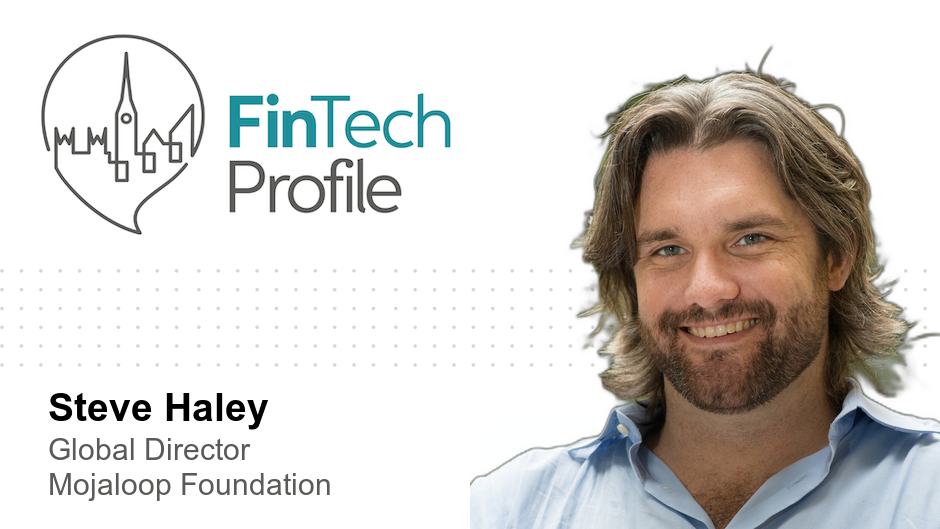
Today we're delighted to speak with Steve Haley, Global Director of the Mojaloop Ecosystem at The Mojaloop Foundation. Based in Rwanda, Steve brings a unique perspective shaped by his career in the US Army, humanitarian assistance in conflict zones, and impact investing across the Middle East. In this interview, he shares insights on building inclusive payment infrastructure, the importance of digital sovereignty, and why payments should be treated as a commodity rather than a revenue centre.
My questions are in bold - over to you Steve:
Who are you and what's your background?
I am Steve Haley and I started my career as an officer in the US Army, then moved into humanitarian assistance in conflict zones, and later worked in impact investing and equity venture capital, mostly in the Middle East. Through those experiences, I became really interested in the challenges around economic development and nation-building, particularly in countries going through major transitions.
Over time, I realised that without systemic infrastructure-level fixes, many of the projects I worked on would struggle to have lasting impact, especially in areas like financial inclusion. So much of the work in that space is one-off projects, but real change requires sustainable national infrastructure.
Most of my past roles involved bringing together a wide range of stakeholders, from governments to business leaders, to align on a single goal, whether in conflict zones or in corporate and public sectors. Bringing that experience into the payments and digital identity world has been a natural fit, helping me tackle complex challenges where coordination, infrastructure and long-term sustainability really matter.
What is your job title and what are your general responsibilities?
I am the Global Director of the Mojaloop Ecosystem, based in Rwanda. My role is to grow and strengthen the global Mojaloop community by ensuring the ecosystem develops in a balanced and sustainable way. This involves working closely with both the organisations that implement Mojaloop technology, such as system integrators, and the institutions that adopt it, including central banks and hub operators.
A key part of my responsibility is making sure these two groups grow in tandem. If there are too many implementers and not enough adopters, there are fewer commercial opportunities for partners. Conversely, if adoption outpaces implementation capacity, costs can rise and organisations have fewer providers to choose from. My role is to foster a healthy, competitive ecosystem that gives adopters access to high-quality implementation partners while creating sustainable opportunities for those delivering Mojaloop solutions. Ultimately, my focus is on ensuring the ecosystem continues to grow in a way that benefits all participants and supports greater financial inclusion around the world.
Can you give us an overview of your business?
At its core, Mojaloop Foundation exists to support the development of an equitable and inclusive global payments system. We are a non-profit that maintains free, open-source payments software and community infrastructure as public goods, enabling countries and providers to build interoperable digital financial systems that work for everyone.
Unlike traditional venture-backed technology companies that prioritise rapid scale and shareholder returns; our model is deliberately mission-led. We focus on enabling and strengthening local payment ecosystems rather than extracting value from them. Our goal is not to create a single dominant platform, but to help build sustainable, locally rooted industries that support financial inclusion and long-term economic growth.
Our core product is Mojaloop, an open-source payments platform that enables real-time, interoperable digital transactions between banks, mobile money providers, merchants, governments, and other digital financial services providers. By removing technical and commercial barriers, Mojaloop makes it easier for underserved communities to access and use digital financial services.
We work closely with regulators, governments, NGOs, and digital financial services providers across Africa and other emerging markets, focusing on regions where interoperable payments can have the greatest impact. Alongside platform development, we convene the global payments community through events, training and collaborative forums to share best practice and accelerate adoption. Our work is overseen by a diverse Technical Governing Board, ensuring strong governance and continuous innovation. This structure helps align our technology, community and mission.
If the ecosystem we support grows into a billion-dollar industry, we see this as a success but only if that value is widely distributed. By helping create thousands of local businesses and entrepreneurs, rather than one global winner, we generate a far greater economic and social multiplier effect. This alignment between purpose and operating model ensures that impact is embedded in everything we do, rather than treated as an afterthought.
Tell us how you are funded?
We are a non-profit, funded by mission-aligned philanthropic and corporate partners who take a long-term view of financial inclusion. Our primary funders include The Gates Foundation and Google, both of which have supported us from the early stages and understand that building and scaling national payments systems requires sustained, long-term investment. We have been fortunate to work with funders who prioritise long-term impact over short-term outputs and whose values closely align with our mission.
What's the origin story? Why did you start the company? To solve what problems?
Mojaloop was created to address a growing gap in the global payments market: the need for interoperable, instant payment systems that could serve everyone, particularly those in emerging markets who were being left out of traditional financial infrastructure.
The original vision behind Mojaloop was to build a payment platform that could connect a much wider range of financial service providers, beyond just traditional banks. At the time, many commercial payment systems were designed primarily for large, urban banks that resembled Western banking models. However, in many emerging markets, the people most in need of digital financial services were being served by non-bank providers such as mobile money operators, savings and credit cooperatives, microfinance institutions and fintechs. The existing infrastructure was not designed to connect these organisations effectively.
Mojaloop was initially developed to demonstrate that there was a different way to build payment infrastructure - one that was more inclusive and better suited to the needs of emerging economies. Over time, however, the open-source nature of the platform became one of its most important differentiators.
Many countries were increasingly frustrated by vendor lock-in, where they were dependent on proprietary technology providers and unable to easily adapt systems to their own needs. Mojaloop's open-source model gives countries greater ownership and control over critical digital infrastructure, allowing them to make decisions based on their own priorities rather than being constrained by external providers.
For me, that principle of digital sovereignty is one of the most powerful aspects of Mojaloop. It is about enabling countries to build payment systems that they own, control and can continue to develop for the long term - creating more inclusive financial ecosystems that work for their citizens.
Who are your target customers? What's your revenue model?
Mojaloop's primary customers are national payment system operators - typically central banks or national switch operators - that use the technology to enable money to move seamlessly between different financial institutions within a country.
However, the Mojaloop ecosystem extends beyond the organisations directly operating the platform. A key part of my role is ensuring that all sides of the ecosystem can grow together. This includes the adopters, who are the organisations using Mojaloop to deliver national payment infrastructure, as well as the implementers, such as system integrators, who provide the expertise and services needed to deploy and maintain these systems.
Both groups are essential to the long-term success of the ecosystem. We need enough adopters to create meaningful opportunities for implementers, while ensuring there is enough implementation capacity and competition to give adopters choice, value and high-quality support.
Beyond these core groups, national payment systems rely on a wider network of organisations providing complementary services, including fraud prevention, customer redress mechanisms, cross-border payments and foreign exchange solutions. These adjacent providers are also an important part of the Mojaloop ecosystem.
Our long-term vision is to create a sustainable ecosystem where adopters, implementers and service providers can all generate value and revenue through Mojaloop implementations. As the ecosystem matures, we expect these participants to contribute to the ongoing sustainability and development of the Mojaloop Foundation and the open-source codebase that underpins it.
If you had a magic wand, what one thing would you change in the banking and/or FinTech sector?
If I had a magic wand, I would change the way the banking and fintech sectors think about payments. We believe that moving money from one account to another should be treated as a commodity, with the focus on making transactions as efficient and affordable as possible.
The biggest shift would be moving away from viewing payments primarily as a revenue centre and towards being a cost for them to best serve their customers. Then banks and fintechs can focus on reducing the cost of every transaction, rather than maximising revenue from each payment, they can create more accessible and inclusive financial ecosystems.
That change in mindset would encourage greater collaboration across the industry to find new ways to drive down costs, improve efficiency and make digital payments available to more people. Ultimately, payments should be a seamless, low-cost utility that supports economic participation, rather than a barrier to it.
What is your message for the larger players in the Financial Services marketplace?
My message to the larger players in the financial services industry is simple: it's time to rethink the role of payments. Moving money should be viewed as a core customer service, not primarily as a revenue stream. The institutions that succeed over the next decade will be those that make payments faster, cheaper and more seamless, while creating value through lending, data-driven services and innovation.
That shift needs to start at the top. CEOs, CTOs, CIOs and boards would need to set objectives that prioritise customer satisfaction, operational efficiency and long-term digital growth over short-term transaction revenue. Technology should be used to continually reduce the cost of payments, while the data generated by increased transaction volumes can unlock new opportunities to better serve customers and develop new products.
Most importantly, financial institutions need to take a longer-term view. Investing in low-cost, interoperable payment infrastructure is not about improving the next quarter's earnings; it is about building the foundations of a stronger digital economy that will benefit banks, businesses and consumers for years to come.
Where do you get your Financial Services/FinTech industry news from?
I get most of my financial services and fintech news through LinkedIn. Rather than following lots of individual commentators, I tend to follow organisations that are shaping the industry and sharing insights on payments, financial inclusion and digital infrastructure.
Some of the sources I regularly turn to include AfricaNenda, SWIFT and the Bank for International Settlements (BIS), all of which provide valuable perspectives on developments in the instant payments ecosystem.
Can you list 3 people you rate from the FinTech and/or Financial Services sector that we should be following on LinkedIn, and why?
Mohamed El-Erian is someone I enjoy following because he combines insightful analysis of the global economy with thoughtful personal commentary, making his content both informative and accessible.
I follow Robert Karanja a lot. He's regularly posting about my favourite topic - sovereignty on domestic digital public infrastructure and highlighting the people who are championing the cause.
I also find a lot of the things that Pat Patel likes or shares really resonate with me, so the LinkedIn algorithm seems to keep serving me content with his name attached to it.
What FinTech services (and/or apps) do you personally use?
One of the fintech services I use most is Wise, particularly for transferring money from the United States to Rwanda. The transparency, speed and overall user experience are significantly better than what I have experienced through traditional bank transfers, making it a great example of how fintech can simplify cross-border payments.
In Rwanda, I regularly use an app called Nokanda, which improves the experience of using USSD-based services. Rather than navigating multiple USSD menus, the app provides a simple, intuitive interface that generates the correct USSD commands in the background. It makes services such as mobile money, bill payments and government transactions much easier to access, particularly on a smartphone.
Before moving to Rwanda, I also lived in India, where I was a regular user of Google Pay connected to UPI. It remains one of the best digital payments experiences I have had, combining speed, simplicity and reliability. I would love to see that kind of user experience become more widely available in other markets, including those deploying Mojaloop.
If there is one area where I think there is still room for improvement, it is the user experience offered by many traditional banking apps. Fintech companies have raised expectations around simplicity and convenience, and banks will need to continue investing in their digital experiences to meet those evolving customer expectations.
What's the best new FinTech product or service you've seen recently?
Two of the most exciting fintech developments I have seen recently are the launches of national payment systems in Guinea and Liberia.
The first is NimbaPay in Guinea, which has significant potential given the strong alignment and support it has received from both the government and private sector. National payment systems like this can play a transformative role in expanding digital payments, improving financial connectivity and creating new opportunities across the economy. I am very interested to see how NimbaPay develops as adoption grows.
I would also highlight Pay Na-Na in Liberia, which has already had a meaningful impact on the way people are able to make payments and transact. In a relatively short period of time, it has continued to expand the number of connected institutions and the range of use cases available to customers.
What excites me about both examples is that they demonstrate the power of locally owned, interoperable payment infrastructure to support financial inclusion and economic growth. These platforms have the potential to reshape how people and businesses access and use digital financial services.
As a disclaimer, I should say that both of these products are built on Mojaloop technology!
Finally, let's talk predictions. What trends do you think are going to define the next few years in the FinTech sector?
Over the next few years, I believe the biggest trend in fintech will be the transformation of cross-border payments. While there is significant discussion around technologies such as central bank digital currencies (CBDCs), stablecoins and blockchain, I think the most immediate and tangible impact will come from making international payments faster, cheaper and more accessible by intelligently connecting new domestic inclusive instant payments systems together.
We are already seeing a major shift among leading organisations such as SWIFT and Visa towards leveraging existing domestic payment rails to enable cross-border transactions. Rather than building entirely new infrastructures, the focus is increasingly on connecting national payment systems in a way that delivers a seamless international payments experience.
As this continues to evolve, I expect cross-border payments to become significantly faster and lower cost, enabling individuals and businesses to move money whenever they need to, rather than waiting to batch transactions because of cost or complexity. That has the potential to unlock greater trade, improve financial inclusion and make the global movement of money as simple as making a domestic payment.
Many thanks to Steve for taking the time to share his insights with FinTech Profile. You can learn more about The Mojaloop Foundation on their website.