Michelle Stewart, Head of Finance, Nous
Michelle Stewart shares how AI is democratising financial support and why fintech should shift the burden of money management away from consumers.
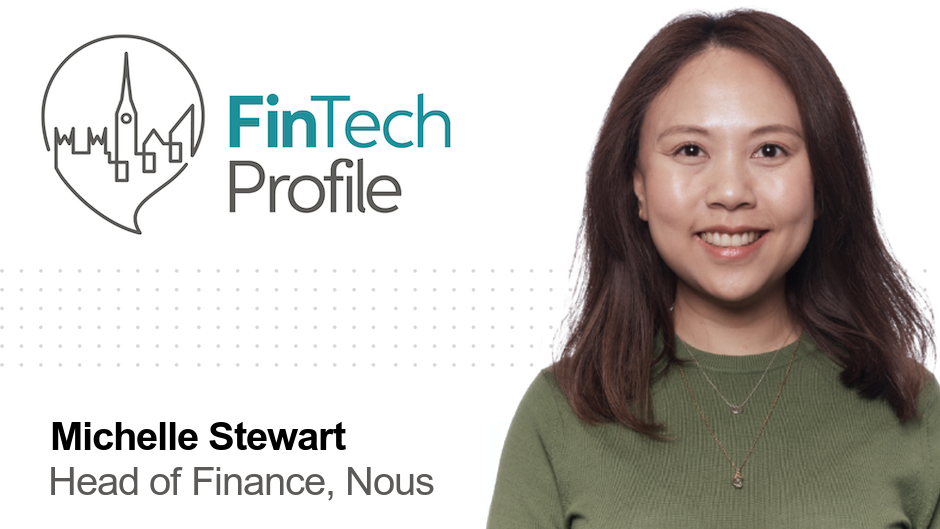
Today we're delighted to speak with Michelle Stewart, Head of Finance at Nous, an AI money-saving agent helping UK households automatically reduce their essential bills. With a background spanning investment banking, corporate development at Arm, and now fintech, Michelle brings a unique perspective on how AI can democratise financial support that's historically been reserved for the wealthy.
My questions are in bold - over to you Michelle:
Who are you and what's your background?
After studying Engineering at university, I built a career advising, investing in and operating technology businesses.
I started in investment banking, advising technology companies ranging from Series B/C businesses to large multinational conglomerates across EMEA and North America. Working with some of the world's most ambitious technology businesses gave me a front-row seat to how great companies are built, funded and scaled. But after six and a half years, I found myself craving more direct operational involvement.
That led me to corporate development at Arm, where I combined the M&A and venture investment work I was already familiar with more varied strategic projects and partnerships. Among other things, I supported the proposed $40 billion acquisition of Arm by Nvidia and helped launch Deeptech Labs, an accelerator and venture capital fund supporting early-stage deeptech companies.
It was a highly rewarding experience, but the engineer in me wanted to move closer still to the actual building of businesses. Advising and investing in companies gives you a privileged view at an important moment in their lifecycle, but operating inside a startup means living with the decisions and helping shape what happens next. So I jumped in with both feet, building and leading finance teams at venture-backed technology businesses including Qogita and Engine by Starling, before joining Nous earlier this year.
In many ways, fintech feels like a natural culmination of my experience. My engineering background helps me understand the technology and engage with how products are actually built, while my financial experience allows me to assess the commercial implications. Bringing those perspectives together helps me look at decisions holistically, rather than purely through a financial lens, and ultimately contribute to better, more impactful outcomes.
What is your job title and what are your general responsibilities?
I'm the Head of Finance at Nous. My role is to help the company understand where it is, where it is going and how best to use its resources to get there. That means working closely with our product, operations and growth teams on everything from strategy and fundraising to customer unit economics and hiring decisions.
If we are considering a new product, partnership or go-to-market channel, my job is not simply to tell the team what it will cost. It is to understand how it could create value, challenge the assumptions we are making, identify the evidence we should look for as we develop it and track its performance over time.
I also oversee the financial foundations that allow the business to operate effectively, including planning, reporting, cash management, payroll, payments and controls. In a startup, the strategic and operational aspects of finance are closely connected. I may spend part of the day thinking about our long-term funding requirements and another part making sure the immediate mechanics of the business are running properly.
At our stage of growth, everyone wears multiple hats, and I am no exception. Alongside finance, I am also responsible for much of the people, legal and company secretarial work that comes with building and scaling a business.
Ultimately, my responsibility is to bring financial discipline and commercial thinking to our decision-making without slowing down the pace and experimentation that an early-stage technology company needs.
Can you give us an overview of your business?
Nous is an AI money-saving agent that helps households automatically reduce the cost of their essential bills and everyday spending. Nous has a really clear purpose - people shouldn't have to spend hours comparing tariffs, negotiating with suppliers or worrying whether they're overpaying just to keep on top of household finances.
The great thing about Nous is we don't just tell customers what they should do. Using agentic AI, Nous manages routine spending on their behalf, identifying opportunities to save money, finding better deals and handling interactions with suppliers. We think that's a fundamental shift from traditional budgeting apps or comparison websites, which rely on consumers taking action themselves.
It's a model that's clearly resonating. Since emerging from Beta, we've seen rapid growth, with households across the UK increasingly trusting Nous to manage their household spending. Ultimately, we're helping people save both money and something that's becoming just as valuable: time and peace of mind.
Tell us how you are funded?
We're venture-backed, having raised a $9 million seed round led by Mosaic Ventures alongside more than 65 experienced founders and technology leaders. Their investment has allowed us to accelerate our mission of building a money-saving AI agent.
What's the origin story? Why did you start the company? To solve what problems?
Like many great ideas, Nous started with a moment of frustration. Greg Marsh, our founder, spent hours trying to sort out a problem with his energy bill just as he and his wife were about to welcome their second child. It made him realise how much time and mental energy households spend staying on top of bills, contracts and renewals, often simply to avoid paying more than they should.
That experience raised a bigger question: why was so much of this still falling on consumers? Rather than building another comparison site or budgeting app, Greg set out to build a service that could take responsibility for the work itself. That's how Nous was born.
Who are your target customers? What's your revenue model?
Our primary customers are busy households who don't have the time or headspace to spend hours on jobs like comparing tariffs, switching providers and keeping on top of household bills. Anyone can use Nous for free, while households that want unlimited managed services, cash rewards and additional support can upgrade to Nous Premium for a monthly subscription.
If you had a magic wand, what one thing would you change in the banking and/or FinTech sector?
I would shift more of the burden of managing money away from consumers and onto the financial services designed to support them.
Historically, proactive financial support has largely been reserved for the wealthy, who can rely on advisers and other professionals to monitor their finances, identify opportunities and manage the administration on their behalf. Everyone else is largely expected to do it all themselves. Too many products still rely on customers continuously monitoring their accounts, comparing options, interpreting complex information and remembering to take action at the right time. As a result, people are often penalised for being busy or overwhelmed, while businesses benefit from inertia.
Technology, and agentic AI in particular, has the potential to democratise that kind of support by giving everyone a smart financial assistant in their pocket. I'd like to see fintech companies use it to empower customers without assuming they want to become experts at managing every aspect of their finances. Most people do not want more reminders, dashboards or alerts. They want tools that give them greater visibility and control, help them understand their options and, where they choose, take action on their behalf.
This gives us the opportunity to combine informed decision-making with practical support. The aim should not be to remove customers from the process, but to give them the right information, recommendations and level of involvement for their needs, while automating the administrative burden around them. If I could change one thing, it would be to make that kind of proactive, personalised and customer-aligned support the norm rather than a privilege.
What is your message for the larger players in the Financial Services marketplace?
My message would be to embrace collaboration. Larger players do not need to build every customer solution themselves.
Established providers bring scale, infrastructure and deep industry expertise, while fintech companies can focus intensely on particular customer problems and develop new ways to solve them. By working together, we can combine those strengths and bring genuinely useful innovation to customers more quickly.
Ultimately, we all serve the same people, so we should be looking for ways to make their lives easier, give them better value and build greater trust in the industry together. The businesses that succeed will be those that continually earn their customers' loyalty by delivering products and experiences they actively value.
Where do you get your Financial Services/FinTech industry news from?
The Financial Times is my main source for broader financial services and capital markets news. I also read Sifted for its coverage of European startups and venture capital, while TechCrunch gives me a more global view of the technology and startup ecosystems. This Week in Fintech and Fintech Insider are also particularly useful for keeping abreast of developments across the sector.
However, I try not to restrict myself too narrowly to fintech. Developments in AI, product, consumer behaviour, regulation and the wider venture market all have a direct bearing on what we are building at Nous.
When something catches my attention and I want a deeper perspective, I tend to seek out specialist written analysis, often through platforms such as Substack, as well as longer-form conversations with people who understand the issue firsthand. Some personal favourites across those formats include Lenny's Newsletter and Podcast, Digital Native, Mostly Metrics and Acquired, alongside content produced by various venture capital firms.
These days, I increasingly consume longer-form content through podcasts, although I still turn to Substack for thoughtful written analysis. Both formats allow for a much deeper exploration of the decisions, trade-offs and challenges behind a business than a typical news article can provide.
Finally, LinkedIn adds a useful real-time perspective, particularly when founders and operators share what they are learning and the problems they are solving firsthand.
Can you list 3 people you rate from the FinTech and/or Financial Services sector that we should be following on LinkedIn, and why?
There are so many people I rate highly across the industry, but three who regularly share interesting perspectives on LinkedIn are:
Benedict Evans, an independent technology analyst who cuts through the hype and explores what developments in AI, technology and consumer behaviour mean for businesses and their customers.
Ruth Handcock, former CEO of Octopus Money, for her perspectives on making personalised financial guidance more accessible through technology.
Leda Glyptis, whose candid insights shed light on the realities of delivering transformation across banking and fintech.
Many thanks to Michelle for taking the time to share her insights with FinTech Profile. You can learn more about Nous on their website.