Doug Morris, CEO, Sharesight
Doug Morris discusses how Sharesight helps investors track portfolios across brokers and markets, the challenges of fragmented data, and why financial understanding matters more than access.
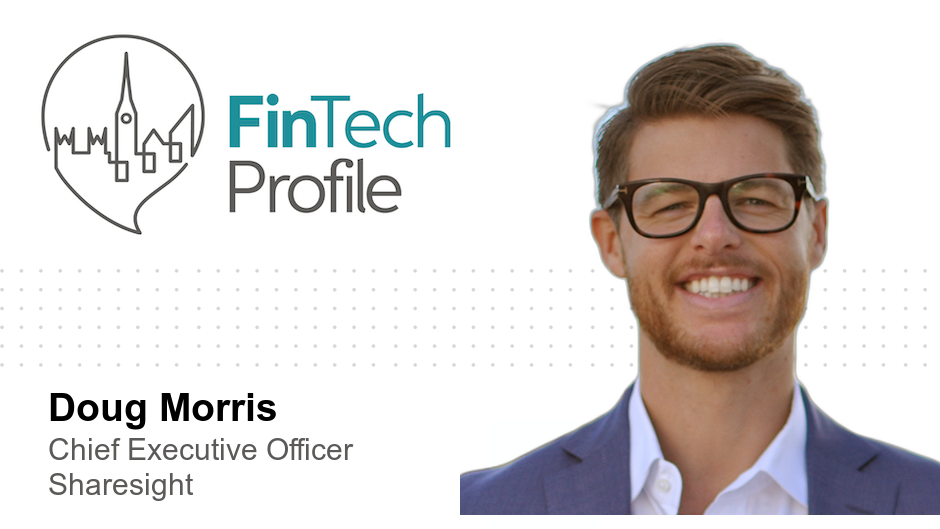
Today we're delighted to speak with Doug Morris, Chief Executive Officer at Sharesight, an online portfolio tracking and reporting platform serving over 500,000 investors worldwide. Doug shares his journey from Morningstar to leading Sharesight, the problems the platform was created to solve, and why the fintech industry needs to focus less on producing more data and more on helping people understand what they already have.
My questions are in bold - over to you Doug:
Who are you and what's your background?
I'm Doug Morris, Chief Executive Officer of Sharesight. I began my career at Morningstar in Chicago, working in project management within its investment management business. I later moved to Sydney, where I worked across business development, adviser and institutional relationships, product management, and global research distribution.
I joined Sharesight as General Manager in 2013 and became CEO in 2015. Most of my career has focused on investment data, financial technology and helping people make better sense of their portfolios.
What is your job title and what are your general responsibilities?
As CEO, I am responsible for setting the strategic direction of the business and making sure we continue solving meaningful problems for investors and portfolio-facing professionals.
That involves working closely with our teams as we expand in key markets, strengthen our broker and platform integrations, develop our professional offering and build greater awareness of the importance of accurate portfolio reporting.
Can you give us an overview of your business?
Sharesight is an online portfolio tracking and reporting platform designed to give investors and professionals a complete picture of their investments.
It brings performance, income and tax information together across brokers, markets, currencies and asset types. Trades, dividends and corporate actions can be recorded automatically through hundreds of integrations and users can add investments manually or import them through spreadsheets.
Today, more than 500,000 investors use the platform to track over 700,000 stocks, ETFs and funds. By bringing fragmented records into one place, we help people understand their true performance, monitor investment income and spend less time managing spreadsheets.
How are you funded?
Today we're a profitable company. When we started the business, we were mainly founder bootstrapped. We also executed two customer lead funding rounds in 2015 and 2020. As a platform serving investors, we thought it made sense to involve our customers, many of whom are HNW, experienced investors in their own right.
What's the origin story?
The idea came from a frustration familiar to many investors.
Father-and-son team Tony and Scott Ryburn were managing investments across different brokers and found themselves relying on spreadsheets and manual calculations to work out how the overall portfolio was performing. They could see there was a need for an independent platform capable of bringing those holdings together in one place.
This idea became Sharesight: a simpler way for investors to track their portfolios and understand what was really driving their returns.
Why was the company started?
Investing was becoming easier, but keeping track of investments was not. People could buy shares and funds through a growing number of brokers and platforms, yet monitoring everything often meant piecing together broker dashboards, registry records, spreadsheets and manual calculations. Each source showed only part of the story.
The aim was to give investors one reliable place to see what they owned, how their investments were performing and what income they were generating across the whole portfolio.
What problems was it created to solve?
The core problems were fragmented data, time-consuming administration and incomplete performance reporting. When investments are spread across several brokers, markets and currencies, it becomes difficult to calculate returns accurately. Capital growth is only part of the picture; dividends, fees and currency movements can all have a significant effect on the final result.
By consolidating that information and automating much of the record-keeping, the platform gives investors, accountants and advisers a more accurate understanding of performance and income without relying on endless manual calculations.
Who are your target customers?
We work with self-directed investors and portfolio-facing professionals, including accountants, financial advisers and family offices.
They are often managing investments across multiple brokers, markets or asset types and need a reliable way to bring everything together. The platform helps them assess performance, monitor income, prepare tax reports and identify areas of concentration or diversification across a portfolio.
What's your revenue model?
We operate through a tiered subscription model, with plans for both individual investors and professional users. Individual customers can choose a plan based on the number of portfolios, holdings and reporting features they need, including a free entry-level option.
Our professional offering is designed for accountants, advisers and other teams managing investment data and reporting across multiple clients. Customers can move between plans as their needs change, without being tied into a long-term contract.
If you had a magic wand, what one thing would you change in the banking and/or FinTech sector?
I would close the gap between access to financial products and genuine financial understanding. It has never been easier to open an account, buy an investment or access huge amounts of financial data.
Yet many people still struggle to answer some very basic questions: What do I actually own? How is my overall portfolio performing? What is driving my returns?
The industry should focus more heavily on helping people interpret their financial information and understand the outcomes. Good financial technology should provide clarity, context and confidence rather than simply presenting users with more data. That is the problem we are trying to solve.
What is your message for the larger players in the Financial Services marketplace?
Think more carefully about what happens after a customer gains access to an investment product. Modern investors often hold assets across several providers, markets and currencies, but most financial platforms only show what sits within their own ecosystem. That makes it difficult for customers to understand their overall performance, income, fees, diversification and exposure to currency movements.
Greater interoperability and better data flows would allow the industry to give people a more complete understanding of their financial position. Collaboration between brokers, investment platforms and independent reporting providers can lead to better customer outcomes and stronger long-term engagement.
Where do you get your Financial Services and FinTech industry news from?
The FT, WSJ, Bloomberg, and the Economist for financial news. For tech, it's mostly the main tech news platforms like the Verge, Wired, Y Combinator, or Stratechery.
Can you list three people from the FinTech and/or Financial Services sector that we should follow on LinkedIn, and explain why?
Alex Johnson for banking and fintech business models
Ben Thompson for big tech and deep dives
Jamin Ball for SaaS
What FinTech services and/or apps do you personally use?
Xero for accounting (business and personal)
Wise for FX and global travel, payments
Morningstar for investment research
What's the best new FinTech product or service you've seen recently?
Monarch for personal budgeting, and shout out to Revolut, which just launched in Australia!
What trends do you think will define the next few years in the FinTech sector?
Portfolio complexity will continue to increase. Investors now have much easier access to global markets, ETFs, alternative assets, multiple currencies and a growing number of investment platforms.
That creates more choice, but it also makes portfolios harder to monitor and understand. Broker-specific dashboards and spreadsheets will become increasingly inadequate for people trying to assess their complete financial position.
We will therefore see greater demand for consolidated reporting and more useful investment intelligence. Investors will expect clearer information about income, fees, currency movements, diversification, overlapping exposures and the factors driving their returns.
Artificial intelligence will also make financial analysis more accessible, but its usefulness will depend on the quality and completeness of the underlying data. The next stage of fintech growth will be less about producing more information and more about turning fragmented financial data into reliable, contextual and useful understanding.
Many thanks to Doug for taking the time to share his insights with FinTech Profile. You can learn more about Sharesight on their website.