Sylvie Boucheron-Saunier, CRO Payments, Finastra
Sylvie Boucheron-Saunier discusses intelligent payments, the shift from customisation to modernisation, and how AI is transforming financial services.
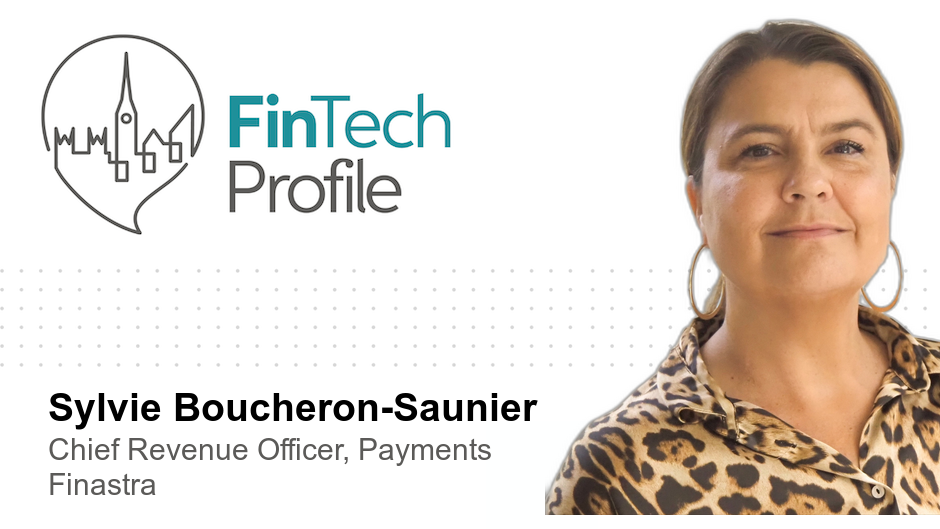
Today we're delighted to speak with Sylvie Boucheron-Saunier, Chief Revenue Officer for Payments at Finastra. With over a decade of experience transforming global payments markets and a passion for financial inclusion, Sylvie shares her insights on the evolution from faster payments to intelligent payments, the challenges of legacy infrastructure, and why modernization doesn't have to mean rip and replace.
My questions are in bold - over to you Sylvie:
Who are you and what's your background?
I'm Sylvie Boucheron-Saunier, Chief Revenue Officer for Payments at Finastra, where I oversee global revenue growth initiatives. I have an extensive background in technology and a deep understanding of the financial services and payments industry.
Before joining Finastra in 2020, I spent ten years at ACI Worldwide, a leading real-time payments solutions provider, where I progressed through a variety of leadership roles, becoming an expert at rebuilding and transforming complex regional and global markets.
My journey into FinTech was driven by an enthusiasm for innovation and a belief in technology's ability to create positive social impact. I have always been passionate about helping shape the future of digital payments while fostering greater inclusion, both for customers and for talent within our industry. As such, I support various mentorship and diversity initiatives.
Outside of work I also enjoy dedicating time to causes focused on financial inclusion and economic empowerment. I supported NanoBNK, a FinTech providing digital banking solutions for unbanked populations in Africa and served as a Board Member of the Anglo-African Group. I am also one of the co-founders of a non-profit organization that helps single mums in Nigeria. Those roles reflect my commitment to using technology to help reduce inequalities and expand access to financial services in underserved communities.
Joining Finastra was an exciting opportunity to help shape the future of payments on a truly global scale. The breadth of the organization, its deep relationships with financial institutions and commitment to innovation made it a natural next step in my career.
What is your job title and what are your general responsibilities?
I'm the Chief Revenue Officer for the Payments business at Finastra, where I lead the global go-to-market strategy and execution. My primary focus is driving revenue growth around the world - a double-digit growth for a business that delivers several hundreds of millions of dollars every year.
This involves overseeing prospects acquisition, customer retention and accelerating time to revenue for both existing and new business.
Additionally, I spearhead strategic initiatives aimed at optimizing revenue streams and delivering a superior customer experience.
Can you give us an overview of your business?
Finastra is a leading provider of mission-critical financial services software, with a strong focus on Lending and Payments. Our innovative solutions, such as Loan IQ and Global PAYPlus, help financial institutions move money seamlessly, improve lending workflows, and deliver great client experiences.
Finastra combines deep industry expertise with secure, reliable, and scalable technology. We enable customers to modernize operations, accelerate innovation, and unlock growth in today's rapidly evolving financial landscape. Our reputation is built on delivering solutions that improve efficiency and enhance customer experience.
Our modern Payments solutions provide secure, efficient and innovative workflows for cross-border and domestic transactions. We serve a diverse range of clients, helping them modernize payments processing, expand their reach, and accelerate digital transformation. Our solutions help to move $7 trillion in transactions every single day.
Tell us how you are funded?
Finastra is a privately held company owned by Vista Equity Partners.
What's the origin story? Why did you start the company? To solve what problems?
Finastra was formed in 2017 through the combination of Misys and D+H, bringing together more than 180 years of financial technology expertise. The company was created to help financial institutions modernize across Payments, Lending and Banking Services through more open, flexible and scalable technology.
This vision remains at the heart of our mission to Innovate Finance Together. We believe the best financial outcomes are achieved through collaboration - helping institutions, fintechs and partners work together to deliver innovative services and better customer experiences.
Who are your target customers? What's your revenue model?
Our core solutions serve a broad spectrum of financial institutions, from high-tier banks and financial institutions (FIs) to mid-tier FIs and corporates. Our revenue is primarily derived from a combination of licensing and subscription fees across our suite of software solutions. We offer flexible deployment options tailored to meet individual client needs, ensuring long-term value and scalability.
If you had a magic wand, what one thing would you change in the banking and/or FinTech sector?
If I had a magic wand, I would eliminate the industry's dependence on highly customized, outdated technology systems. For decades, banks have built complex, tailored platforms which often hinder innovation, drive costs and make transformation unnecessarily difficult. Continuing to rely on fragmented environments risks falling behind in a rapidly evolving financial landscape, where removing this barrier would enable banks to focus on delivering better customer experiences and bringing innovative solutions to market faster.
What is your message for the larger players in the Financial Services marketplace?
Modernization is essential, but it doesn't have to mean rip and replace. Many financial institutions are burdened by decades of customizations and technology layers that increase operational risk and slow innovation. My advice to CEOs and CIOs is to leverage their technology partners more strategically, simplify where possible, and pursue modernization in a way that delivers business value incrementally while building a more resilient and future-ready bank.
Where do you get your Financial Services/FinTech industry news from?
The American Banker and Finextra are great sources for industry news and developments across the wider fintech landscape. However, some of the most valuable insights come directly from conversations with banks, fintechs, and ecosystem partners. Those discussions often reveal where the industry is heading before it makes the headlines.
Can you list 3 people you rate from the FinTech and/or Financial Services sector that we should be following on LinkedIn, and why?
Scarlett Sieber - Chief Strategy Officer at Money20/20. One of the most influential voices connecting banks, fintechs, investors, and emerging technologies, Scarlett consistently brings thoughtful perspectives on where financial services are heading. Scarlett is also a long-time friend whose generosity and willingness to help others has always stood out to me.
Brett King - One of the leading futurists in financial services. Along with thinkers such as David Birch, he has helped shape industry thinking on digital banking, payments, AI, and the future of money. His perspectives challenge established assumptions and help leaders anticipate what comes next.
Anne Boden - Founder of Starling Bank and a pioneer of digital banking. Anne offers a valuable perspective on how technology can be used to transform banking while keeping the customer experience at the center.
Finally, let's talk predictions. What trends do you think are going to define the next few years in the FinTech sector?
The trend I'm watching most closely is the rise of intelligent payments. For decades, the industry's focus has been on making payments faster, cheaper and more seamless. Increasingly, the focus is shifting towards making them smarter. As AI becomes more deeply embedded across financial services, it has the potential to transform operations from fraud detection and compliance to customer service and operational efficiency.
The organizations that gain the competitive advantage here won't simply adopt AI, but will combine it with modern, flexible infrastructure. The ability to harness data, automate decision-making and continuously innovate will increasingly depend on having the right technology foundations in place. The next phase of fintech will be defined by more intelligent, proactive and seamless financial experiences.
Many thanks to Sylvie for taking the time to share her insights with FinTech Profile. You can learn more about Finastra on their website.