Andrea Remyn Stone, CEO, Zema Global
Andrea Remyn Stone discusses her journey to CEO of Zema Global, the company's vision for Decisioning Intelligence, and why probabilistic scenario modeling will reshape risk management in energy and commodities.
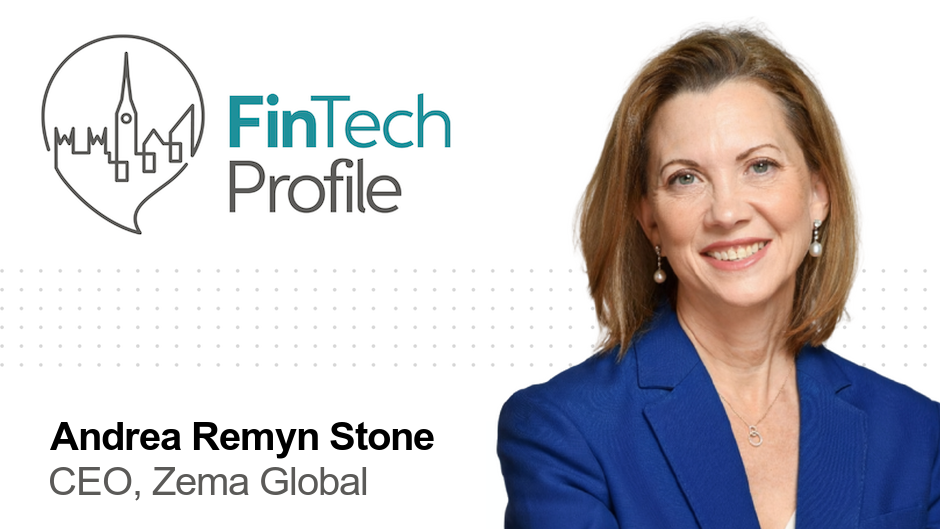
Today we're delighted to speak with Andrea Remyn Stone, CEO of Zema Global, a company helping energy, commodity and financial firms turn complex data into better business outcomes. With a career spanning trading desks, strategy roles at Bloomberg and senior leadership at LSEG, Andrea brings a unique perspective on how markets are evolving and why trusted, decision-ready data has never mattered more.
My questions are in bold - over to you Andrea:
Who are you and what's your background?
My career has never followed a straight line, and I've come to see that as a strength. Rather than a single path, it has been shaped by a few consistent themes: a love of building, a willingness to reinvent, a passion for driving transformation at scale, and a belief that great outcomes come from great teams.
The first is a love of building. I started in go-to-market management consulting before moving into dot.com advertising and digital technology, where I discovered how much I enjoyed creating businesses and putting technology to work for customers. That entrepreneurial instinct has stayed with me and has shaped my work in product development, new business incubation, and go-to-market strategy ever since.
The second is curiosity, and a habit of running toward the gaps in my knowledge rather than away from them. When the dot-com crash brought the company I worked for to its knees, I decided to deepen my understanding of finance and completed an MBA in finance at Wharton. That took me into convertible bond trading and equity research, and ultimately to the intersection of financial services, technology, and data, where I've spent the past thirty years. Along the way, I built expertise across market and reference data across the full latency spectrum from historical to ultra-low latency real time data, valuation, credit and derivatives, risk and portfolio analytics, and energy and commodities.
The third, and the one that defines me most, is driving change and transformation at scale. I contributed to the digital transformation of McGraw Hill/S&P after the dot-com crash and helped to turn around its wealth infotech and advisory business during the 2008 financial crisis. Later, I became Global Head of Strategy and Corporate Development at Bloomberg, where I led cross functional teams through a period of significant growth that included 13 acquisitions, multiple venture investments and building over $3bn in revenue through new business incubations. At Dealogic, I helped steer the company's sale to ION and the subsequent creations of ION Analytics, as well as the creation of ION Corporates through continued acquisitions in the ETRM and risk analytics space. At Refinitiv, as Chief Customer Proposition Officer, I helped integrate the business with London Stock Exchange Group and return the business to industry growth rates before becoming CEO of LSEG's Data and Analytics division. Across private, private equity-backed, and large public companies, the common thread has been leading organizations through complex, fast-paced change while growing revenue and margin and keeping customers at the center.
The fourth is people. I firmly believe that true leadership comes from empowering others to thrive and grow, and that leaders should be developed at every level. I'm passionate about coaching people to realize their potential and accomplish big, hairy, audacious goals they didn't think possible.
That combination of perspectives also shapes my board work. As a non-executive director at Xpansiv and PEI, I enjoy advising companies to consider where to place bets, how drive excellent execution and realize their respective visions, challenging assumptions and bringing a different lens to the decisions that matter most.
Today, I'm bringing everything I've learned about financial markets, data, technology, and building businesses to Zema Global. I'm especially drawn to companies whose purpose is to improve quality of life, work, and the environment, and I want to leave things better for my industry, my customers, and my teams.
The biggest lesson from my career is that you can't predict where you'll end up. I've had plenty of moments when I questioned what I was doing, but I've learned to embrace that uncertainty. I find ambiguity energizing because it creates the opportunity to shape something new.
What is your job title and what are your general responsibilities?
I'm CEO of Zema Global, where my responsibility is to set the strategic direction of the company and ensure we have the right people and capabilities to deliver on our ambitions.
We're operating at a particularly interesting moment for energy and commodities markets. Greater volatility, driven by geopolitical uncertainty, changing energy systems, and the rapid development of AI are fundamentally changing how organizations use data to understand and manage risk while capitalizing on opportunities. My job is to make sure Zema Global is positioned to help customers navigate those conditions, while building a business that can grow and innovate at scale.
Can you give us an overview of your business?
Zema Global operates at the intersection of energy, commodities, financial markets, and data and analytics technology. We help organizations make sense of enormous volumes of complex, fragmented data so they can make faster, better-informed decisions.
In today's market, where the complexity, volume, and speed of data is increasing, we focus on helping customers answer a fundamental question – what is my position, contract, or asset worth and how do I take action? Market prices, trading activity, weather forecasts, supply chains, and operational data can all sit in separate systems, updating at different speeds. Bringing that information together reliably in one foundation is a significant challenge.
Our offering connects four complementary areas: decision-ready data, curve and valuation analytics, enterprise risk and portfolio analytics, and advisory services. Together, these solutions help customers move beyond collecting and managing information to understanding their exposures, evaluating possible outcomes, and making decisions with greater confidence.
Over the past two years, we've strengthened that offering through acquisitions including Morningstar Commodity Data and cQuant.io, bringing together established market data capabilities with sophisticated asset valuation, portfolio and risk analytics.
By connecting these capabilities into a single platform, we're offering Decisioning Intelligence to our customers. It's about connecting trusted data directly to the analytics and systems businesses rely on to make critical decisions. In increasingly volatile and interconnected markets, that distinction really matters: having more information isn't necessarily an advantage. Having the right information, knowing you can trust it, and being able to act on it creates a tangible benefit. It's what we call a Decisioning Advantage.
Tell us how you are funded?
In 2024, I partnered with FTV Capital, a growth equity investor specializing in enterprise and financial technology, to invest in Zema Global and shape its next chapter, and became CEO as part of that shared vision. Together, we set out to expand internationally and build a stronger, more comprehensive platform for Decisioning Intelligence.
Having worked across publicly listed, privately held, and private equity-backed businesses, I've seen how important it is to have investors who understand the opportunities and the complexities of scaling a technology company. For me, the priority is always to build something with lasting value, and that starts with a deep understanding of what our customers need. Capital creates opportunities, but sustainable success comes from solving real problems for customers, with high-quality products and great people dedicated to getting it right. That's why we've connected the industry's highest-quality consolidated data model, enterprise data management, curve engine, and valuation models into a single platform that delivers Decision Intelligence.
What's the origin story? Why did you start the company? To solve what problems?
The business has its roots in ZE PowerGroup, established in 1995, and deeply respected as the industry's leading enterprise data management and curve analytics engine. It was created to solve a fundamental challenge: harmonizing fragmented data across energy and commodity asset classes and combining it with customers' own proprietary data and insight to deliver unique views of future market performance across any time series, from forward curves to options pricing and volatility surfaces. That challenge is even more relevant today.
Energy and commodity markets have always depended on vast quantities of data, yet that information comes from different providers, systems, and markets, each with its own formats and standards. Historically, organizations have spent enormous amounts of time collecting, cleaning, and reconciling information before they could even begin to analyze it. That creates inefficiency, but more importantly, it introduces risk.
At the same time, the market itself has changed. Decisions were once built on end-of-day analysis and set up for the day ahead. Today they're made throughout the day, driven by intraday, real-time, cross-commodity analysis, and the window between insight and action has narrowed dramatically.
Bringing together ZE PowerGroup, Morningstar Commodity Data, and cQuant into Zema Global unites three cross-commodity platforms into one consistent, decision-ready foundation. We connect the industry's best consolidated data model across asset classes, leading real-time, event-driven enterprise data and curve management, world-class asset valuation, and enterprise portfolio and risk analytics. By integrating these parts of the workflow and creating consistency across data and analytics, we reduce time to decision and give our customers the confidence to act quickly, mitigating risk and recognizing opportunity.
It all starts with data integrity, auditability, and governance. Four values sit at the center of everything we do: quality of the data; breadth across markets and asset classes; depth, meaning low latency and speed; and control, the governance to know data is accurate and auditable at any point in time.
The challenge we're addressing isn't just technological. Reliable energy matters to every part of the economy, and the decisions made by traders and energy companies ultimately affect businesses, communities, and consumers. Helping our customers make better decisions is a contribution everyone at Zema Global is proud to make.
Who are your target customers? What's your revenue model?
We primarily work with organizations operating across energy, commodities, and financial markets, including integrated oil and gas majors, utilities, energy producers and distributors, trading firms, financial institutions, and businesses managing complex commodity exposures. Our revenue model is primarily based on recurring subscriptions to our solutions.
Our customers include the top eight global banks trading energy and commodities, nine of the top 12 global oil and gas majors, eight of the top US utilities companies and eight of the top 10 commodities trading companies.
If you had a magic wand, what one thing would you change in the banking and/or FinTech sector?
I'd eliminate the assumption that more data automatically leads to better decisions. The real priority should be making data trustworthy, understandable, and actionable.
Financial services has invested heavily in technology, AI, and analytics, but many organizations still struggle with fragmented systems and data that isn't sufficiently governed or understood.
It's a problem I've encountered throughout my career, from trading desks to the executive offices of some of the world's largest financial data businesses. As we move toward increasingly autonomous systems, the risks of getting it wrong become much greater. A human analyst might spot an unusual number and question it, but an algorithm can process that same information instantly, potentially acting on a faulty assumption before anyone has recognized the problem.
I'd also encourage financial institutions to develop more energy and commodity instruments, securities, and liquid trading venues that allow market participants to hedge risk over longer time horizons. Today, liquidity is concentrated in a relatively short window, yet the race to secure energy and compute is driving dramatic growth in complex, long-duration contracts. These commitments would be far better served by liquid hedging instruments that cover the full lifecycle of the underlying asset.
What is your message for the larger players in the Financial Services marketplace?
Don't mistake your scale for an advantage if it prevents you from changing. I've spent much of my career working with large, established businesses, and I've seen firsthand what they're capable of when they combine their resources with a willingness to challenge conventional thinking. The challenge is that scale often brings complexity, and complexity can slow down the very decisions that should give these businesses an edge.
Start with the decisions you're trying to improve, not the technology you're trying to implement. Technology is enormously powerful, but successful transformation requires curiosity and teams equipped to rethink how things are done.
Be clear about where your edge truly lies, and partner for the rest. Every organization should assess honestly where it has proprietary skills and insight, and where it would benefit from the wisdom of the crowd that commercial products bring. Building everything in-house can feel like control, but it often creates proprietary technology debt that slows you down over time. The right partners fill capability gaps, help you keep pace with innovation, allow you to govern your intellectual property at enterprise scale, and let you benchmark your approach against industry practice. Fewer, scaled partners are critical to driving change at pace.
Volatility isn't going to abate, so the focus now must be on being prepared. Preparation means concentrating your own resources where you're genuinely differentiated and relying on trusted partners to strengthen everything around it.
Finally, let's talk predictions. What trends do you think are going to define the next few years in the FinTech sector?
Over the next few years, I expect to see a fundamental rethink of how financial institutions understand and manage risk in energy and commodities.
The recent crisis in the Strait of Hormuz is a powerful example, as what began as a disruption to energy shipments quickly exposed the connections between markets often think of as separate. Oil and LNG prices, shipping costs, insurance premiums, and even fertilizer supplies were all affected, with consequences extending far beyond the energy sector. For decades, we've relied on historical correlations to help us understand how markets behave and valued future investments using fundamental price curves built on deterministic expectations of supply and demand. That approach is no longer sufficient. Geopolitical events are increasingly exposing risks that traditional models were never designed to capture, revealing that markets that appear relatively independent can be closely interconnected, and creating a very different picture of exposure.
I believe this will accelerate a shift to probabilistic scenario modeling as best practice. Rather than relying on a single forecast, businesses will assess thousands of potential outcomes and understand both the range of possibilities and the likelihood of each. But probabilistic analysis is only as reliable as the data beneath it. The organizations that lead will be those that build on a decision-ready data foundation, one that is consistent, governed, and connected across asset classes, so they can model complex scenarios with confidence and act quickly when conditions change.
Many thanks to Andrea for taking the time to share her insights with FinTech Profile. You can learn more about Zema Global on their website.