João Moura, CEO and Co-Founder, Fraudio
João Moura discusses how Fraudio's unified transaction risk platform uses global network intelligence to stop fraud and improve approval rates across $2 trillion in annual transaction volume.
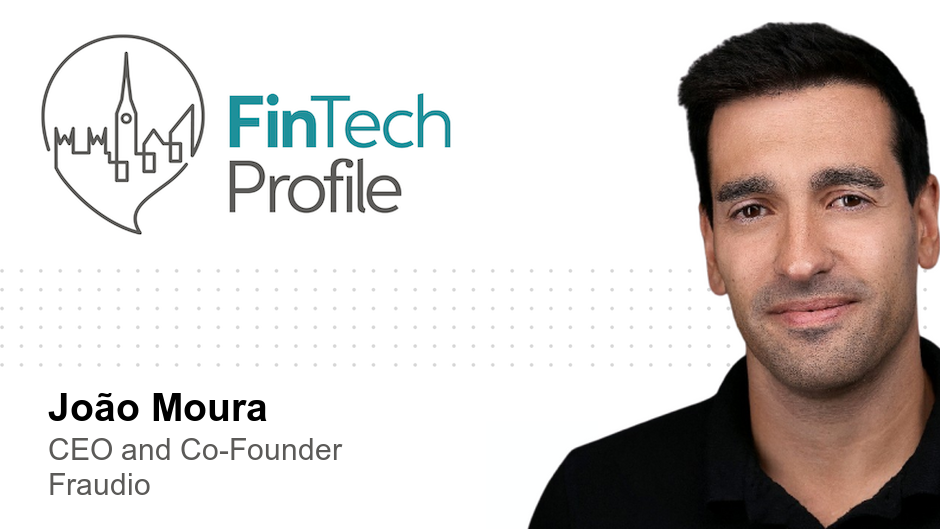
Today we're delighted to speak with João Moura, CEO and Co-Founder of Fraudio, a unified transaction risk platform that's protecting over $2 trillion in annual transaction volume. With fraud rising by 25% over recent years and false positives nearly doubling since 2020, João shares how network intelligence is transforming the fight against financial crime - and why isolated security tools are no longer enough.
My questions are in bold - over to you João:
Who are you and what's your background?
I am the CEO and Co-Founder of Fraudio. My professional background has always been rooted in the intersection of artificial intelligence and complex data systems. I started my career as an AI research engineer, spending several years working across both academia and industry, which included completing a PhD in Computer Science with a specific focus on AI.
Before launching Fraudio, I served as the Head of Data Science at Payvision. It was during my time there that I saw the reality of financial crime first-hand in the payments industry. I realised that legacy setups were fundamentally struggling to keep up with modern threats, which ultimately led me to believe there had to be a more efficient, scalable way to protect the financial system.
What is your job title and what are your general responsibilities?
As CEO and Co-Founder, my primary responsibility is guiding Fraudio's strategic direction and scaling our unified transaction risk platform globally. On a day-to-day basis, I focus on expanding our integrations with major processors and payment rails so that merchants or acquirers can easily access our network intelligence through the connections they already use.
I work closely with our team to broaden the platform's scope beyond standard fraud detection. A major focus of my role is ensuring we can help customers manage transaction risk across the entire payment journey, which includes improving payment approval rates and making sure real transactions flow smoothly and securely across the entire payment stack.
Can you give us an overview of your business?
Fraudio is a unified transaction risk platform built for the payments industry. We provide a single platform that helps acquirers, issuers, processors, fintechs, and merchants detect fraud, monitor merchant behaviour, and manage anti-money laundering (AML) compliance in one place. We deliver this through an API-first, fully SaaS infrastructure that fits directly into existing payment systems.
What makes us unique is our centralised, network-driven dataset. Traditional solutions look at data in isolated silos, but Fraudio delivers real-time contextual analysis across transactions, merchants, cards, and related entities. Today, our technology protects a global network that processes over $2 trillion in transaction volume annually. The system is highly effective; in a recent blind test against one of the world's top-tier global vendors, our intelligence controlled fraud while causing 40% fewer false positives.
Tell us how you are funded?
We recently raised a funding round led by Alea Capital Partners, with investment support from IMGA. This round follows a strong period of growth, driven by an increasing demand for risk prevention tools that can keep up with real-time and instant payment rails.
The funds are being used to fuel our international expansion as we look to scale our presence globally from our engineering and product roots. Practically, this means we are actively growing our commercial team to boost our sales and partnership capacity, while continuing to invest heavily in product development. Over the next 12 to 18 months, we plan to expand our AI detection capabilities to tackle emerging threats like mule account networks and fast-spend behavioural attacks, helping our partners reduce fraud losses and cut down the operational burden of chargebacks.
What's the origin story? Why did you start the company? To solve what problems?
Fraudio was born out of professional frustration from my time leading data science teams in the payment space. I witnessed firsthand how companies were reliant on either outdated rule-based systems that generated endless false alarms, or embarking on complex AI integrations that took six months just to set up.
Fraud is inherently a structural, interconnected network threat, yet almost every financial institution was looking to fight it using only the data they could see within their own isolated systems. Our latest proprietary data proves this, revealing that more than 90% of observed fraud events are tied directly to shared infrastructure, such as single IP addresses being connected to a massive number of different cards. We started Fraudio to level the playing field, using collective network intelligence to stop coordinated attacks before they hit the individual business.
Who are your target customers? What's your revenue model?
Our customers sit across the essential layers of global finance, including payment processors, acquirers, card issuers, and high-growth fintechs. However, we are increasingly focused on digital platforms, marketplaces, and payment facilitators that manage complex, layered shopping setups. Our data shows that transactions routed through these complex submerchant setups carry a fraud rate nearly five times higher than direct merchant transactions, creating huge blind spots for traditional risk tools.
Fraudio operates on an API-first, fully predictable SaaS revenue model where fees simply scale alongside our clients' transaction volumes. By aligning our pricing with their growth, we ensure our clients can expand safely without facing unpredictable, sky-high pricing structures or massive upfront software costs.
If you had a magic wand, what one thing would you change in the banking and/or FinTech sector?
I would remove the reliance on defensive fraud controls that treat security as a game of simply declining more transactions. Our data shows that the rate of false alarms across the industry has almost doubled; climbing from around 12% in 2020 to a massive 23.5% in May 2026 - which is heavily damaging legitimate sales for online businesses.
When fraud cases spike, financial institutions tend to hit the panic button. They turn up the heat on their legacy rules, which ends up blocking perfectly honest customer revenue. I would replace that fear-based approach with widespread, real-time precision, stopping the coordinated fraud networks early so that genuine customers can enjoy seamless shopping.
What is your message for the larger players in the Financial Services marketplace?
Our data shows that transactions where 3DS security was successfully passed still carried a 0.218% fraud rate - which is virtually identical to transactions where 3DS wasn't used at all. For C-level leaders of the world's largest banks, processors, and networks, this is a clear indication that you cannot hide behind basic cardholder authentication.
Criminal networks have adapted and checking transactions in isolation has reached its limits. Modernising your risk management no longer requires a complete tech overhaul, but it does mean moving past static rules. With API-first network intelligence, you can look beyond a single isolated payment to see the wider global context, drastically improving your approval rates from day one.
Where do you get your Financial Services/FinTech industry news from?
Finextra and The Paypers are arguably the two outlets I read most regularly. Both cover the payments, fraud, and financial crime space with enough technical depth to be genuinely useful rather than just reporting headlines. Simon Taylor's Fintech Brain Food newsletter is also hard to beat.
I also spend a lot of time on LinkedIn. If you follow the right people, it's often where you'll see emerging trends, product launches, and industry debates long before they make their way into the mainstream trade press. For me, it's less about following company pages and more about learning from practitioners who are solving these challenges every day.
Can you list 3 people you rate from the FinTech and/or Financial Services sector that we should be following on LinkedIn, and why?
Nauman Abuzar
Nauman consistently shares practical insights at the intersection of fraud prevention, AML, AI and modern payments. He has also been a valuable sounding board for our team over the years, so I know first-hand the depth of his technical expertise. If you're interested in transaction risk and financial crime, he's well worth following.
Chen Zamir
Chen produces some of the best practitioner-led content in payments and fraud. Through The Saturday Fraud Strategist newsletter and podcast, he shares practical advice on fraud operations, AI, risk strategy and payments, always grounded in real-world experience rather than theory.
Robert Kraal
Robert brings a strategic perspective shaped by decades of building global payments infrastructure. His posts explore the future of acquiring, banking technology and payment processing, offering thoughtful commentary on where the industry is heading.
What FinTech services (and/or apps) do you personally use?
Revolut and Wise are probably the fintech products I use most in everyday life. Living and working across Amsterdam, Spain, and Lisbon means I'm constantly moving money, and both make that process simple and transparent without the friction that traditionally came with international banking.
I also use Gnosis Pay, which combines self-custody with the convenience of a debit card. Full disclosure, they're a Fraudio client, but I'd genuinely use the product regardless. I think it represents an interesting example of how decentralised finance is starting to become accessible through products that people can actually use in their day-to-day lives, rather than just as niche technology experiments.
What's the best new FinTech product or service you've seen recently?
Chocolate Finance has certainly caught my attention. It's a Singapore-based app that automatically puts your idle cash into short-term bond funds while still allowing you to spend that money through a Visa card whenever you need it. What I like most is that it solves a genuine consumer problem without making investing feel complicated. The experience is incredibly simple, which is often where the best fintech products succeed.
Another company I find particularly interesting is Zunify in Costa Rica. They've built a payments network that brings multiple bank accounts into a single app and allows people to pay merchants using either QR codes or phone numbers. It's a great reminder that some of the most exciting innovations in payments aren't necessarily coming from the biggest financial centres. Emerging markets are increasingly leapfrogging traditional card infrastructure and building entirely new payment experiences from the ground up.
Finally, let's talk predictions. What trends do you think are going to define the next few years in the FinTech sector?
Over the next few years, I believe we will see a major shift away from individual, clunky security tools toward single platforms that see the bigger picture. With payment fraud rising by roughly 25% over the last couple of years, the era of using separate systems for fraud detection, merchant monitoring, and AML compliance is officially over.
We are going to see massive consolidation toward unified transaction risk platforms that look at the global context of data in real time. As online marketplaces continue to dominate digital commerce, the industry will be forced to solve the current lack of visibility around complex submerchant setups. The most successful players in this space will be defined by their ability to deploy smart, behavioural intelligence that stops sophisticated fraud networks without driving up false declines for everyday consumers.
Many thanks to João Moura for taking the time to share his insights with FinTech Profile. To learn more about Fraudio and their unified transaction risk platform, visit their website.