My Advice on AI: Pauline Babel of Spendesk
Spendesk CFO Pauline Babel shares practical advice on embedding AI into finance workflows, balancing automation with human judgement, and delivering measurable business value.
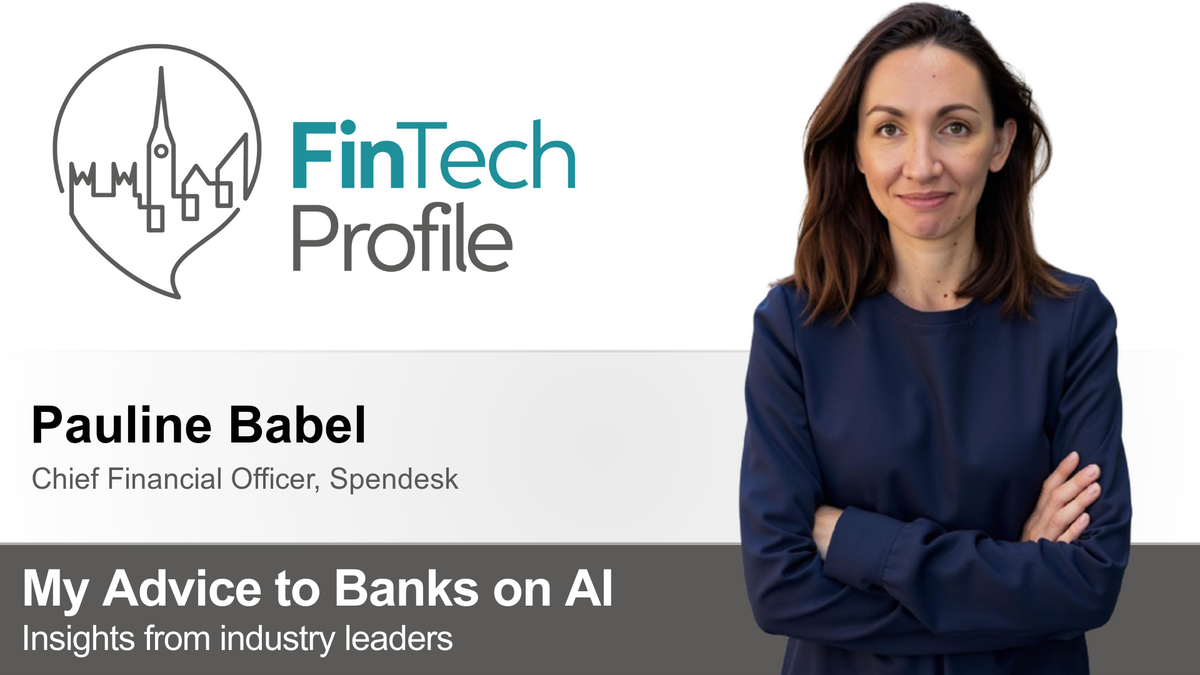
I spoke with Pauline Babel, CFO at Spendesk, about how AI is transforming the finance function and what CFOs should prioritise to deliver real business value. Pauline brings a unique perspective, having spent her career helping high-growth technology companies build scalable finance functions whilst experiencing firsthand the challenges Spendesk solves.
My questions are in bold - over to you Pauline:
Can you give us an introduction to you and an overview of Spendesk?
I'm Pauline Babel CFO at Spendesk. I've spent my career helping high-growth technology companies build finance functions that can grow and scale with the business. What attracted me to Spendesk was experiencing firsthand, as a user, the fundamental problem we're solving: finance teams are drowning in disconnected systems and manual processes, and that's preventing them from playing a strategic role in the business.
At Spendesk, we're helping businesses simplify how they manage spend across the entire process, from procurement through to payment. It's not just about consolidation, it's about giving finance teams time back. When you have real-time visibility across all spend, you move from explaining what happened last month to actively shaping what happens next.
I always say the goal isn't simply to make finance more efficient; it's to help businesses spend smarter, creating the space for finance to be a strategic partner: a translator between financial performance and what's actually happening in the business.
How is the role of the CFO changing as AI becomes embedded across the finance function?
I don't think AI is changing the purpose of the CFO, but it is changing how we create value.
I'll admit, I was initially sceptical about AI in finance. That changed when I saw a task that would normally take hours completed in around ten seconds. It made me realise AI isn't here to replace finance professionals - it's here to transform how we work.
Finance has traditionally operated in reporting cycles, explaining performance after decisions had already been made. AI allows us to work much closer to the point of decision-making, using real-time information instead of historical snapshots.
With Spendesk AI Connect, powered by the Spendesk MCP, finance teams can ask questions about spend data through an AI assistant, surface anomalies before they become problems and understand the financial impact of decisions before they're made.
As a result, the CFO's role is becoming far more strategic, moving beyond reporting to helping bridge the gap between financial performance and operational reality.
Where should finance leaders embrace AI, and where is human judgement still essential?
The best place to start is with repetitive, time-consuming tasks that involve large volumes of data. Processing invoices, analysing spend patterns, identifying anomalies and answering routine finance queries are all areas where AI can deliver immediate value.
Human judgement remains essential whenever decisions involve context, trade-offs or risk. AI might identify rising supplier costs, but it can't decide whether it's the right time to renegotiate a contract, invest in a strategic supplier or absorb those costs to support growth.
AI shouldn't replace judgement, it should give finance teams better information, faster, so they can make better decisions. The most successful organisations are starting with practical use cases, solving genuine pain points and building confidence from there.
What are the biggest challenges finance teams face as they look to automate procurement and spend management?
First, fragmentation. Many businesses still have procurement, finance and accounts payable operating across different systems and processes. That makes it difficult to build a complete picture of spending and if your data is fragmented, automation can only take you so far.
The second challenge is mindset. AI shouldn't be seen as a way to remove people from financial processes. It should remove unnecessary friction while keeping the controls that matter. Finance teams need confidence that automation supports governance rather than bypassing it.
The success stories are coming out of organisations who focus on practical outcomes. They're solving genuine operational challenges first, then scaling from there, after all, you can't transform everything overnight.
How is AI changing the relationship between finance, procurement and the wider business?
Historically, procurement has focused on purchasing, finance has focused on budgets and reporting and business teams have often worked separately from both.
With AI, everyone can work from the same real-time information simultaneously. Finance and procurement can engage with business teams before decisions happen, showing them budgets, supplier commitments, and the broader financial impact of their choices.
That changes the conversation: instead of reviewing spend after the event, finance and procurement can work with business teams before decisions are made, helping them understand budgets, supplier commitments and the wider financial impact of their choices. That creates better outcomes for the business and makes finance a much more strategic partner across the organisation.
What should CFOs be prioritising over the next 12-18 months to ensure AI delivers measurable business value?
Over the next 12-18 months, CFOs should focus on embedding AI into core finance workflows rather than treating it as a standalone initiative. The priority should be using AI where better information leads to better decisions - whether that's approving spend, managing suppliers, forecasting cash flow or planning investment.
Success also needs to be measured by business outcomes, not the number of AI tools deployed. If AI isn't helping teams make faster decisions, reducing manual work or improving financial performance, it's not delivering real value.
CFOs should also start thinking beyond dashboards and towards AI agents that can autonomously query data, surface insights and support decision-making. As finance teams are expected to do more with the same resources, AI's real value will come from freeing people to spend less time on administration and more time providing strategic insight and partnering with the business.
If you had a magic wand, what one thing would you change in the banking and/or fintech sector?
I'd remove the fragmentation that still exists across financial systems.
Despite the progress fintech has made, many businesses are still moving data between disconnected platforms, reconciling multiple systems and trying to build a complete picture of their finances. That's valuable time that could be spent making better decisions instead.
I'd love to see a future where financial information flows securely and seamlessly between the tools businesses already use, giving finance teams one reliable source of truth instead of multiple versions of it.
Ultimately, the best fintech should be almost invisible. It shouldn't add complexity - it should remove it, allowing finance teams to spend less time managing processes and more time helping their businesses grow.
Many thanks to Pauline Babel for taking the time to share her insights with FinTech Profile. You can learn more about Spendesk on their website.