Dimitri Akhrin, President, BAMS
Dimitri Akhrin discusses bootstrapping BAMS for nearly two decades, transparent merchant services, and why agentic commerce will reshape payments.
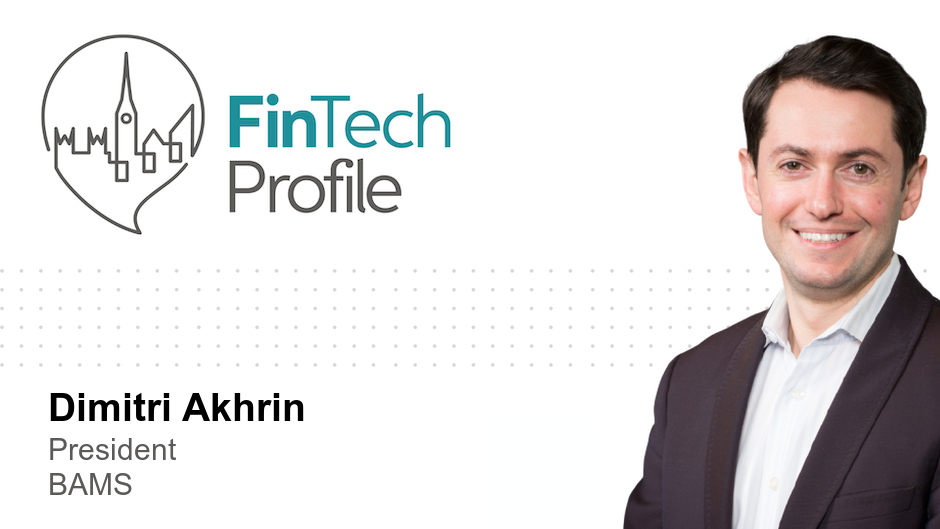
Today we're delighted to speak with Dimitri Akhrin, President of BAMS, a merchant services and payment processing solution provider headquartered in Brooklyn. With over two decades in the payments industry, Dimitri has built his career on removing friction for merchants, ISOs and banks - founding BAMS in 2006, IRIS CRM in 2010 (acquired by NMI in 2022), and CRMDialer. In this interview, he shares his views on transparent pricing, the limitations of legacy banking infrastructure, and why agentic commerce is set to redefine the payments landscape.
My questions are in bold - over to you Dimitri:
Who are you and what's your background?
I'm Dimitri Akhrin, founder and President of BAMS, a merchant services and payment processing solution provider headquartered in Bay Ridge, Brooklyn. I've spent over two decades in the payments industry, and my path into fintech came from the inside out rather than from a classroom. I started in the credit card processing business and spent years watching where merchants, ISOs and banks actually experienced friction before deciding to build companies that removed it.
In 2006, I founded BAMS, a payments processing solution. Four years later, in 2010, I founded IRIS CRM, a customer relationship management platform built specifically for the payments industry that automated merchant onboarding, support and residual calculations for ISOs and payment facilitators. IRIS CRM grew into a category leader and was acquired by NMI in early 2022, and I stayed on through the integration. I later founded CRMDialer, a sales productivity platform for calling, SMS and email. Today I run BAMS day-to-day and also oversee a family office where I focus on long-term capital allocation.
What is your job title and what are your general responsibilities?
I'm the President of BAMS, and my daily responsibilities include setting strategy for the business, overseeing our sales and account management teams and managing our banking and processor relationships. I stay closely involved in product and technology decisions, including where and how we use AI across sales, support and operations. I also lead our senior hiring, most recently building out our growth function into two co-equal Director-level roles covering organic search and paid media.
Because BAMS runs on a residual revenue model, protecting the long-term health of our merchant portfolio is a core part of my role, which means staying hands-on with chargeback defence, retention and account management rather than letting any of it drift towards automation for its own sake.
Can you give us an overview of your business?
BAMS is a merchant services and payment processing company serving small and mid-sized retailers, restaurants and e-commerce brands across the country. We provide credit card processing, payment gateways, next-day funding, chargeback defence and dedicated account management, all built around one simple standard, with no hidden fees and no misleading rates. We're a team of roughly 35 people, Brooklyn-founded and intentionally boutique, so merchants get a real person rather than a call centre. Our unique selling point is pairing competitive, transparent pricing with the kind of dedicated account management usually reserved for much larger accounts. We hold a BBB A+ rating, are an Authorize.Net Preferred Reseller and participate in the Goldman Sachs 10,000 Small Businesses programme. The market reaction has been consistent over nearly two decades; merchants stay with us because we answer the phone and do what we said we'd do.
Tell us how you are funded?
BAMS has been self-funded and bootstrapped since I started it in 2006. I've never brought outside equity into the business, and growth has come entirely from operating cash flow and reinvested residuals. I've been through a funded exit on the other side as well; IRIS CRM was also bootstrapped before its acquisition by NMI in 2022, and running that company through a sale gave me a real appreciation for capital discipline that carries directly into how I run BAMS and my family office today.
What's the origin story? Why did you start the company? To solve what problems?
I started BAMS in 2006 after years inside the credit card processing industry watching merchants get squeezed by hidden fees, confusing rate structures and processors who disappeared the moment something went wrong, usually a chargeback or a funding delay. The problems were rarely about the underlying technology; they were about accountability. So I built BAMS around a founding principle: underpromise and overdeliver, with the goal of making pricing transparent and making sure a merchant could always reach a real person. Nearly twenty years later, that's still the operating standard for the company.
Who are your target customers? What's your revenue model?
Our core customers are small and mid-sized businesses, retailers, restaurants and e-commerce brands that need reliable processing and cash flow support but don't have the leverage to command attention from the larger processors. We run on a residual revenue model: we earn an ongoing share of the processing volume we support rather than a one-time fee, which is exactly why retention and merchant health matter so much to us. It aligns our incentives with the merchant's; we only do well if they keep processing and keep growing.
If you had a magic wand, what one thing would you change in the banking and/or FinTech sector?
I'd change how slowly incumbent banks move on integrating real technology into merchant-facing products. A large share of the friction in this industry, namely delayed funding, clunky onboarding, and opaque chargeback processes, exists because legacy banking infrastructure wasn't built for how modern merchants actually operate. Smaller, more technologically nimble players end up building workarounds for problems the banks themselves could solve at the infrastructure level if they moved faster.
What is your message for the larger players in the Financial Services marketplace?
My message to the CEOs and CIOs of the largest banks is that the merchants you're trying to serve at scale don't want to be treated at scale. They want fast funding, transparent pricing and someone accountable when something goes wrong. Every year that a large bank delays modernising its merchant services infrastructure is another year that smaller, more focused competitors take share simply by being responsive and following through (and even exceeding) on promises.
Where do you get your Financial Services/FinTech industry news from?
I read PYMNTS and Digital Transactions regularly for payments-specific coverage, and I follow the Electronic Transactions Association's updates for what's happening on the regulatory and network side of the industry.
Can you list 3 people you rate from the FinTech and/or Financial Services sector that we should be following on LinkedIn, and why?
Linas Beliūnas posts in-depth analyses on industry news and trends on a daily basis, and is a great source of information to keep a pulse on, including interesting, thought-provoking posts.
Alex Johnson writes for Fintech Takes, so he's a great profile to follow for interesting articles, podcast discussions, and more.
Tomasz Tunguz is a worthy mention; he has decades of experience in some of the world's leading companies and is great to follow for regular insights on AI and data news and trends.
What FinTech services (and/or apps) do you personally use?
Day-to-day, I rely on QuickBooks for accounting and Plaid-backed connections for account verification, and I use Ramp for corporate card and spend management across BAMS.
What's the best new FinTech product or service you've seen recently?
The move towards agentic commerce is the most interesting thing I've seen recently, particularly Stripe's Agentic Commerce Suite, which lets businesses sell directly through AI agents while keeping purchase visibility and approval controls intact. Visa and Mastercard have both rolled out their own frameworks for verifying AI agents at checkout over the past several months as well. It's early, but it's the first time the infrastructure for AI-initiated payments has felt like a real product rather than a concept.
Finally, let's talk predictions. What trends do you think are going to define the next few years in the FinTech sector?
Agentic commerce is the big one: AI agents researching, selecting and completing purchases on a customer's behalf, which will force every payments company, us included, to rethink fraud prevention, consent and authorisation from the ground up. I also expect real-time payments and instant funding to become table stakes rather than a differentiator, and I expect continued consolidation among smaller processors and ISOs who can't keep pace with the compliance and technology investment required to compete. For a business like BAMS, the winners over the next few years will be the ones who can move fast on AI-powered underwriting and fraud tools while keeping the human relationship with the merchant intact. That combination is harder to pull off than either piece alone.
Many thanks to Dimitri for taking the time to share his insights with FinTech Profile. You can learn more about BAMS on their website.