Jodi Slomp, Chief People Officer, Backbase
Jodi Slomp discusses what it means to become truly AI-native, why judgement matters more than automation, and how fintech must rethink talent beyond traditional hierarchies.
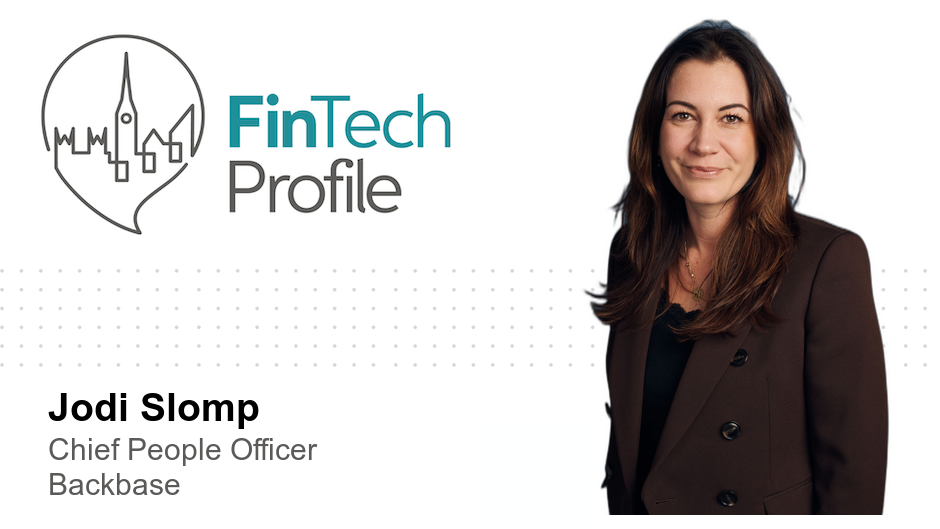
Today we're delighted to speak with Jodi Slomp, Chief People Officer at Backbase. With a decade of experience scaling people strategies across high-growth technology companies in Europe - from Booking.com to Aiven and Mollie - Jodi brings a sharp perspective on what it actually means for organisations to become AI-native. In this interview, she challenges conventional thinking about talent, hierarchy and how banks and fintechs should be reshaping their workforce for a fundamentally different future.
This is our second conversation with Backbase: CEO Jouk Pleiter shared his advice to banks on AI in March.
My questions are in bold - over to you Jodi:
Who are you and what's your background? What route led you into people and culture leadership, and then into fintech?
I'm Jodi Slomp, Chief People Officer at Backbase. I'm Canadian, but I've spent the last decade working in Europe across technology and high-growth companies.
I've always worked in HR, but across very different environments - from hospitality, to large-scale tech at Booking.com, to high-growth SaaS at Aiven. My move into fintech came in 2023 when I joined Mollie, a European payments company, as VP People. I've stayed in the sector since, and today I'm Chief People Officer at Backbase.
What I've enjoyed about fintech is the pace and complexity. The people agenda sits very close to business performance - talent, organisational design and leadership are all directly connected to how the company grows and competes.
What is your role at Backbase, and how would you describe the company to someone outside banking technology?
As the Chief People Officer at Backbase, I'm responsible for our global people strategy and how we think about talent, leadership and organisation design as the business grows.
Backbase helps banks modernise the way they serve customers by bringing their digital channels, front office and operations together on one AI-native operating system. In simple terms, we help banks move faster, simplify how they operate and create better, more unified customer experiences.
What makes the company particularly interesting right now is that we're not only helping banks use AI differently; we're also asking what it means for Backbase itself to become AI-native - how we build, organise, innovate, hire and lead.
Backbase talks about being "AI-native." From a people perspective, what does that actually change about how you hire, organise and lead teams?
For me, AI-native means you stop treating AI as a productivity tool and start treating it as an organisational design question.
It changes what work should exist, what skills you hire for, how large teams need to be and what managers actually manage.
We're increasingly looking for people who combine deep expertise with adaptability, strong judgement and a real growth mindset - people who are willing to experiment, test new ways of working and learn quickly. We also have to think much harder about where AI can genuinely replace work, where it can augment people and where human judgement remains critical.
The biggest shift is probably that roles can no longer remain static for years. Jobs will continue to change, so curiosity, learning agility and the willingness to experiment become much more important.
As AI takes on more of the work inside banks and the vendors that serve them, which human skills become more valuable, not less?
Judgement.
As AI becomes better at generating, analysing and automating, the value shifts towards the planning, the strategy, and deciding what great looks like.
I think critical thinking, commercial judgement, creativity and the ability to influence people will become more important than ever.
There's also a leadership implication. If people have access to increasingly powerful tools, managers can't create value simply by coordinating tasks. They need to provide context, direction and better decision-making.
How do you keep culture intact while scaling a fast-growing technology company across multiple markets?
I'm not convinced the goal should be to keep culture intact.
If a company doubles in size, enters new markets or changes its strategy, the culture should evolve too.
What you want to preserve are the principles that make the company successful - how decisions get made, what behaviour gets rewarded, what the performance bar looks like.
The mistake is trying to preserve every tradition or way of working simply because it existed when the company was smaller. Scaling requires being quite deliberate about what you keep and what you let go.
What's the most common mistake you see banks and fintechs make when they try to reshape their workforce around AI?
Treating AI as a technology implementation when it is actually organisational redesign.
Companies often start with tools: which AI platform should we deploy, how many licences do we need, how do we train everyone?
Those questions are important, but they come later.
Right now we should focus on: what work should disappear, what work should change, where do we need different capabilities and what does this mean for the structure of the organisation?
If you only add AI on top of the existing organisation, you may become slightly more efficient. You probably won't fundamentally change the business.
If you had a magic wand, what one thing would you change about how the banking and fintech sector approaches talent and culture?
I'd separate seniority from value creation.
Many organisations still equate career progression with managing more people, having a bigger title or moving further up the hierarchy.
AI is already starting to challenge that.
Some of the most valuable people in an organisation may be individual contributors who build, solve and create enormous leverage without managing large teams.
I think we need much better career paths, reward models and status for deep expertise - rather than assuming leadership always means people management.
Can you list 3 people you rate in fintech or financial services that our readers should follow on LinkedIn, and why?
I'm shamelessly going to say people should follow our CMO, Tim Rutten, from both an AI-native GTM leader and thought leader in the Banking Industry. Tim Rutten is doing some exceptional work, and he is sharing it actively out there.
There are also some inspirational women in our industry. I'd point to Theodora Lau. She's been one of the sharpest independent voices in fintech for years - her work on financial inclusion and how AI reshapes access for underserved groups is essential reading, especially as our industry gets swept up in efficiency narratives and forgets who gets left behind.
And Dr. Efi Pylarinou - she's already consistently one of the most followed voices in fintech and AI, and her commentary cuts across banking, digital assets and innovation - she's usually right before everyone else catches on.
Many thanks to Jodi for taking the time to share her insights with FinTech Profile. You can learn more about Backbase on their website.