Jenna Wright, Managing Director, Digital Assets, LMAX Group
Jenna Wright discusses institutional digital asset infrastructure, the convergence of traditional and digital finance, and why stablecoins will transform payments and collateral.
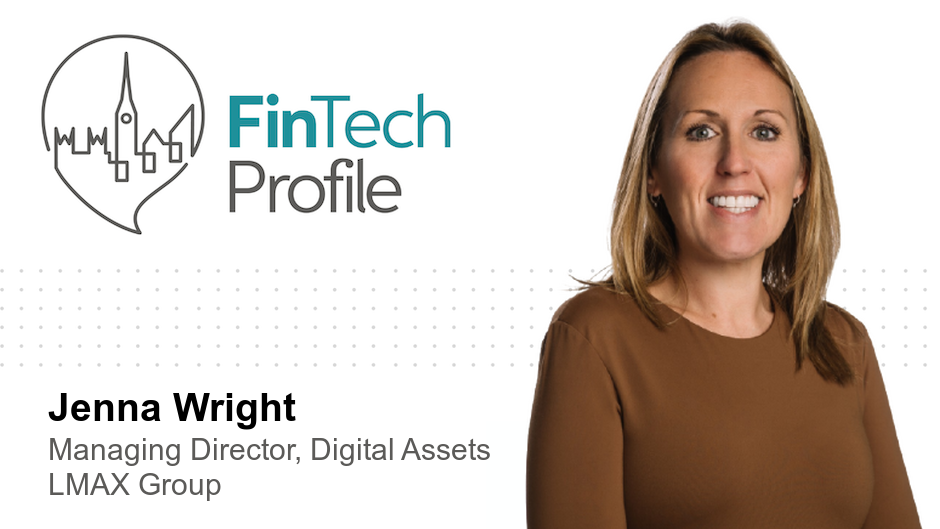
Today we're delighted to speak with Jenna Wright, Managing Director, Digital Assets at LMAX Group. With a career spanning UBS, Cantor and seventeen years at LMAX Group, Jenna has been instrumental in building LMAX Digital into a leading institutional spot digital asset exchange. In this interview, she shares her perspective on the convergence of traditional and digital finance, why institutions need regulated infrastructure rather than a separate crypto universe, and how stablecoins are set to transform payments and collateral management.
My questions are in bold - over to you Jenna:
Who are you and what's your background?
I'm Jenna Wright, Managing Director, Digital Assets at LMAX Group. I studied Economics and Politics at the University of Manchester, which has proved useful in a career spent at the intersection of markets, institutions and policy. I started at UBS and Cantor, then joined LMAX Group in January 2009. Since then, I've held senior operational and client-facing roles, including Head of Client Services and Broker Operations Director. That has given me a view of both the client experience and the infrastructure behind it. The latter is rarely glamorous, but it is usually where the important work happens.
My route into FinTech was quite organic. I learned the business from the operational foundations upwards, then helped build LMAX Digital from inception in 2018 into a leading institutional spot digital asset exchange. It taught me that institutions do not need a separate, mysterious crypto universe. They need excellent technology, sound market structure and counterparties they trust. I've been fortunate to receive industry recognition, including being named among Europe's Top 25 Women Leaders in Financial Technology, one of Financial News' Twenty Most Influential Women in Crypto and winner of Markets Media 2026 European Women in Finance Awards for Excellence in Digital Assets, but this is very much a team effort. Outside work, I'm a mother of three, so I'm accustomed to busy days and competing priorities.
What is your job title and what are your general responsibilities?
I'm Managing Director, Digital Assets at LMAX Group. In practical terms, I work out what institutions are likely to need next and help ensure we build it properly. Right now, that includes institutional perpetual futures, stablecoins, payments and collateral, as well as expanding our real-world asset perpetuals into commodities, equities and indices. I also oversee our growing cross-asset revenue-enablement function, which is about breaking down product silos and having more joined-up conversations with clients. No two days are quite the same, which suits me. The diary can be ambitious, but I enjoy the pace.
Can you give us an overview of your business?
LMAX Group is a global cross-asset marketplace bringing traditional and digital finance together through regulated market infrastructure and trusted technology. We operate institutional execution venues and provide access to custody and market-data services across FX and digital assets. In short, we make complex markets more transparent, connected and dependable. Finance has not always treated those three qualities as a matching set, so the opportunity is considerable.
Today, we operate matching engines in London, New York, Tokyo and Singapore, serving institutional clients including banks, brokers, asset managers and proprietary trading firms in more than 100 countries. What excites me most is that we're not asking clients to pick a side between "old finance" and "new finance". We're building the connection between the two, because in the end clients care far more about whether something works than which label the industry has given it.
Tell us how you are funded?
LMAX Group is independently operated and majority owned by management and employees, which gives the business a genuinely entrepreneurial streak. In 2021, investor J.C. Flowers & Co. acquired a 30% minority stake for $300 million, valuing the business at $1 billion. That gave us extra firepower for international growth, particularly in North America and Asia, while management retained control and a meaningful economic interest. It is a good balance: serious long-term backing, but no loss of the character, pace or healthy impatience that got us here.
What's the origin story? Why did you start the company? To solve what problems?
LMAX began within Betfair in 2010 and became independent through a management buyout in 2012. The idea was refreshingly simple: bring exchange-style transparency, fairness and precision to markets built around opaque, bilateral dealing. That meant firm liquidity, clear price discovery and consistent execution. We took those same institutional principles into digital assets when we launched LMAX Digital in 2018. The problem we are still solving is fragmentation. Institutions want regulated venues, reliable technology, deep liquidity, custody, collateral mobility and connectivity that work together. A trade should feel routine, even when the infrastructure behind it is anything but.
Who are your target customers? What's your revenue model?
Our clients are institutions and sophisticated market participants: banks, asset managers, funds, retail brokerages, proprietary trading firms and other professional counterparties in more than 100 countries. Increasingly, we are also speaking with organisations whose first digital asset use case is not trading Bitcoin. It is moving money or collateral quickly, securely and 24/7. A time-critical international payment should not have to wait for banking hours to resume. We generate revenue from activity across our regulated execution venues and related services, including trading, brokerage, custody and market data. The model is deliberately broad, spanning asset classes, regions, products and client types.
If you had a magic wand, what one thing would you change in the banking and/or FinTech sector?
I'd remove the artificial divide between traditional finance and digital assets. Clients should not need separate infrastructures, liquidity pools and settlement windows simply because one asset is represented differently from another. Money does not become more useful because it stops moving at 5pm on a Friday. My magic wand would give institutions one safe, joined-up way to trade, move collateral and settle value around the clock. Fewer parallel processes would be a good start.
What is your message for the larger players in the Financial Services marketplace?
My message is: do not wait for a mythical perfect moment to build digital asset capability. It is probably not coming, and somebody else will be learning and building while you wait. For many financial institutions, the first meaningful use case will not be trading Bitcoin. It will be stablecoins for payments, settlement or more efficient collateral movement. Start with a real client problem, use regulated and interoperable infrastructure. Move carefully, absolutely, but do move.
Where do you get your Financial Services/FinTech industry news from?
I read the Financial Times and Bloomberg, alongside specialist digital asset and market structure publications. Some of the best intelligence, though, comes from clients, partners, regulators and colleagues. This market can move very quickly, so it helps to combine rigorous reporting with candid conversations, and a clear view of what institutions are actually doing.
Can you list 3 people you rate from the FinTech and/or Financial Services sector that we should be following on LinkedIn, and why?
Thomas Uhm, QRD, Qube Research & Technologies
Thomas brings a rare combination of quantitative trading expertise and deep digital-asset market experience. His perspective on market structure, liquidity and institutional adoption makes his insights particularly valuable for anyone interested in how digital-asset markets are evolving.
Geoff Kendrick, Global Head of Digital Asset Research, Standard Chartered
Geoff is one of the most influential voices covering digital assets from within traditional finance. His research often connects digital-asset developments with broader macroeconomic and institutional trends, making his views especially relevant for understanding where the sector may be headed.
Cathie Wood, Founder, CEO and Chief Investment Officer, ARK Invest
Cathie's commentary focuses on disruptive innovation, including blockchain technology, artificial intelligence and the changing financial landscape. Her long-term investment perspective connects digital assets with broader technological shifts and the role they could play in the future of finance.
What FinTech services (and/or apps) do you personally use?
Apple Pay is probably the service I would notice fastest if it vanished, closely followed by PayPal. I value anything that removes a little life admin without requiring much thought, and both have become almost invisible parts of how I pay online. I also use Net-a-Porter. It may not be the obvious answer to a FinTech question, but its checkout experience is extremely good, perhaps a little too good. Professionally, I'm drawn to services that make money and collateral more useful, from secure custody and institutional connectivity to real-time payments and stablecoin rails. The best products remove friction so quietly that you almost stop noticing the technology.
What's the best new FinTech product or service you've seen recently?
The products catching my attention are the ones making stablecoins feel less like a niche crypto instrument and more like genuinely useful financial infrastructure. I'm particularly interested in services that bring payments, custody and cross-asset collateral into one coherent institutional workflow. Moving value safely at any hour is an easy benefit to understand, especially when traditional banking hours are the only thing standing between a client and a transaction.
On the consumer side, I've also been impressed by how companies like Revolut have expanded the definition of what people expect from a financial app by bringing payments, FX, savings and everyday money management into a single experience. And although I haven't used Nubank myself, it's impossible to ignore the level of positive attention it gets across Latin America. I keep hearing about the quality of the product, customer experience, and the scale of adoption it has achieved, which says a lot in such a competitive market.
The strongest products will make all of this feel regulated, intuitive and almost unremarkable to use. In financial infrastructure, that is generally a compliment.
Finally, let's talk predictions. What trends do you think are going to define the next few years in the FinTech sector?
The defining theme will be convergence, and I think it will arrive faster than many people expect. Stablecoins will move further into payments, treasury and collateral because 24/7 movement of value solves a real operational problem. Tokenisation will progress from proofs of concept into production use cases across funds, credit, commodities and other real-world assets. Institutional derivatives, including perpetual futures, will deepen as firms look for efficient ways to hedge and express exposure. Regulation, custody and resilient infrastructure will become genuine competitive advantages too, rather than supporting considerations. The firms that do well will be those that make the technology safe, useful and straightforward to integrate. Ultimately, delivery will matter more than noise.
Many thanks to Jenna for taking the time to share her insights with FinTech Profile. You can learn more about LMAX Group on their website.