John McGowan, Founder & CEO, HubSync
John McGowan discusses his 25+ years in accounting tech, the $100M Thoma Bravo investment, and how AI is transforming CPA firm workflows at HubSync.
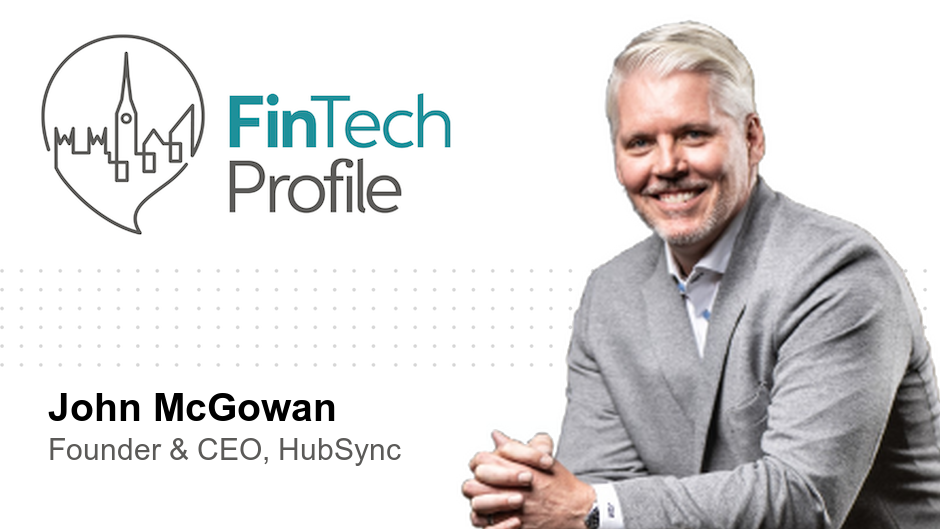
Today we're delighted to speak with John, Founder and CEO of HubSync, an AI-powered tax and accounting workflow platform built exclusively for CPA firms. With over 25 years of leadership experience at firms like Deloitte and KPMG, and a recent $100 million strategic investment from Thoma Bravo, John shares his insights on the fragmentation plaguing financial technology, the practical application of AI in accounting, and why the future of FinTech depends on platforms that truly understand how professionals work.
My questions are in bold - over to you John:
Who are you and what's your background?
I'm John McGowan, founder and CEO of HubSync. I've spent more than 25 years working at the intersection of accounting, tax, and technology, including leadership roles at Deloitte and KPMG.
My career began at KPMG, where I eventually served as Global Chief Information Officer. In that role, I led a technology organisation of more than 500 professionals and hundreds of vendor resources, which gave me a deep understanding of how large professional services firms approach technology and innovation.
I later joined Deloitte, where I served as Partner-in-Charge of Tax Technology. There, I focused on developing advanced tax applications and platforms designed to modernise how firms manage complex tax workflows and deliver services to clients.
Over time, I saw firsthand how fragmented many of the tools and processes were between firms and their clients. That realisation ultimately led me to launch HubSync, with the goal of transforming how tax and audit professionals collaborate with their clients.
I earned both my BSBA and Master's in Accounting from the University of North Carolina at Chapel Hill, which provided the foundation for my career in tax technology and innovation.
What is your job title and what are your general responsibilities?
As founder and CEO of HubSync, my job is a mix of strategy, product vision, and making sure we're solving real problems for our customers.
On a daily basis that means working closely with our product and engineering teams, talking with accounting firms about the challenges they're facing, and helping guide the direction of the company. A big part of that today also involves thinking about how AI can be applied in practical ways to help firms automate repetitive work, improve workflows, and create better client experiences without losing the human element that's so important in accounting.
I spend a lot of time thinking about where the industry is going and how we can build technology that supports firms as they scale and evolve.
At the end of the day, my role is really about making sure we stay focused on the mission of helping firms create better, more efficient relationships with their clients through technology.
Can you give us an overview of your business?
HubSync is a secure collaboration platform designed specifically for accounting and tax firms. Firms and their clients need a better way to work together, share information, and manage the many workflows that happen throughout the year.
Traditionally, those interactions have happened through a mix of email, portals, spreadsheets, and disconnected systems. HubSync brings those processes into one centralised platform where firms can manage document sharing, requests, communication, and workflow in a much more structured and secure way. As the industry evolves, we're also seeing more opportunities to incorporate automation and AI to streamline repetitive tasks whilst keeping experienced professionals in the loop to review, validate, and provide judgement.
What makes HubSync unique is that it's purpose-built for accounting firms and the way they operate. Instead of forcing firms to adapt to generic tools, we've built something that aligns with the real operational needs of modern firms and the growing expectations of clients.
Tell us how you are funded?
HubSync has largely been built through a disciplined, growth-focused approach. From the beginning, we've focused on building a sustainable business that grows alongside our customers and delivers real value to accounting firms.
More recently, we announced a strategic growth investment of more than $100 million from Thoma Bravo, one of the world's leading software-focused investment firms. The partnership is helping accelerate our product innovation, expand our reach across the accounting industry, and continue scaling the platform to support more firms and clients.
That combination of strong customer-driven growth and strategic investment has positioned us well for the next phase of HubSync's development.
What's the origin story? Why did you start the company? To solve what problems?
HubSync really came from seeing the same pain points repeated across firms again and again. Through my firsthand experience working inside large firms like Deloitte and KPMG, I was able to see how even the most sophisticated organisations were still dealing with fragmented tools and inefficient processes when it came to collaborating with clients.
A lot of that collaboration still relied on email threads, manual follow-ups, and systems that weren't designed to work together. That creates friction for both the firm and the client.
I started HubSync to rethink that entire interaction. The goal was to create a platform where firms could manage all of those client interactions in one place—securely, efficiently, and in a way that actually supports how modern firms operate. When you reduce that friction, firms can focus more on delivering value and less on managing administrative chaos.
Who are your target customers? What's your revenue model?
Our primary customers are accounting and tax firms that are looking to modernise how they collaborate with their clients. These firms deal with large volumes of client interactions, documents, and workflows, and they need a better way to manage that complexity.
HubSync operates on a SaaS model, where firms integrate the platform and use it across their teams and client base. The model is designed to scale with the firm, which means it grows alongside their business.
What we hear most often from customers is that HubSync helps them create a more organised, professional experience for their clients whilst also giving their teams better visibility into what's happening across engagements.
If you had a magic wand, what one thing would you change in the banking and/or FinTech sector?
One thing I'd love to see change is the level of fragmentation across financial technology systems. There are a lot of great tools in the market, but too often they don't communicate well with one another.
For firms and financial professionals, that means spending time manually moving information between systems instead of focusing on higher-value work. The future of FinTech really depends on stronger integration and collaboration between platforms.
If we can create ecosystems where tools work seamlessly together, the entire industry becomes more efficient and ultimately delivers better outcomes for clients.
What is your message for the larger players in the Financial Services marketplace?
The biggest opportunity right now is to focus on the experience of the professionals and businesses who use your systems every day.
Technology adoption doesn't happen just because a solution is powerful—it happens when it's intuitive, efficient, and built around the way people actually work. When technology aligns with real workflows and solves practical problems, it becomes something teams genuinely want to use rather than something they feel forced to adopt.
In other words, listen closely to the people doing the work.
Where do you get your Financial Services/FinTech industry news from?
I follow a mix of industry publications and conversations happening across the accounting and FinTech ecosystem. I also start most mornings with an AI-curated newsletter that pulls together insights and headlines from a variety of financial services, technology, and accounting publications, which is nice because it helps me quickly spot emerging trends and themes across the industry.
Outlets like FinTech Magazine and Financial Times are great for keeping up with broader industry trends, whilst Accounting Today provides valuable insight into how those trends are impacting accounting firms specifically.
But honestly, some of the most valuable insights come directly from conversations with customers and partners who are working through these changes in real time.
Can you list 3 people you rate from the FinTech and/or Financial Services sector that we should be following on LinkedIn, and why?
Randy Crabtree—co-founder of Tri-Merit and host of The Unique CPA podcast. Great follow for insights on firm growth, advisory services, AI, and the future of accounting.
Ryan Lazanis—Founder of Future Firm and a leading voice in cloud accounting and firm modernisation. Shares practical content on automation, AI, and scaling advisory firms.
Randy Johnston—One of the accounting industry's top technology experts. His content focuses on accounting tech, cybersecurity, AI, and the systems shaping modern firms.
What FinTech services (and/or apps) do you personally use?
Like most people in the FinTech space, I use a variety of tools that make financial management easier.
Services like Xero and Bill are great examples of platforms that have significantly improved how businesses and accounting teams manage financial operations, payments, and reporting workflows.
What I appreciate most about these tools is that they take complex financial processes and make them intuitive and scalable. And I'd be remiss if I didn't also mention HubSync, which, in my admittedly biased opinion, is pretty great as well.
What's the best new FinTech product or service you've seen recently?
One area that's been especially interesting recently is the growth of AI-driven financial tools that help automate analysis and decision-making. There are a number of emerging platforms using AI to interpret financial data and surface insights in ways that weren't possible before.
A product that's really caught my attention is Ramp, particularly with how aggressively they're incorporating AI into expense management, accounting automation, and financial operations. They're doing a great job of turning traditionally manual finance workflows into something much more intelligent and efficient.
Finally, let's talk predictions. What trends do you think are going to define the next few years in the FinTech sector?
I think we're going to see three major trends shaping the next phase of FinTech.
First, automation and AI will continue to reduce the amount of manual work involved in financial processes. Second, platform consolidation and integration will become increasingly important as firms look for ecosystems rather than isolated tools. And third, there will be a stronger focus on client experience—the way businesses and professionals interact with financial technology.
The companies that succeed will be the ones that combine powerful technology with a deep understanding of how professionals actually work.
We'd like to thank John for taking the time to share his insights with us. You can learn more about HubSync on their website.