Debra Maxwell, CEO, ArvatoConnect
Debra Maxwell shares how ArvatoConnect combines human expertise with AI to deliver better customer outcomes in regulated sectors, and why trust will define FinTech's future.
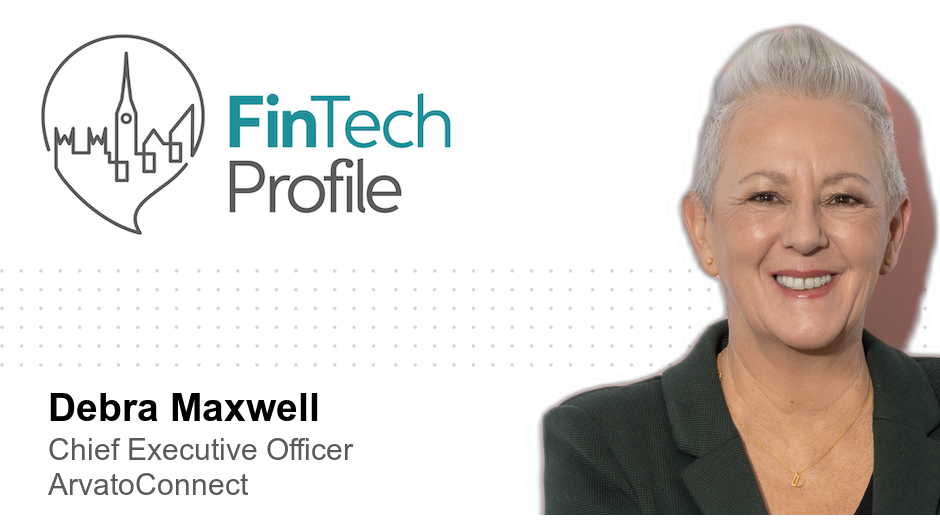
Today we're delighted to speak with Debra Maxwell, CEO of ArvatoConnect, a customer experience and digital transformation business. With nearly two decades at the company and 14 years as CEO, Debra brings a unique perspective to AI adoption in financial services - one shaped by her own experience starting on the frontline as an agent. In this interview, she discusses why innovation and regulation aren't opposing forces, the risks of AI exclusion for vulnerable customers, and why the real winners will make AI invisible.
My questions are in bold - over to you Debra:
What is your job title and what are your general responsibilities?
I'm Debra Maxwell, CEO of ArvatoConnect, a customer experience and digital transformation business. I'm from South Africa and have lived around the world, but I now live in Cheltenham and work just outside London. I've been with ArvatoConnect for almost two decades and have served as CEO for nearly 14 years. During that time, I've been responsible for setting the company's strategy, overseeing major client partnerships and helping organisations navigate their transformation programmes.
What makes my role particularly rewarding is that I actually started my career in the UK on the frontline as an agent at Caradon Mira - sizing thermostatic mixing valves! That experience has shaped how I lead today. I understand the challenges our people face because I've done the job myself, and it reinforces my belief that successful transformation is about people and culture, as much as technology. I use our Big Debate as a conduit to support my understanding the unique challenges of our front line employees so we can support them and build an inclusive culture.
Alongside leading the business, I'm passionate about developing future talent. We run initiatives such as our CEO Club programme, which gives frontline colleagues access to mentoring, coaching and leadership development opportunities. Around 40% of participants have gone on to secure promotions or progress into new roles, which is something I'm incredibly proud of.
Can you give us an overview of your business?
We support organisations in complex, high-trust and regulated sectors to deliver better customer outcomes through a combination of human expertise, AI and digital transformation. We help private and public sector organisations, from HMRC and the Department for Education to Wales Air Ambulance, improve customer experience and modernise back-office operations. With much of our work being in highly regulated industries, increasingly, that means helping businesses harness AI and automation responsibly, ensuring technology enhances human expertise rather than just replacing it.
Tell us how you are funded?
We are part of Bertelsmann, one of the world's largest media, services and education groups. That backing gives us the stability and scale to invest in long-term innovation without pressure of short-term shareholder returns. However, our services are delivered through a strong UK operating model, where our revenue comes from providing customer experience, outsourcing automation, digital transformation and business process services to our clients. This means we can benefit from local expertise and governance while having access to global innovation and investment capabilities.
What are your unique selling points?
We specialise in sectors where customer outcomes really matter - local authorities, financial services firms, healthcare providers. We start by understanding our customers' objectives and pain points, then apply the right solution second. That's customer service 101 in my eyes: know what success looks like, then implement in a way that improves service quality, efficiency and customer satisfaction, testing and safeguarding those outcomes throughout.
At ArvatoConnect, we believe the most effective use of AI is to empower people with it. While many organisations race to automate everything, we take a pragmatic, human-centric approach that combines automation with human judgement. AI can streamline routine tasks, but it can also augment employee capabilities, through tools like sentiment analysis and real-time insights that flag vulnerability, helping teams make better decisions and deliver more personalised support.
Our "human-in-the-loop" approach is what sets us apart from organisations racing to implement AI without considering the people who've built and carried their industries for decades. It means technology enhances human expertise, resulting in processes that are more efficient while still preserving the empathy and judgement our customers value most.
As part of parent company Bertelsmann, we benefit from the strength and stability of a global organisation while retaining a uniquely decentralised structure. This gives us the agility to make decisions quickly, adapt our strategy to the specific needs of our clients and local markets, and avoid a one-size-fits-all approach. Rather than relying on standardised processes and products, we have the flexibility to tailor our solutions to each client's unique challenges, objectives and ambitions.
Who are your target customers? What's your revenue model?
Our target customers are operating in complex, customer-facing and highly regulated environments. Financial services is a key focus for us because firms are under increasing pressure to improve customer outcomes, modernise legacy processes and implement AI responsibly while meeting regulatory obligations.
Increasingly, clients come to us because they need help navigating the next phase of AI adoption. Most organisations have already introduced some form of automation; the challenge now is determining where AI creates genuine value and where human expertise remains essential. That's where our experience in customer operations, regulation and transformation makes a difference. Ultimately it is all about the Customer Journey.
For example, we work with Wales Air Ambulance Charity, which operates one of the most advanced air ambulance services in the UK and has completed more than 43,000 missions, all funded by the people of Wales. We supported the Charity's digital transformation by using automation in their fundraising processes, helping it raise funds more effectively and reduce its environmental impact.
Our "teach and transfer" approach meant we designed the solution while training the Charity's own team to run and evolve it independently. The new process cut admin time by 92%, gave the team a fully auditable process and significantly reduced manual errors. As a result, we saved the Charity more than £40,000 a year by moving from post to email, delivering quicker responses to supporters and reducing its carbon footprint.
If you had a magic wand, what one thing would you change in the banking and/or FinTech sector?
If I could change one thing, it would be the perception that innovation and regulation are opposing forces.
The most successful financial institutions in the next decade won't be the fastest, but rather, the ones who innovate in ways customers trust. Regulation should be viewed as a framework for building better customer outcomes rather than a barrier to progress.
Our data found that three-quarters of finance leaders believe their AI strategy could exclude vulnerable customers, while only a quarter test their systems against real-life vulnerability and build clear routes to a human. This isn't a niche customer segment: almost half of UK adults have at least one characteristic of vulnerability, and any of us could become vulnerable in an instant. The real opportunity for the UK's financial services sector is to innovate responsibly and build AI-powered services that put the customer first, regardless of their circumstances.
The industry needs to make sure customers are given the choice and can reach a human when they need to, rather than getting stuck in AI doom loops. If firms get this wrong, they risk losing customer trust and support. Trust will determine whether the promise of AI actually materialises in the long run.
What is your message for the larger players in the Financial Services marketplace?
My message is simple: don't measure AI success by how many processes you've automated or how much saving you have made. Measure it by whether you've improved customer outcomes - for everyone.
The direction of travel from the FCA is clear. Whether through Consumer Duty, discussions around vulnerability, or the increasing focus on governance around AI, firms are being challenged to demonstrate that innovation delivers tangible benefits for customers.
AI has enormous potential to help firms identify vulnerability earlier, reduce customer effort and provide more personalised support at scale. In fact, our recent research found that 88% of leaders believe AI can have a positive impact for vulnerable customers, highlighting that AI remains a major opportunity to improve accessibility, personalisation and speed across financial services. But it must be implemented with strong governance and clear routes to human intervention when customers need it.
At ArvatoConnect, we often talk about a balanced operating model where automation handles routine interactions while people focus on the more complex, sensitive and emotionally nuanced conversations. In practice, that's how organisations create experiences that are both efficient and trusted.
Where do you get your Financial Services/FinTech industry news from?
Fintech Futures - I love Leda Glyptis' "Resident Thought Provocateur"
LinkedIn - getting increasingly cluttered but still some nuggets that are thought provoking (when you can find them)
FT - I particularly like the Moral Money newsletter content
The FCA - it is important to understand how regulation and legislation are impacting the industry
Can you list 3 people you rate from the FinTech and/or Financial Services sector that we should be following on LinkedIn, and why?
Nicole Casperson - I love her approach to inclusivity and innovation in Fintech. Her Femme podcast is very insightful. We need more women at the forefront of finance.
Leda Glyptis - Challenging the role of women and leadership in Fintech
Coen Jonker - founder and CEO of Tyme Group - a fellow South African who has built a digital bank focusing on emerging nations with the belief that banking should be accessible, trusted and relevant to everyday life
What FinTech services (and/or apps) do you personally use?
I use online banking for my current, saving and investment accounts. I have banked with First Direct since its inception and their mobile platform is great - the handover from AI agent to Human agent is flawless. Revolut for transferring money to South Africa. I track my credit file on Experian. I rarely use a card - pay by mobile or watch. If there is an app for it I will be using it!
What's the best new FinTech product or service you've seen recently?
I love some of the new tech ideas coming from Africa - a country of entrepreneurs who are often underrated. Needs are different in developing countries - access to digital platforms can be groundbreaking but need local knowledge and adapted to specific circumstances and differing needs. Not new but Pineapple insurance in South Africa is a P2P insurance platform that is hassle free and dare I say it pretty fun! You can take a pic of an item, upload it, get an instant insurance quote and be covered in minutes - insurance needs a disruptor and they seem to be onto something really good.
Finally, let's talk predictions. What trends do you think are going to define the next few years in the fintech sector?
Over the next few years, I think we'll see AI move from being a technology initiative to becoming a trust exercise. Most financial institutions have already adopted AI in some form. The next challenge is proving that it's fair, transparent and delivering better outcomes for customers.
As more services become digital-first, firms will need to demonstrate they haven't unintentionally created barriers for people who need support. Organisations that can combine automation with accessible human support will increasingly differentiate themselves.
I expect the real winners to be those that make AI "invisible". Customers won't care whether they're interacting with a human, an AI system or a combination of both. They'll care whether the experience is fast, personalised and effective.
Many thanks to Debra for taking the time to share her insights with FinTech Profile. You can learn more about ArvatoConnect on their website.