Philipp Buschmann, Co-founder and CEO, AAZZUR
Philipp Buschmann discusses AAZZUR's embedded finance orchestration platform, recent £2m funding, and why banking must become invisible infrastructure woven into everyday life.
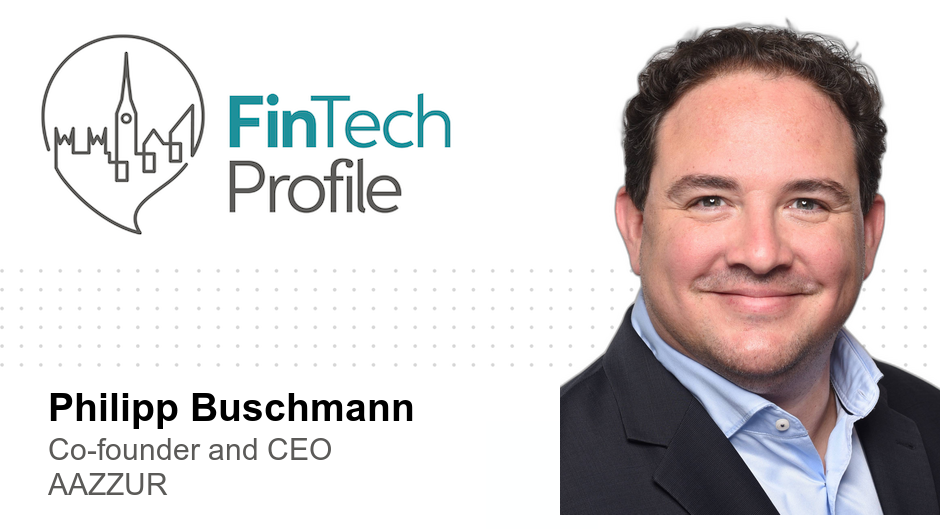
Today we're delighted to speak with Philipp Buschmann, Co-founder and CEO of AAZZUR, the embedded finance orchestration platform helping businesses launch banking, card, lending and wealth products in weeks rather than years. Fresh from closing an oversubscribed £2 million funding round and named one of TechRound's FinTech50 for 2026, Philipp shares his vision for a future where financial services disappear into the fabric of everyday life, why orchestration is becoming critical infrastructure, and how AI agents are about to transform the industry.
Philipp is a returning guest: we first profiled him in July 2024, and he shared his advice to banks on AI earlier this year.
My questions are in bold - over to you Philipp:
Who are you and what's your background?
I'm a serial entrepreneur who has built and scaled businesses across challenger banking, financial services, IT and energy, one of my earlier ventures, Ignis Petroleum, we took public in both the US and Germany. So I've seen the founder journey from both the glamorous end and the 3am-spreadsheet end.
My career actually started at the keyboard, as a software developer in financial services. That gave me a front-row seat to banking's transformation from both the technology and the commercial side, and it left me with a conviction I've never shaken: most financial products are built around the bank, not the human. My fascination with behavioural economics comes from exactly that gap, and it still shapes everything we do at AAZZUR.
I hold an MBA from London Business School, and I've never lost the itch for entrepreneurship or for a good argument about where FinTech is heading. I speak regularly at industry events including Money20/20, MoneyLIVE, FinTech Matters, the Future of Retail Banking, and most recently FinovateEurope 2026, where we demoed the latest version of our platform and I ended up on the SOURCE CODE podcast talking about AI in banking.
What is your job title and what are your general responsibilities?
I'm the co-founder and CEO of AAZZUR. My job is to set the strategic direction, keep us innovating, and work closely with our partners as they embed financial services into their customer experiences. Since closing our latest funding round, a lot of my energy has gone into scaling the commercial side such as new markets, new partnerships, new use cases.
The other big slice of my time goes to AI. Not the buzzword version, the practical question of how intelligent, agent-driven experiences change what a financial product even is. My rule for the team is simple: technology earns its place only when it makes the customer's life measurably better.
Can you give us an overview of your business?
AAZZUR is an embedded finance orchestration platform. In plain English: we let any business plug financial services, accounts, cards, lending, wealth, insurance, directly into their customer journey, without spending two years and several million on integrations. Our platform offers over 70 'Smart Finance Blocks', pre-built, compliant components that snap together with a pre-integrated network of fintech partners, so our clients launch in weeks rather than years.
Our vision has always been to reimagine financial services around how people actually live and spend, rather than around product silos. A traveller shouldn't have to think about FX; a gig worker shouldn't wait a week to be paid. Embedded finance done right is invisible, it just shows up at the moment of need.
The market reaction has been the best proof point. We work with partners across travel, lending, luxury retail and the gig economy, organisations including TUI, Société Générale and Equals, and in the past year we've added partnerships with Corpay Cross-Border for global payments, Wallester for European card issuing, Railsr for wealth, Doshi for AI-driven financial engagement, and KYP for partner risk monitoring. We were named one of TechRound's FinTech50 for 2026, following our Mastercard Fintech Forum Europe award for product innovation.
Tell us how you are funded?
We've taken the classic staircase: founder capital and angels early on, then top-tier accelerators, including Techstars and Plug and Play, plus Accenture's FinTech Innovation Lab in London, and now institutional investment.
In October 2025 we closed an oversubscribed £2 million round led by Haatch, with participation from Alert Venture Foundry, Alumni Ventures, Great Stuff Ventures, Tyr Ventures and Tenity. What made that round special was the timing: we'd just posted excellent year-on-year revenue growth, so the capital isn't keeping the lights on, it's accelerating what already works. We're using it to expand use cases across banking, cards, lending and wealth, and to push our go-to-market harder.
What's the origin story? Why did you start the company?
AAZZUR was born in Vienna in 2017, out of a paradox my co-founders and I kept running into: banks, traditional and challenger alike, were expected to deliver ever more innovative, customer-centric services, while customers increasingly expected those services to be free. Something had to give.
Our answer was that banking shouldn't be a destination at all. Financial services needed to become personalised, intuitive and woven into everyday life, built around lifestyles and behaviours, not around product catalogues. If someone books a safari, the travel insurance, the multi-currency card and the spending insights should assemble themselves around that moment.
So we combined our expertise across banking, payments and technology and built the orchestration layer that makes this possible: a way for businesses to deploy embedded financial services quickly, compliantly and profitably. Eight years on, that founding thesis, embedded finance reshaping banking, has gone from contrarian to consensus. We just got there early.
Who are your target customers? What's your revenue model?
Our customers are businesses that want to embed financial products into their customer journeys, banks and fintechs modernising their stack, and brands adding financial services for the first time. Today we work across travel, lending, luxury retail and the gig economy, with organisations including TUI, Société Générale and Equals, and our pre-integrated partner network spans names like Wise, Treezor, Edenred, Wallester and Corpay.
The revenue model is straightforwardly B2B: a platform fee for the orchestration layer, plus usage-based fees and revenue share as the financial products our clients embed start to scale. I like that alignment, we only do well when our partners' embedded finance propositions actually perform.
The pattern with every client is the same: what used to be a two-year integration programme becomes a launch measured in weeks, and what used to be a cost centre becomes a revenue line.
If you had a magic wand, what one thing would you change in the banking and/or FinTech sector?
I'd wave it at the product-first mindset. Too many legacy institutions still start with 'what products do we have to sell?' instead of 'what is this customer trying to do?'. Consumers have moved on, they expect financial services to be personalised, contextual and frictionless, the way everything else on their phone already is.
Banking is heading towards embedded, invisible services that fit naturally into everyday life. My magic wand would simply speed up the industry's acceptance of that, because the shift is happening either way, and resisting it just hands the future to someone else.
What is your message for the larger players in the Financial Services marketplace?
You don't have to build everything yourselves, and you shouldn't try. The future of financial services isn't standalone banking products; it's embedded experiences, and no single institution can assemble all of that alone. The winners will combine responsible AI, customer-centric design and genuine partnerships, letting financial services become an invisible but deeply valuable part of everyday life.
And a practical note: your biggest constraint isn't ideas or budget, it's speed to market. Orchestration, plugging into what already works instead of rebuilding it, is how you compete with players who ship in weeks.
Where do you get your Financial Services/FinTech industry news from?
There is lots. I like Embedded Finance review by Lars, also his events are top. There is also Simon Taylor's Fintech Brainfood newsletter. Day to day I keep an eye on Finextra and FF News for the deal flow, and Sifted for the European startup pulse. And honestly, LinkedIn has become a surprisingly good fintech newsroom if you curate who you follow ruthlessly.
Can you list 3 people you rate from the FinTech and/or Financial Services sector that we should be following on LinkedIn, and why?
I don't follow many people on LinkedIn these days. I used to spend more time on the platform, but nowadays I tend to keep up with developments in fintech through a broader mix of industry news, company announcements and conversations rather than individual LinkedIn feeds.
What FinTech services (and/or apps) do you personally use?
Living between Berlin and London, multi-currency is not a hobby, it's survival, so Wise and Qonto get daily use (and Wise is part of our partner network, so I get to be a customer and a colleague). I invest through Trade Republic, a great example of Berlin fintech done well. And I'm forever testing our partners' and clients' products, occupational hazard of running an orchestration platform.
But we are switching to our own product. Keep your ears peeled for that news.
What's the best new FinTech product or service you've seen recently?
Doshi (https://www.doshi.app) - an AI-native financial engagement platform that turns financial education into something people actually want to do, already working with the likes of TSB and Lloyds. Full disclosure: we rated them so highly that we partnered with them earlier this year, behavioural economics meeting embedded finance is exactly my kind of product.
I like what W Money is going to build.
I like what some of our clients are building.
Finally, let's talk predictions. What trends do you think are going to define the next few years in the FinTech sector?
Three trends stand out to me.
First, AI is moving from answering questions to doing the work. The last two years were about copilots; the next few are about agents, onboarding customers, catching fraud, making credit decisions and increasingly executing financial tasks on our behalf. AI stops being a differentiator and becomes infrastructure, and with regulation like the EU AI Act maturing, deploying it responsibly becomes a feature, not a burden.
Second, embedded finance keeps disappearing into the fabric of everyday life, and the frontier is physical. Your car negotiating its own charging and parking payments, airlines turning the seat-back into a storefront, gig platforms paying workers the moment a job completes. Finance is showing up at the point of need and vanishing from view everywhere else.
Finally, orchestration becomes critical infrastructure. As the fintech ecosystem consolidates, the winners won't be whoever holds the most licences, they'll be whoever can assemble compliant, profitable financial products fastest. Interoperability and speed to market will define the next phase of FinTech. Naturally, I would say that, but the past year of our partnerships, from card issuing to cross-border payments, suggests the market agrees.
Many thanks to Philipp for taking the time to share his insights with FinTech Profile. You can learn more about AAZZUR on their website.