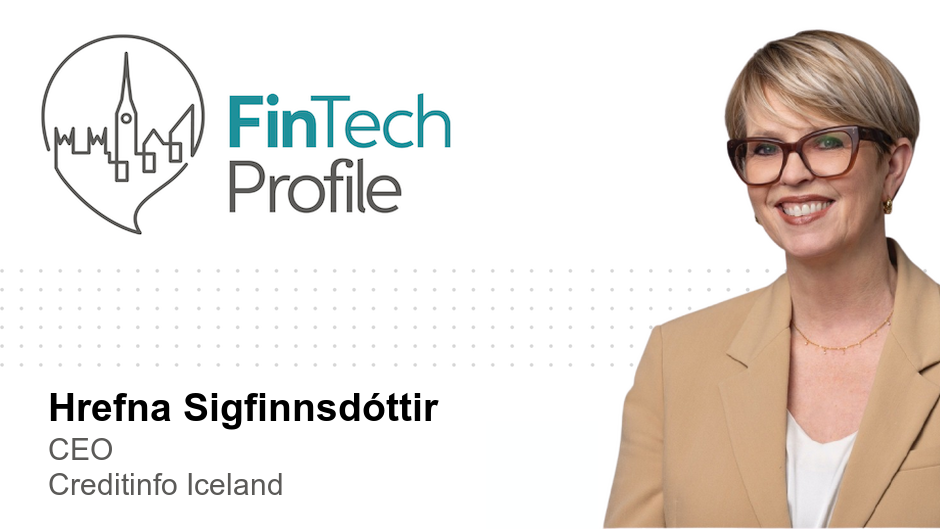
David Zwick, Chief Financial Officer, Billtrust
David Zwick discusses three decades in finance, why AR automation matters, and how CFOs should approach AI investment with discipline over hype.
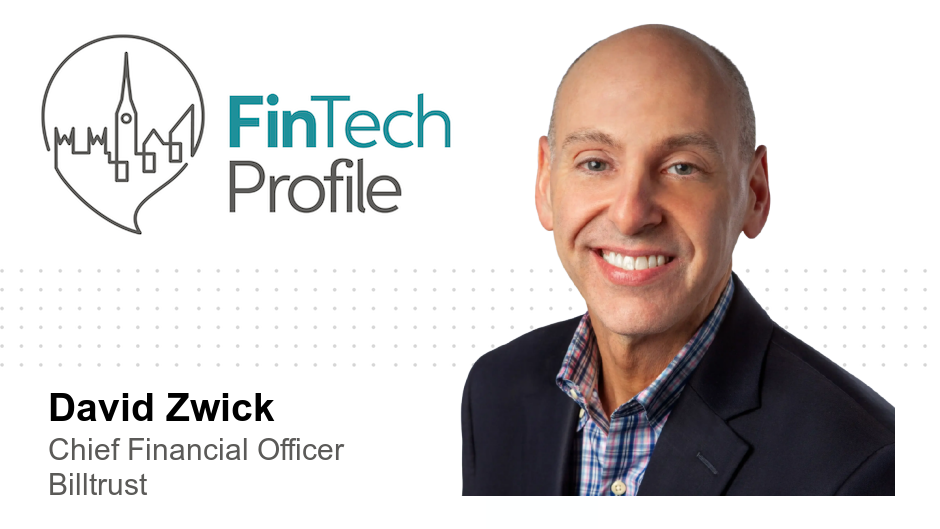
Today we're delighted to speak with David Zwick, Chief Financial Officer at Billtrust. With over three decades of experience spanning Arthur Andersen, Lehman Brothers, and five CFO roles across public and private markets, David brings a unique perspective on how AI and automation are transforming accounts receivable - and why finance leaders must approach these investments with rigorous discipline rather than following the hype.
My questions are in bold - over to you David:
Who are you and what's your background?
I've spent more than three decades working at the intersection of finance, operations, and technology. I started my career at Arthur Andersen, as a Certified Public Accountant, and later moved into investment banking at Lehman Brothers / Barclays Capital (including two years in Hong Kong on an international assignment). Here I learned how capital structure, operating discipline and market cycles shape the long-term trajectory of a business.
Since then, I've served as the CFO of five companies across both public and private markets.
What's been consistent throughout my career is a focus on the systems that determine how receivables actually move - how invoices and cash flow through an organisation and how credit decisions are made. That lens is ultimately what led me into fintech.
Accounts receivable (AR) is often under-invested compared to other parts of the finance stack, even though it controls the timing and predictability of cash inflows. Modernising those workflows with AI, automation and better data directly improves collections speed, strengthens working capital and builds a firm's financial resilience, so I'd argue it's critically important.
What is your job title and what are your general responsibilities?
I'm the Chief Financial Officer at Billtrust, which means I'm responsible for the company's financial strategy, planning, capital allocation and risk management.
A core part of my role is ensuring every dollar we deploy is tied to a specific cash outcome, whether that's shortening the number of days it takes to collect payments, freeing up cash that's stuck in receivables or working with our leadership to accelerate growth.
I'm also responsible for how our internal operating model at Billtrust evolves. This is why I spend time with our product, engineering and customer teams to understand how credit decisions are made, how disputes move through the system and where accountability sits in cash application and collections.
Today, our clients' customers are paying more slowly, dispute volumes are rising and AR teams are being asked to manage higher workloads with fewer resources. My responsibility is to ensure that Billtrust can also manage headwinds of this type by giving my team clearer insight, and the ability to automate tasks that consume time. We aim to keep people in control of the decisions that matter as payment behaviour changes faster than existing approaches can keep up.
Can you give us an overview of Billtrust?
Billtrust has been focused on one thing for more than two decades: help finance teams accelerate cash flow by modernising accounts receivable. AR is one of the last major financial functions to be fully digitised, and the gap between manual processes and today's payment cycles is widening. Our platform uses AI to automate invoicing, cash application, credit decisions, collections workflows and the analytics woven through everything.
What differentiates us is the combination of automation and configurability. Organisations need rules that reflect their customers, their risk appetite, their industry and their cash priorities. Our AI capabilities adapt to those nuances, and the result is faster payments, lower overhead and better visibility into working capital.
We also see the full spectrum of payment behaviour across industries, which gives us a unique vantage point. When customers are paying more slowly, or fraud patterns shift, we see it early. That insight leads to the creation of tools that help finance teams make better decisions under pressure.
If you had a magic wand, what one thing would you change in the fintech sector?
I would like to warn other CFOs and finance leaders to be aware of the hype and FOMO around committing to major AI deployments. In the early stage of any technology cycle, the danger is uniform enthusiasm. Too many fintech deployments focus on features rather than workflows, where a new tool gets layered on top of an old process, leaving users surprised when the returns are marginal. Adoption metrics are not an outcome, so we should all be very mindful and disciplined about how we measure success.
The organisations getting the strongest returns on fintech investment in accounts receivable are those applying the hardest internal scrutiny. They ask whether each deployment ties directly to outcomes like reducing the number of days it takes them to collect cash after issuing an invoice, improving working capital or strengthening fraud defences.
What trends will define the next few years in fintech?
Most CFOs are doing two things at once: investing heavily in AI and questioning whether that spending will hold up over time. 65% of finance leaders already allocate at least a tenth of their budgets to AI and automation and that level of investment, paired with healthy scepticism, is what keeps the market disciplined. Remember, AI investment into AR needs to be tied to a specific cash outcome. If it can't clear that bar, it belongs in an experimentation budget, not the operating budget.
The other major trend to keep an eye on is fraud defence. We expect to see a sharp rise in investment into this area, and into deepfake detection in particular. Fraudsters have quickly adopted AI to enhance the frequency and effectiveness of their attacks, so those of us in finance need to adapt and use AI as an additional security layer that protects our firms.
We'd like to thank David for sharing his insights with us. To learn more about Billtrust and their work modernising accounts receivable, visit their website.