Fix the Plumbing First: Steve Round on the Unglamorous Groundwork Behind Agentic AI
Steve Round explains why fewer than a third of banks run AI in core operations, and what needs fixing before agentic AI can deliver real value.
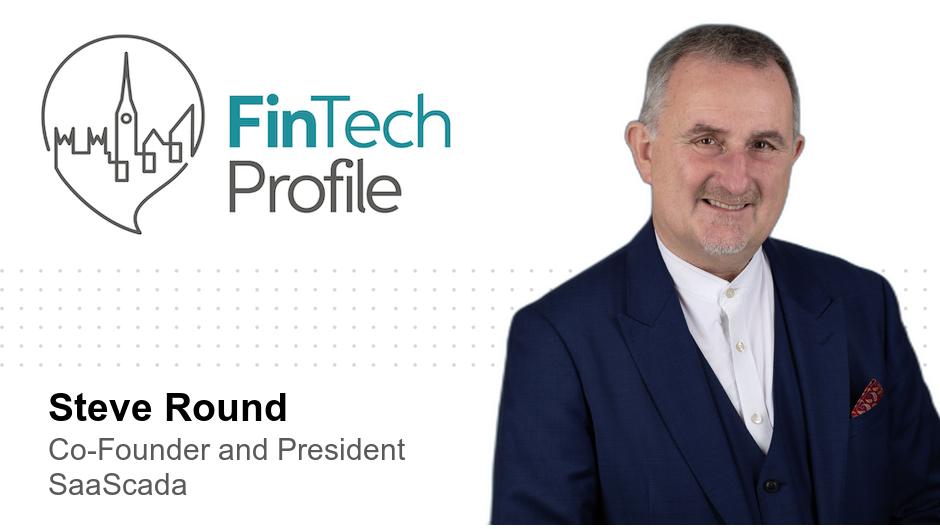
Today we're hearing once again from industry luminary, Steve Round, Co-Founder and President of SaaScada. With agentic AI dominating boardroom conversations yet struggling to gain traction in core banking operations, Steve shares why legacy systems and fragmented data are holding banks back - and what needs to change before AI can deliver genuine operational value.
My questions are in bold - over to you Steve:
Agentic AI is the phrase on everyone's lips right now, yet your research says fewer than a third of banks (31%) are running any AI in core operations. Where's the gap between the boardroom ambition and the operational reality?
There's no shortage of excitement around agentic AI. The reality facing most banks, though, is that legacy systems and fragmented data still sit at the heart of their operations, with many core processes still running manually. That is exactly the environment AI struggles in.
An agent has to act on what is happening right now, but a legacy core processes in batches and surfaces data hours after the event, so it often arrives too late to be useful. Data is also scattered across disconnected systems, so no single source holds the full picture an agent would need.
Banks have understandably spent a lot of time improving the front end, because that is what customers see. But that is not where the biggest operational value will come from. The harder, messier work is in the back end: fixing the processes, data flows and core systems that determine whether the bank can actually act faster, make better decisions and run more efficiently.
Since AI is only ever as good as the information feeding it, these foundations simply cannot supply what is needed. The result is that AI cannot be put to work properly in core operations, and many promising use cases stay stuck at the proof-of-concept stage.
You've described some banks' approach as trying to "race an Aston Martin over cobblestones." Unpack that for us – what specifically is the cobblestone, and why can't the AI just be bolted on top?
The Aston Martin is the AI, the expensive and powerful tool everyone wants. The cobblestones are the core systems underneath, most of them built for a world where a person made each decision and the system simply recorded it afterwards. Agentic AI works the other way round, reading what is happening and acting on it in close to real time, so it needs a clean and continuous flow of data at the moment events occur. A legacy core that gives you yesterday's position this morning cannot provide that.
This is why you cannot simply bolt it on. You can connect a clever model to an old core through a retrofitted interface and it will look impressive in a demo, but it is still being starved of the live data it was designed for, so the results come slower and prove less reliable. The sensible order is to fix the road first, so the car is worth driving.
More than three-quarters of banks point to legacy systems and poor data quality as the things holding AI back. Of those two, which is the harder problem to fix – and why?
Data quality is harder because it is not a single thing you can rip out. It is the build-up of years of systems that were never designed to talk to one another, so the same customer can look different in different places. You can install a brand new core and still be sitting on all of that messy data behind it, which leads to AI making poor decisions and banks struggling to explain or defend them. It is telling that only around 12% of banks feel confident they could justify an AI-driven decision to a regulator today.
Only one in ten banks have fully automated core processes like standing orders, scheduled payments and interest posting. Why has something so apparently basic stayed manual for so long, and what's the real cost of leaving it that way?
Core processes have remained manual because they are so important. Calculating daily interest across millions of accounts, applying standing orders, posting payments: this is high-volume work where a mistake is immediately visible to customers and regulators, so keeping a human in control felt like the safe choice.
But the cost of staying manual is already being felt. Our research found that 89% of banks describe a process like calculating daily interest as painful, and 63% call it very or extremely so, with those still doing it by hand reporting far more pain than those that have automated.
While automating it removes the immediate pain, it does not solve the deeper problem. Much of this work runs as end-of-day batch processing, so the data only becomes available once the overnight run has finished, rather than as events happen, which is the opposite of what an agent acting in real time needs. Manual handling makes this worse by introducing inconsistencies and gaps, but the underlying constraint is the batch model itself. So the longer these processes stay tied to overnight runs, the weaker that foundation for AI will be.
There's a temptation to treat AI as the thing that finally forces the core-systems modernisation banks have ducked for years. Is that a fair reading, or does it risk banks spending on AI to paper over foundations they still haven't fixed?
AI can put core modernisation back on the agenda, but it cannot do the hard work for banks. There is a temptation to treat it as the thing that will finally solve years of underinvestment, slow buying cycles and difficult decisions around legacy systems. But AI is not a magic bullet. If the core is fragmented, the data is poor and the processes are still manual, AI will simply inherit those problems.
This is where banks have been stuck for years. Modernising the core is seen as risky, expensive and career-limiting if something goes wrong. RFP processes often reinforce that caution, because they reward the option that looks safest on paper rather than the one that will deliver the most operational change. So banks keep adding new layers on top, hoping to get more life out of systems that should already have been fixed.
That paper-over-the-cracks mentality is becoming harder to defend. Outages are rising, operational resilience is under pressure, and the gap between what banks want to do with AI and what their infrastructure can actually support is getting wider. Regulation will continue to be the thing that forces action, but banks would be better off moving before they are pushed. The priority has to be fixing the core problem: better data, more automation and infrastructure that can support real-time banking. Only then does AI become useful rather than another layer of complexity.
For a bank that wants agentic AI to actually deliver value rather than sit in a pilot, what does the right sequence of work look like over the next 12-18 months?
Banks need to start with the operational reality, not the AI ambition. The first question is not "where can we deploy agentic AI?", but "what can our current core actually support?" They need to look honestly at where the limitations are: how much still depends on manual work, where data is delayed or fragmented, whether the platform is truly cloud-native, and whether it can actually process and surface information in real time.
That assessment matters because agentic AI depends on live, reliable data and processes it can act on. If the core still runs in batches, relies on workarounds or cannot give a clear view of what is happening now, AI will struggle to deliver value beyond a pilot.
Over the next 12 to 18 months, the priority should be fixing the operational foundations. That means automating routine processes such as daily interest, scheduled payments and exception handling, improving data quality, and creating the conditions for faster, more reliable decision-making. These are not glamorous use cases, but they are where the bank creates the foundations AI needs to work.
Crucially, this does not require a high-risk, big-bang core replacement. A modern, cloud-native core can run alongside the legacy core, with products, processes or customer groups moved across in stages. That dual-core model lets banks modernise faster and de-risk the process at the same time. It gives them a practical route to test, prove and scale change while creating the real-time operating model AI needs to deliver value.
Where do you see agentic AI delivering genuine, measurable value in banking first – and where is it currently overhyped?
The quickest value add would be back office, especially in high-volume operational work like reconciliation and exception handling. These processes can be easily defined to establish what good looks like, while risk is contained. Banks themselves rank compliance monitoring highest, though the bigger prize is automating the fundamental processes underneath it, which is where most are still weakest.
At the other end of the scale is a fully autonomous agent making high-stakes decisions about people's finances with little human oversight. Accountability creates the barrier, as very few banks could currently explain an AI-driven decision to a regulator, and most accept that succeeding with AI means proving it is explainable and trustworthy, not just efficient.
If you were advising a bank CEO who's under board pressure to "have an AI strategy" but knows the plumbing isn't ready, what's the one piece of advice you'd give them?
If a toilet is broken, you don't make it usable by painting the door. You fix the plumbing first. Buying an AI model while the data and core systems underneath are broken is the same mistake, it looks like progress, but nothing actually works any better. So the first thing I would tell the board is that, in a bank where the foundations are not ready, the AI strategy is really a data and infrastructure strategy. The first step has to be getting the data and core right, so the AI you bring in later actually works and can be defended to a regulator.
It's much better to be realistic now, and focus on the unglamorous groundwork. The payoff comes once the AI has something solid to run on. The banks that come out ahead will not necessarily be the ones with the best ideas, but the ones whose foundations can actually carry them.
Many thanks to Steve for sharing his insights with us. Find out more about SaaScada at www.saascada.com.
More from Steve Round
- Five Things FinTech Needs to Fix (January 2026)
- Steve Round, Co-Founder of SaaScada (March 2024)
- Nelson Wootton, Co-Founder & CEO, SaaScada (January 2025)