Ines Salhi, Chief Product Officer, PayFit
Ines Salhi discusses PayFit's evolution from SaaS platform to AI-powered payroll service, and why financial services must rethink complexity, not just digitise it.
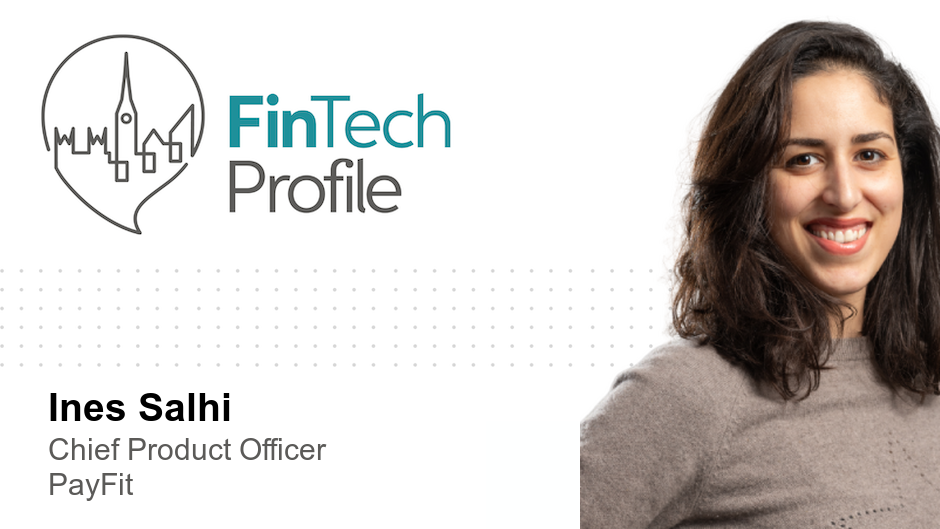
Today we're delighted to speak with Ines Salhi, Chief Product Officer at PayFit, a payroll and HR service supporting over 22,000 businesses across Europe. As PayFit transforms from a SaaS platform into an AI-powered service, Ines shares her insights on product leadership, the role of AI in reshaping financial services, and why removing complexity - not just digitising it - is the next frontier for fintech.
My questions are in bold - over to you Ines:
Who are you and what's your background?
I'm Ines Salhi, Chief Product Officer at PayFit. I'm an engineer by training and graduated from CentraleSupélec in Paris.
I have always had a tendency to go deeply into a problem and try to understand what is happening at its root. That instinct is what initially attracted me to engineering. It is also what eventually brought me into product.
Understanding what users expect, and, more importantly, the job they are truly trying to accomplish, requires the same kind of reasoning. You have to look beyond what someone first tells you, keep asking why, and uncover the real problem underneath. I find that process both intellectually demanding and genuinely fascinating.
Before PayFit, I founded a software company focused on transport route optimisation. I initially did it because I wanted to understand what it really meant to start and build a business. It taught me that there can be a considerable distance between the problem you think a customer has and the problem they actually experience. Learning how to close that gap is a craft in itself, and it is one of the reasons I decided to build my career in product.
I joined PayFit in 2018, when the company had around 100 employees and was only three years old. What attracted me first was the people: the talent, ambition and energy within the company. The second factor was the size of the opportunity. Payroll is a huge market, and simplifying it, particularly in Europe, is an exceptionally interesting product and design challenge.
Since then, I have experienced PayFit's product journey from several perspectives: initially building the technology hands-on and now leading the teams shaping its future.
What is your job title and what are your general responsibilities?
I'm Chief Product Officer (CPO) at PayFit, leading product management, design, product builders, product compliance and AI operations.
My fundamental responsibility is to ensure that we are working on the problems that will create the greatest value for our customers. A significant part of the role therefore involves continuous research: speaking with customers, conducting interviews and studying the interactions they have with PayFit. It is essential to stay close to what customers are actually experiencing, rather than relying solely on our assumptions.
The next step is translating that understanding into our roadmaps and making sure we have the right level of ambition. This is particularly important with AI. PayFit AI is developing very quickly, so part of my role is ensuring that our direction, pace and ambition are clear across the organisation.
Much of a CPO's work is turning something initially ambiguous into a clear strategic direction: where we are going, why a particular project matters and how ambitious we intend to be. I then need to make that understandable and actionable for our product, design and engineering teams, so everyone can move in the same direction.
I also remain very close to execution. I test important releases and look at the details, particularly when something will have a significant customer impact. I believe it sends an important message when the CPO demonstrates the same curiosity and product-quality expectations that we ask of every team.
Another major focus today is transforming how product, design and engineering work together. The aim is to increase both velocity and quality, but, above all, quality.
Can you give us an overview of your business?
For its first ten years, PayFit was primarily a SaaS platform that enabled thousands of businesses to manage payroll and many of their HR processes independently, with ongoing support from payroll and HR experts.
Today, we are entering a new chapter. PayFit is becoming an AI-powered payroll and HR service. Our ambition is to take care of payroll operations, from collecting payroll variables through to statutory declarations, while giving customers real-time visibility and allowing them to validate the key stages.
Our difference comes from combining three elements. First, we have a technology platform designed around simplicity, transparency and visibility. Second, we have 200 payroll experts who understand our customers' contexts and intervene when their expertise is needed. Third, we have PayFit AI, an operational companion that is progressively moving beyond answering questions to acting within payroll and HR processes.
We do not think businesses should have to choose between operating payroll entirely by themselves or outsourcing it through a model that can sometimes lack transparency. With PayFit, customers can choose how involved they want to be. They retain control at the moments that matter while relying on PayFit as a genuine payroll and HR partner.
Ultimately, we want PayFit to become the central system from which leaders manage everything connected to their people, payroll and HR initially, followed progressively by areas such as health insurance and IT equipment. The objective is to remove operational complexity and mental load, so businesses can concentrate on their people and their growth.
Tell us how you are funded.
PayFit has raised €433 million in total from investors, including General Atlantic, Eurazeo, Bpifrance and Accel. Our most recent major round was a €254 million Series E in 2022.
In 2026, PayFit also reached profitability for the first time. We see profitability as a new starting point: it gives us a solid foundation from which to invest in the next evolution of our service and pursue our ambitions responsibly.
What's the origin story? Why did you start the company, and what problem were you trying to solve?
PayFit was founded in 2015 by Firmin Zocchetto, Ghislain de Fontenay and Florian Fournier around a simple belief: payroll was far too complex, particularly for smaller businesses, and technology could make it much more accessible.
The company built its own payroll technology from the ground up and launched in France in 2016. As customers' needs evolved, PayFit expanded beyond payroll into HR workflows and then into Spain and the UK.
The problem has also become clearer over time. Businesses do not fundamentally want to "do payroll". They want employees to be paid correctly and on time, to remain compliant and to understand what is happening without carrying the stress and complexity themselves.
That is why our evolution into a service matters. We are no longer only improving the tool through which customers perform payroll. We are increasingly taking care of the outcome by combining technology, AI and human expertise, while preserving visibility and customer control.
Who are your target customers, and what's your revenue model?
PayFit supports more than 22,000 businesses across France, Spain and the UK, helping to pay approximately 250,000 employees each month.
We work with companies from their first employee through to organisations with several hundred people. Our service is provided through a recurring subscription model, with the level of service and functionality adapting to the company's size, complexity and desired level of involvement.
What connects our customers is not simply their size. It's their desire to remove payroll and HR complexity while retaining clarity and control.
If you had a magic wand, what one thing would you change in banking or FinTech?
I would remove the assumption that customers must carry the complexity of a financial service in order to remain in control.
Many companies have digitised existing processes without fundamentally rethinking them. The interface may be more modern, but the complexity, decisions and responsibility often remain with the user.
The next step is to build services that genuinely take responsibility for the desired outcome while giving customers transparency and control at the important moments. Good technology should not merely make a complex process easier to understand. It should absorb much of that complexity and surface only the information and decisions that truly matter.
What is your message for the larger players in the Financial Services marketplace?
Do not treat AI as another feature to place on top of an existing product or workflow. It is beginning to challenge the structure of the product itself.
We now need to ask fundamental questions. When is a traditional user interface still the best way to interact with a service? When should an agent perform the work instead? How should products interact with agents from other platforms? Where should the boundaries and permissions sit?
The institutions that benefit most will not necessarily be those that launch the greatest number of AI features. They will be the ones willing to reconsider their processes, interfaces and operating models while remaining extremely disciplined about trust.
In financial services, trust must be earned progressively. Users need to understand what an AI intends to do, why it is recommending an action and what the consequences will be. Permissions, validation steps and a clear record of every action are not constraints on AI innovation, they are what will make meaningful adoption possible.
Where do you get your Financial Services and FinTech industry news from?
Mostly through LinkedIn and Maddyness. LinkedIn gives me direct access to what founders and product leaders are thinking, while Maddyness helps me follow the French and European technology ecosystem.
Can you list three people from FinTech or Financial Services that we should follow on LinkedIn, and why?
Arthur Waller, co-founder and CEO of Pennylane, for his perspective on modernising financial management and accounting.
Alexandre Prot, co-founder and CEO of Qonto, for his insights into product development and scaling a European fintech.
Nicole Casperson inspiring founder of Fintech Is Femme, for her inclusive way of seeing innovation in fintech.
What FinTech services or apps do you personally use?
I use Sumeria, formerly Lydia, BoursoBank and Revolut. They each make everyday banking and payments simpler, faster and more transparent.
What's the best new FinTech product or service you've seen recently?
Qonto is a product I know through my husband, who uses it to manage his company's finances. What stands out is the clarity and consistency of the experience: it makes everyday financial management feel much simpler.
Finally, what trends do you think will define the next few years in FinTech?
AI is already transforming the sector, and it will remain the defining subject for the next several years. The important question is no longer simply how to add AI to a product. It is how AI changes the nature of the product itself.
Many thanks to Ines Salhi for taking the time to share her insights with FinTech Profile. You can learn more about PayFit on their website.