Jamie Brown, CEO and Co-Founder, Global Kiwi Labs
Jamie Brown, CEO and co-founder of Global Kiwi Labs, explains how TheHUB brings fair-access colocation to digital asset markets, and why he expects TradFi and DeFi to converge into a single market architecture.
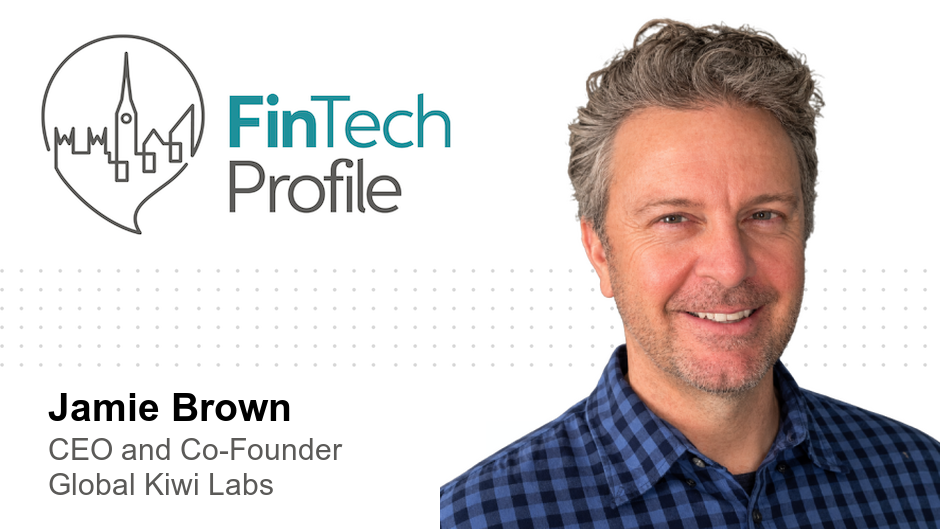
Today we’re delighted to speak with Jamie Brown, CEO and co-founder of Global Kiwi Labs, the company building TheHUB, a purpose-built colocation infrastructure for digital markets. Following a $4M seed round led by Valor Capital Group, Jamie discusses fair-access infrastructure, the convergence of traditional and decentralised finance, and why equalised latency and clearing will matter for the next generation of markets.
My questions are in bold - over to you Jamie:
Who are you and what's your background?
I'm the CEO and co-founder of Global Kiwi Labs, the company building TheHUB, which recently closed a $4M seed round led by Valor Capital Group. I bring 30 years of experience across capital markets infrastructure, as a consultant to major global exchanges and within infrastructure teams at high-frequency trading firms. I spent almost a decade designing fair-access colocation infrastructure for some of the world's largest exchanges, and designed TheHUB's equalization system using the same core technology.
What is your job title and what are your general responsibilities?
As CEO of Global Kiwi Labs, my role involves holding the vision for TheHUB and overseeing all aspects of TheHUB's growth, from site and network development, to nurturing relationships with venues and infrastructure providers. Following our seed round, a big part of my focus right now is putting that capital to work: building out our engineering team and planning our expansion into new geographies.
Can you give us an overview of your business?
Global Kiwi Labs is the company building TheHUB, the first purpose-built colocation infrastructure for digital markets. TheHUB brings the same fair-access infrastructure architecture that underpins the world's largest exchanges to digital assets. Our first site, inside Equinix TY15 in Tokyo, is live and onboarding exchanges, trading firms and validators. Trading firms, exchanges, bare metal providers and node operators can deploy their infrastructure there, connected through one network with equalized latency. Participants can bring their own servers or use bare-metal or on-prem cloud providers. TheHUB is the infrastructure underneath, not an exchange: each venue runs its own matching engine and trading rules. We're backed by Valor Capital Group, alongside Adderall Capital, Keyrock, Staking Facilities and a select group of angel investors.
Tell us how you are funded?
Global Kiwi Labs raised a $4 million seed round led by Valor Capital Group, with participation from Adderall Capital, Keyrock, Staking Facilities and a select group of angel investors. Having a market maker like Keyrock and a validator operator like Staking Facilities on board is a strong signal; they're exactly the kinds of firms TheHUB is built to serve. The funding made our first site possible, and will allow us to grow our engineering team and expand into new geographies.
What's the origin story? Why did you start the company? To solve what problems?
I grew up in a small town in New Zealand, which is where the name Global Kiwi came from. After two decades in telecom and high-frequency trading both in London and New York, I spent almost a decade designing fair-access colocation infrastructure for some of the world's largest exchanges. Traditional financial markets didn't reach today's levels of performance through software alone, they built specialized physical infrastructure around the markets themselves. Digital asset markets are reaching the point where they need the same foundation: a lot of digital asset trading still runs from the cloud, trading firms have to figure out how to connect to venues and market data themselves, and latency differences can mean they don't receive information at the same time. We're building TheHUB so exchanges, traders, and infrastructure providers can access that foundation as a shared network rather than rebuilding it independently. Inside TheHUB, every participant's connection to the central switch is equalized to the same length of fiber, so no one sits closer to the market's matching engine. The fact that market participants were willing to invest in our seed round tells us the industry feels this problem too.
Who are your target customers? What's your revenue model?
Exchanges, trading firms, bare metal providers, node operators and validators. Revenue comes from colocation (space and power), ports and cross-connects, with market data as a longer-term line. As we expand into new geographies, each new site adds capacity we can sell across all of these revenue lines.
If you had a magic wand, what one thing would you change in the banking and/or FinTech sector?
I don't need a magic wand, I have TheHUB.
What is your message for the larger players in the Financial Services marketplace?
My message is that we are focused on building an infrastructure layer that allows blockchain-enabled market places with innovative financial products to become regulatory compliant, allowing larger players to participate in these exciting new markets without regulatory risk.
Where do you get your Financial Services/FinTech industry news from?
I use multiple sources, including mainstream and traditional financial media, as well as socials and other news layers.
What's the best new FinTech product or service you've seen recently?
TheHUB and custom AI overlays, using multiple platforms, such as Perplexity, Claude, ChatGPT, and so on.
Finally, let's talk predictions. What trends do you think are going to define the next few years in the FinTech sector?
I don't believe decentralized finance will replace traditional finance. I believe the two will converge to create an entirely new financial market architecture. It won't be all of one or all of the other, it'll be the best of both: the regulatory certainty, institutional liquidity and risk management of traditional finance, combined with the programmability, composability, transparency, accessibility and 24/7 operation of blockchain markets. The distinction between TradFi and DeFi will become obsolete.
No single force creates that future. Blockchain and tokenization, agentic AI and compute, an evolving regulatory environment, institutional liquidity and 24/7 global markets are all driving toward the same place, and together they require low-latency infrastructure. I also think clearing becomes more important, not less. Smart contracts won't eliminate clearing houses; regulated clearing houses become the mechanism that connects blockchain-native markets with institutional capital, and exchanges become more modular rather than vertically integrated.
Underneath all of it, fair market access becomes the common denominator, because markets have always been built on trust: equalized access to infrastructure, independent timestamping, mitigation of predatory MEV, separation between market operation and proprietary trading, and non-discriminatory market data. TheHUB is the piece in the middle that everything can plug into.
Many thanks to Jamie for taking the time to share their insights with FinTech Profile. You can learn more about Global Kiwi Labs on their website.