Saeid Kian, Co-Founder and CEO, Ribbon
Saeid Kian shares how personal loss inspired Ribbon's mission to transform the inheritance process for credit unions, making it more empathetic and efficient.
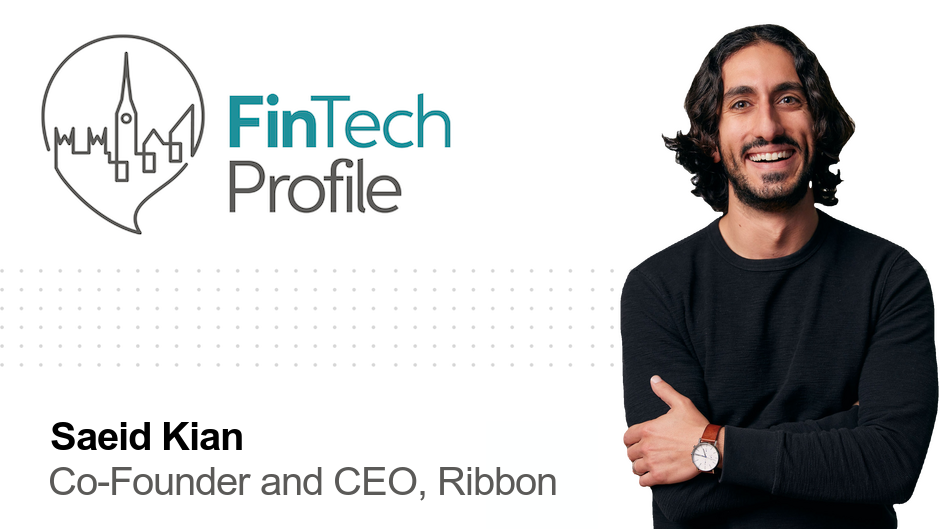
Today we're delighted to speak with Saeid, Co-Founder and CEO of Ribbon, a venture-backed startup transforming how credit unions handle inheritance. With over a decade in fintech and experience at Meta and Stripe, Saeid's personal journey through loss inspired him to build a platform that brings empathy back into financial services during life's most difficult moments.
My questions are in bold - over to you Saeid:
Who are you and what's your background?
I have more than 10 years in fintech, and my previous career paths led me to join the ranks of Meta and Stripe. My career took me around the world, from the United States to Singapore, Myanmar, and Laos.
I studied Political Science and Government at the University of Virginia before pursuing a career in fintech.
I received the news that my dad had been diagnosed with pancreatic cancer while working for Stripe in Singapore. This is what kick-started my journey to founding Ribbon.
What is your job title, and what are your general responsibilities?
I'm the CEO of Ribbon, and that means I do a bit of everything, whether that's chipping in on the backend configuration or speaking at events to champion what we're doing and connect with like-minded industry counterparts. Although if I had to boil it down to stricter parameters, most of my job focuses on business development and client satisfaction.
Can you give us an overview of your business?
Ribbon provides a SaaS platform that enables credit unions to launch their own digital inheritance centres that don't compromise on empathy or efficiency. By powering a smoother and more streamlined inheritance process for account holders, Ribbon also helps credit unions retain deposits, lower operating costs, and improve member experiences.
Our AI software also includes widgets that can be embedded into institutions' digital frameworks and websites. This means that credit unions can scale automation in their workflows, slashing paperwork and drawn-out processes in a digital-first setup.
Tell us how you are funded?
We raised $2.7 million in pre-seed funding led by One Way Ventures and Haymaker Ventures early last year. The pre-seed also included angels such as the ex-GC of Stripe Jon Zieger, ex-GC of Calm Jacques Lehot, and CEO of Polywork Peter Johnston.
What's the origin story? Why did you start the company? To solve what problems?
In the wake of my dad's passing, I experienced firsthand the shortcomings of the inheritance process and how empathy was sorely lacking throughout. I decided that nobody else should have to endure that experience, which is what led me to found Ribbon.
Who are your target customers? What's your revenue model?
Our customers are credit unions and other financial institutions. We scale our pricing based on impact. We charge our customers on a monthly basis, depending on the number of deposits we can keep and how much time we can save.
If you had a magic wand, what one thing would you change in the banking and/or FinTech sector?
Making all experiences empathy-first, from A to Z. In a digital age where efficiency is the name of the game, it's so easy to forget the importance of empathy. I also think choice is important. While automation-driven services in the form of chatbots are saving a ton of time, account holders also want to know there's an actual person they can talk to when needed.
There's also way too much bureaucracy and paperwork involved that ends up making what should be a simple process incredibly convoluted. It shouldn't take multiple branch visits at inconvenient times of the day to file paperwork. More automation in the processes that make the most sense, like uploading documentation, needs to be more universal.
What is your message for the larger players in the Financial Services marketplace?
The race to the bottom is a commodisation game that can't be won. As digitisation strategies ramp up to new heights, the companies that ultimately win over customers are also the ones that differentiate on experience and empathy. A memorable experience for a customer isn't determined by how fast a chatbot answers their query, but the degree to which they felt seen and heard by a brand.
Where do you get your Financial Services/FinTech industry news from?
I try to read as much as I can to keep a pulse on things, so that means I source my industry news from a bit of everything. That includes social media like X and also all kinds of outlets.
Can you list 3 people you rate from the FinTech and/or Financial Services sector that we should be following on LinkedIn, and why?
- Brad Jones: Brad is a legend in the mobile money space. He almost single-handedly brought tens of millions of people into the financial services sector in Southeast Asia. This is one close to my heart as I spent a significant chunk of my own career working in this industry in Laos, Myanmar, and Singapore.
- Nav Khanna, CEO of First City Credit Union: He’s a legend in the credit union space and a long-time champion of member-centricity.
- Mohamed El-Erian: One of the industry’s most renowned experts. He frequently shares useful and fascinating insights on market trends.
What FinTech services (and/or apps) do you personally use?
I use Fidelity, Venmo, Vanguard, and Coinbase the most.
What's the best new FinTech product or service you've seen recently?
Coinbase gives instant access to staked crypto for a small fee. The platform has a very user-centred approach to product development.
Finally, let's talk predictions. What trends do you think are going to define the next few years in the FinTech sector?
There are a number of converging trends that are already underway, which are set to transform the next few decades, not just years. Probably the biggest one is the Great Wealth Transfer, where over a hundred trillion dollars is set to be inherited from mainly baby boomers. It's the biggest wealth transfer in human history, and now is the time for financial institutions to really get on top of their digital transformation strategies to engage these younger generations that make up the inheritors.
Speaking of younger generations, I also think financial institutions need to keep a close eye on Gen Z behaviours. Soon, they'll make up the lion's share of account holders and active members of the workforce. Their financial habits are incredibly unique to older generations, and could redefine how services are marketed and even structured.
Automated workflows are already transforming how finance and banking are done. It's not just a matter of how much is automated, but where and how. Financial institutions really have to think carefully about approaches to automation, particularly balancing that with the human-centric side of customer service that's just as important.
There'll also be a lot more AI solutions for handling operations requests. This is going to recalibrate the human role in the equation. It's time to hone key 'human' skills like critical thinking and emotional intelligence, especially in finance.
We'd like to thank Saeid for taking the time to speak with us. You can find out more about Ribbon on their website.