
Reema Mannah, CEO & Founder, Incept
Reema Mannah discusses how Incept is revolutionising property transactions with algorithm-driven title insurance, delivering real-time policies to replace lengthy manual processes.
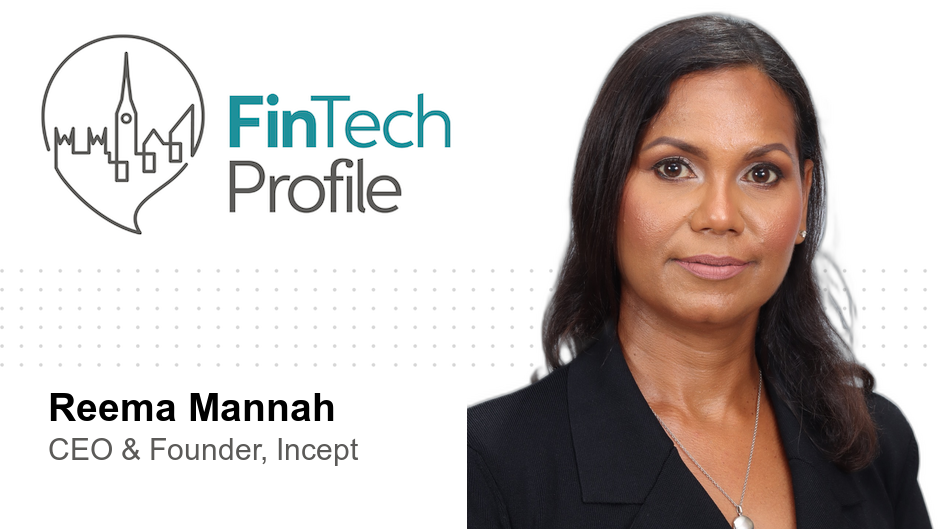
Today we're delighted to speak with Reema Mannah, CEO and Founder of Incept, a pioneering insurtech that's transforming how property deals get done. With 21 years of experience in the title insurance industry and a background as a qualified solicitor, Reema has built an algorithm-driven platform that delivers title insurance policies in real time - a genuine first in the UK market.
My questions are in bold - over to you Reema:
Who are you and what's your background?
My name is Reema Mannah, and I am the CEO and Founder of Incept, which I set up after spotting a gap in the market to replace title due diligence with automated title insurance thus making it quicker and more cost-effective to de-risk real estate transactions.
From my base as a qualified solicitor with experience that included real estate transaction structuring, I moved into the title insurance industry 21 years ago, where I have spent the last two decades building and leading title insurance teams and managing general agents (MGAs) in the UK, European and Asian markets.
In the past few years as technology evolved to enable API access to Land Registry data, I recognised that I could harness technology to streamline the title due diligence and title insurance placement processes.
What is your job title and what are your general responsibilities?
As CEO and Founder, I conceptualised - and I continue to refine and lead - Incept's overall business strategy. We're a start-up that is rapidly gaining traction in our key markets, so I'm constantly driving and developing how our model is rolled out short and longer term, overseeing our distribution channels and honing our business development plan.
From our industry knowledge and experience of working with different segments of the UK property market, we've developed a solution that is truly transformative. But each market segment is different and constantly shifting, with their own unique dynamics and complexities. Adaptability is vital for any tech start-up, to make sure that products are fit for purpose for the varied and changing needs of your clients. That's why I spend a lot of time speaking to customers, engaging with UK real estate stakeholders and hearing about the everyday challenges they face. I use the insights I gain from these conversations to inform strategic decisions and ensure Incept is geared not only to serve but transform the market for the better.
Can you give us an overview of your business?
Incept is a pioneering insurtech solution built for the property market. The system combines advanced data analytics with a pioneering underwriting algorithm to provide on-demand title insurance policies for real estate transactions.
Title insurance is a specialist insurance product that protects property buyers and mortgage lenders against financial loss from legal defects, disputes, or undisclosed claims regarding a property's ownership. It is often critical to getting property transactions over the line.
Real estate transactions typically involve lengthy, resource-intensive title due diligence which can result in delays or in the transaction falling through altogether. Incept has been built to tackle this problem head on. It does this by automating the title due diligence process and combining this with insurance to obviate the need for human involvement. Our first-of-its-kind, algorithm-driven underwriting platform delivers on-demand policies for single assets or entire property portfolios in seconds, based on accurate, original data drawn directly from the Land Registry.
We eliminate time-consuming and costly manual processes, resulting in faster, more cost-efficient deal completions.
Earlier this year, we signed an underwriting agreement with Fortegra, a globally renowned specialty insurer, to provide cover for our title insurance solution. It was a real vote of confidence in our platform.
Tell us how you are funded?
We're VC funded by a specialist investor that focuses specifically on backing start-up insurance vehicles with high growth potential. They have real expertise and deep knowledge in our area of the market, so it's a strong endorsement of our concept and our business model that they have put their financial firepower behind us.
What's the origin story? Why did you start the company? To solve what problems?
Unnecessary delays in a property transaction can prove costly for lenders and buyers, and legal and conveyancing issues are the major cause of such delays.
During my career, I had seen first-hand how outdated title due diligence processes slow deals down and can even cause them to fail altogether. In the UK, completion timescales are getting longer and longer meaning transactions fall through at far higher rates than in most other parts of the world. One in three UK property transactions end up falling through, according to recent figures.
Title insurance has long been an established way to replace title due diligence in property transactions, particularly in the US, but obtaining it was - until now - a very analogue, manual process.
I saw an opportunity to automate it by expanding on what legaltech providers were doing by extracting data from the Land Registry databases to instantly generate title reports. The title reports once created would still require human analysis. However, the introduction of title insurance was the critical element to remove any subjectivities resulting from human analysis and to reduce completion times. What no one else was doing was extracting the data to create title policies, which requires specialist underwriting capabilities alongside innovative tech.
We built an algorithm that replicates the rules used by underwriters, and then automatically constructs policies using pre-agreed rates. All that's required is the title number, property address and amount to be insured, and policies are ready almost instantly, empowering lenders, funds, and buyers to move faster with confidence.
Who are your target customers? What's your revenue model?
We target four main distribution channels:
Mortgage providers looking to de-risk transactions. They can plug into our platform and wrap white-labelled policies around each property they are lending against;
Renewable energy and infrastructure providers seeking risk protection when installing things like solar panels or telecoms masts on properties;
Sellers of distressed assets (such as administrators, liquidators and auction houses) where no title representations and warranties can be provided; and
Investors such as private equity houses and hedge funds looking to expedite any title to property asset aspects of the M&A due diligence processes.
Customers can request policies as and when they need them, with no contract required and based on transparent pricing, all within a user-friendly interface, with bespoke dashboards for extra visibility across the policy portfolio.
If you had a magic wand, what one thing would you change in the banking and/or FinTech sector?
We find that there is a real appetite among senior banking leaders to embrace fintech innovation, knowing that it has so much potential to increase profitability, improve processes and enhance the customer experience.
However, there are so many new products and platforms to choose from that the sheer volume of options can be overwhelming. What's more, embedding new technologies and getting buy-in throughout the business can also be a challenge.
So, if I had a magic wand, I would use it to vanish any internal barriers that are holding back the implementation of important new technologies, so that everybody wins.
What is your message for the larger players in the Financial Services marketplace?
There's a lot of noise about fintech and insurtech, and a lot of buzzwords, but what's essential for large and small players alike, is that they approach the needs of their business in a very pragmatic way.
It's vital that they only invest in new technologies that are genuinely a good fit for the business, and that add meaningful value in specific, tangible areas. They also need to seize new opportunities without too much delay, because while they hesitate to embrace new tech, they risk falling behind their more open and tech-savvy competitors.
So, going back to the magic wand, if I could use it for anything else, it would be to give decision-makers a laser focus on what products and services would serve them best, and give them the agility they need to move quickly.
Where do you get your Financial Services/FinTech industry news from?
I get most of my fintech news from Sifted and FinTech Futures because they provide a great mix of startup, funding, regulatory and technology coverage, helping me stay on top of emerging trends.
For a broader view of the business environment, of course there's the Financial Times, which helps me understand the macroeconomic trends shaping the market and influencing customer priorities.
I also keep a close eye on developments within the insurance sector through the Insurance Times and Insurance Post newsletters, which are invaluable for tracking carrier strategies, distribution trends, regulatory changes and technology adoption across the industry.
Can you list 3 people you rate from the FinTech and/or Financial Services sector that we should be following on LinkedIn, and why?
From my world, top of the list has to be Melissa Collett, CEO of Insurtech UK. She is probably the closest thing the UK insurtech sector has to a central industry spokesperson. She leads Insurtech UK, the trade association representing more than 180 insurtechs and partners, and is a frequent commentator on things like AI, regulation, investment and innovation. She is highly active on LinkedIn and regularly appears in industry podcasts, events and trade media.
There's also Alex Bond, host of the Leadership in Insurance Podcast. A major connector within the global insurtech community. His is one of the most widely listened to podcasts covering the sector, regularly featuring insurtech founders, investors and insurance executives.
Last but not least, there's Emma Ann Hughes, Editor of Insurance Post. As well as leading the editorial team at one of the most widely read titles in the industry, Emma is an influential voice in her own right.
What FinTech services (and/or apps) do you personally use?
Like most people, I'm regularly using apps for banking, and for pensions and investment, and that's really where I came up with the concept for Incept. I realised that getting title insurance should be as quick and easy as checking your pension or doing your banking.
What's the best new FinTech product or service you've seen recently?
The most significant innovation I've seen recently was the news that banks are trialling digital tokens to transform the process of buying a property.
Using similar principles that underpin cryptocurrencies, housing deposits will be tokenised so they can be more easily transferred, with no more need for solicitors to hold funds in escrow. Tokens also will embed important rights and contain key information required in the purchase process that is linked to the mortgage itself, such as environmental reports and title details.
Crucially, however, it looks like title due diligence isn't part of the package, so there's an opportunity there for Incept to fill in the missing link so that this becomes a fully end-to-end service.
Finally, let's talk predictions. What trends do you think are going to define the next few years in the FinTech sector?
Well, I think that in the next few years, this kind of tokenised product will be revolutionary for the mortgage lending sector. Once it takes off, being able to automate the compliance process, and other aspects of the currently lengthy property purchase process, will help prevent transactions from falling through and remove much of the time and expense involved. All it takes is for one bank to take the plunge and others will follow. This combined should make for a healthier property market.
Buying a house or securing commercial premises is said to be one of the most stressful life events, so anything that can expediate the process and eliminate the headaches will, I believe, be game-changing. It's an area that's ripe for growth and innovation, and it's a segment of the fintech space we should all be watching in the coming years.
Many thanks to Reema Mannah for taking the time to share her insights with FinTech Profile. You can learn more about Incept on their website.


