2026 FinTech Predictions: Insights from Sara Perez of EIS
EIS CMO Sara Perez shares insights on core platform transformation, embedded AI governance, and real-time customer expectations reshaping insurance in 2026.
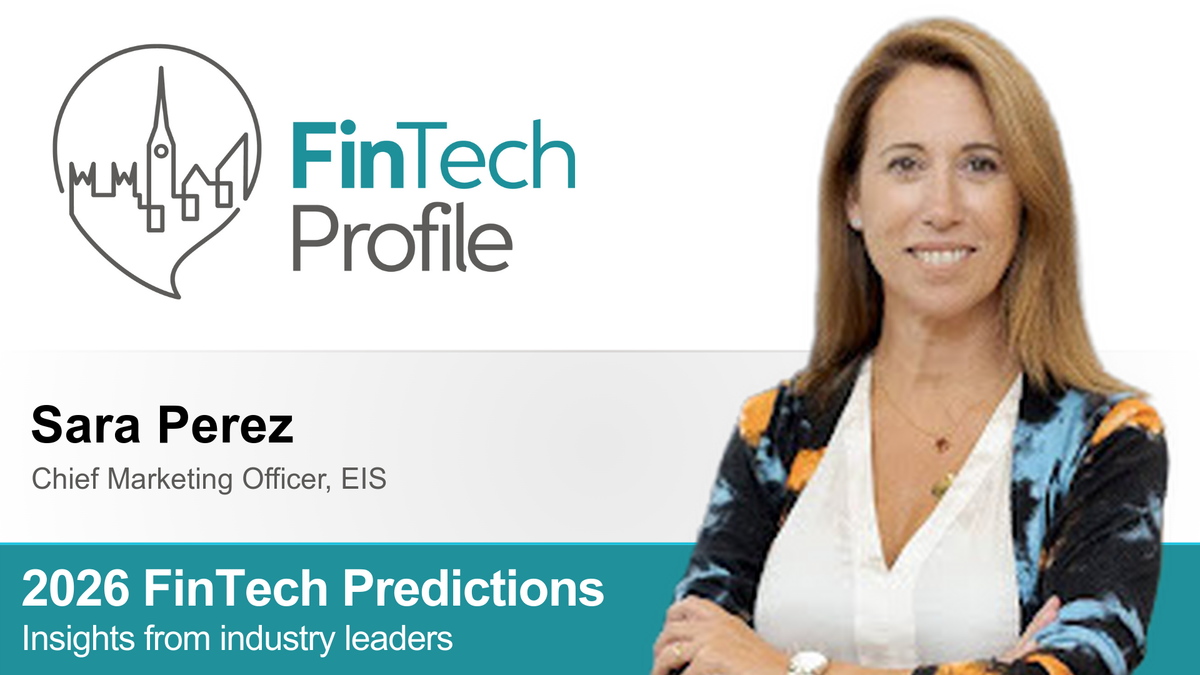
I spoke with Sara Perez, Chief Marketing Officer at EIS, a leading SaaS core platform that enables insurers to manage the end-to-end lifecycle from quote to claim with customer-centric, data-driven capabilities.
As the insurance industry faces mounting pressure to modernise its foundations, Sara shares her perspective on the fundamental shifts ahead—from composable core platforms to embedded AI governance and the rising expectations for real-time, transparent customer engagement.
Over to you Sara - my questions are in bold:
What's the biggest shift you expect across insurance in 2026?
The most significant shift in 2026 will be insurers moving from incremental digital improvement to a fundamental reset of their operating foundations. After years of layering new capabilities onto ageing systems, insurers are recognising that resilience, agility, and growth now depend on rebuilding the core — not just modernising the edges. This reset is not a binary choice between legacy replacement and incremental upgrades. The insurers pulling ahead are adopting composable core platforms that allow them to modernise progressively while avoiding the creation of a new generation of technical debt.
This marks a transition from transformation as a one-off programme to adaptability as a permanent business capability. Insurers that treat their core platforms as living, intelligent infrastructure — rather than static systems of record — will be the ones able to respond to volatility, regulatory change, and rising customer expectations at speed. In practice, this means core platforms evolving from systems of record into systems of action — continuously orchestrating data, decisions, and change across the enterprise.
Which emerging technology will have the most practical impact on insurance and the InsurTechs that support them?
AI will have the greatest impact but only where it is deeply embedded into core insurance platforms rather than bolted on as a standalone tool. In 2026, the industry will move beyond experimentation toward AI that operates inside underwriting, claims, billing, and service workflows in production. The shift will be from AI as an assistive layer to AI as a governed participant in core decision-making. That requires platforms where models, rules, data, and regulatory constraints are orchestrated together — not stitched across disconnected systems.
What will differentiate success is not the sophistication of the model, but the quality, governance, and contextual integrity of the data feeding it. Without embedded domain knowledge and traceable decision paths, even high-quality data cannot deliver AI outcomes that are explainable, auditable, or regulator-ready. Insurers are learning that without clean, real-time, traceable data flows, AI cannot deliver reliable or compliant outcomes. As a result, platforms that remove the structural barriers between AI and the core will become essential.
What customer behaviours or expectations will most challenge insurers?
Customers increasingly expect insurers to operate in real time. Not just in moments of crisis, but across the entire relationship. Static annual pricing, delayed decisions, and fragmented service journeys are increasingly out of step with how people live and make decisions today. Meeting these expectations will require both new interfaces and operating models capable of continuous product change and real-time decisioning at scale.
The real challenge for insurers will be meeting these expectations while maintaining trust and regulatory confidence. Customers want faster, more personalised interactions, but they also want transparency around how decisions are made and how their data is used. Balancing immediacy with explainability will test insurers whose systems were never designed for continuous, contextual engagement.
What risks or blind spots do you think the industry is underestimating as we move into 2026?
One of the biggest blind spots is underestimating how quickly "modern legacy" systems are becoming a competitive liability. Many platforms built in the last decade still rely on monolithic design principles that fundamentally limit data flow, AI governance, and ecosystem integration.
Another underestimated risk is assuming that trust can be managed through policy, process, or oversight alone. In reality, trust is becoming a measurable operational outcome driven by explainability, auditability, and system-level governance. As AI becomes embedded within underwriting, claims, and service workflows, insurers will be required to not only demonstrate what decision was made, but why it was made, which data informed it, and how it complied with regulatory and ethical standards.
Finally, many insurers underestimate the organisational consequences of these shifts. Advanced technology layered onto legacy operating models will not deliver adaptability. Without platforms designed for continuous change — and teams structured to take advantage of them — insurers risk investing heavily in innovation while remaining slow, fragmented, and vulnerable to regulatory and market pressure.
Insurers that fail to engineer trust directly into their core platforms will struggle as regulatory scrutiny and customer awareness continue to rise.
If you were advising an insurer's leadership team today, what strategic priority should they focus on to stay competitive in 2026 and beyond?
The priority should be strengthening the core to unlock intelligent, customer-centric growth at scale. That means investing in composable core platforms that treat data as a live strategic asset, embed governance by design, and support continuous change as a default operating state — not just operational efficiency.
Leaders should focus less on individual technologies and more on whether their technology and operating model together can support real-time decisioning, explainable AI, and rapid product evolution. Insurers that align their core systems, data strategy, and organisational mindset around adaptability will be best positioned to compete in an increasingly volatile and expectation-driven market.
Thank you Sara! You can connect with Sara on her LinkedIn Profile and find out more about the company at www.eisgroup.com.