2026 FinTech Predictions: Insights from Rob Israch of Tipalti
Tipalti's President Rob Israch shares his 2026 predictions on AI adoption in finance, the trust gap holding back transformation, and why customer experience will define competitive advantage.

I'm delighted to feature a contribution from Rob Israch, President of Tipalti, the AI-powered platform for finance operations.
As finance teams navigate the shift from AI experimentation to scaled deployment, Rob shares his perspective on the trust gap, automation's practical impact, and why going back to basics on customer experience will separate winners from losers in 2026.
Over to you Rob - my questions are in bold:
What's the biggest shift you expect across financial services in 2026?
In 2026, more finance teams will shift from just experimenting with AI to relying on it for tangible results. Most importantly, they will be focused on addressing the challenge of ensuring they have full visibility and control in their AI usage scenarios. Trust is foundational for scaling AI with confidence. AI will increasingly support business decision-making, using data and analytics to guide strategy. AI will also become embedded in long-term planning and resilience, supporting everything from scenario modelling and forecasting to spend insights and smarter investment decisions. Finance leaders will be under pressure to scale the use cases that work and clearly demonstrate ROI, and for those finance leaders who take the reins, there is an opportunity for finance to lead the AI adoption across their business.
Which emerging technology will have the most practical impact on banks and the FinTechs that support them?
Automation, including AI, will have the biggest practical impact, particularly when it's used to enable sustainable, strategic growth. By automating manual processes like invoice processing and approvals, reporting and reconciliation, teams can significantly reduce pressure and free up time. Our recent research shows that more than half of accounts payable time is still spent on manual tasks. Automation gives that time back, allowing teams to focus on long-term financial health and planning forward, instead of day-to-day admin. AI-driven insights go further by helping finance teams understand when to pull the right growth levers, rather than relying on disparate information that is not in real-time.
What customer behaviours or expectations will most challenge banks and financial service providers?
As AI becomes more widely used across industries, all customers are getting used to faster, more personalised "consumer-like" experiences, and financial services won't be exempt from those expectations. Banks and providers will be under pressure to improve speed and service quality, while still maintaining strong human oversight to avoid errors. That means modernising systems and embedding AI at scale, without undermining trust or regulatory compliance. Moving too quickly can introduce new risks, so organisations will need to integrate AI carefully and make sure teams are properly trained before it's rolled out.
What risks or blind spots do you think the industry is underestimating as we move into 2026?
One of the biggest blind spots is the ongoing trust gap around AI. Our latest research shows that 31% of finance professionals are concerned about data privacy and security, while 28% cite issues around data quality, provenance and integration with legacy systems. At the same time, organisations that have addressed these concerns are already seeing clear value from AI and feel confident it will become part of how they work long term. Trust is often the missing link between incremental automation and true transformation. For finance teams, the focus needs to be on striking the right balance between autonomy and oversight, building trust into every AI-driven decision, without removing essential human judgment.
If you were advising a bank's leadership team today, what strategic priority should they focus on to stay competitive in 2026 and beyond?
It is all about the customer. Businesses today can no longer rely on aggressive branding or just spending dollars on demand generation techniques to outrun a mediocre customer experience or support challenges. Negative (and positive) word of mouth simply moves too fast, and AI only accelerates this. In a world where little can be trusted, traditional marketing and sales techniques will be even less effective. Businesses need to go back to the basics and rely on the network effect for future growth by delivering a superb customer and product experience, alongside strong partnerships. Being laser-focused on what your customers want and need, and coming up with new ways to serve them better, will breed sustainable success.
Thank you Rob! You can connect with Rob on his LinkedIn Profile and find out more about the company at www.tipalti.com.
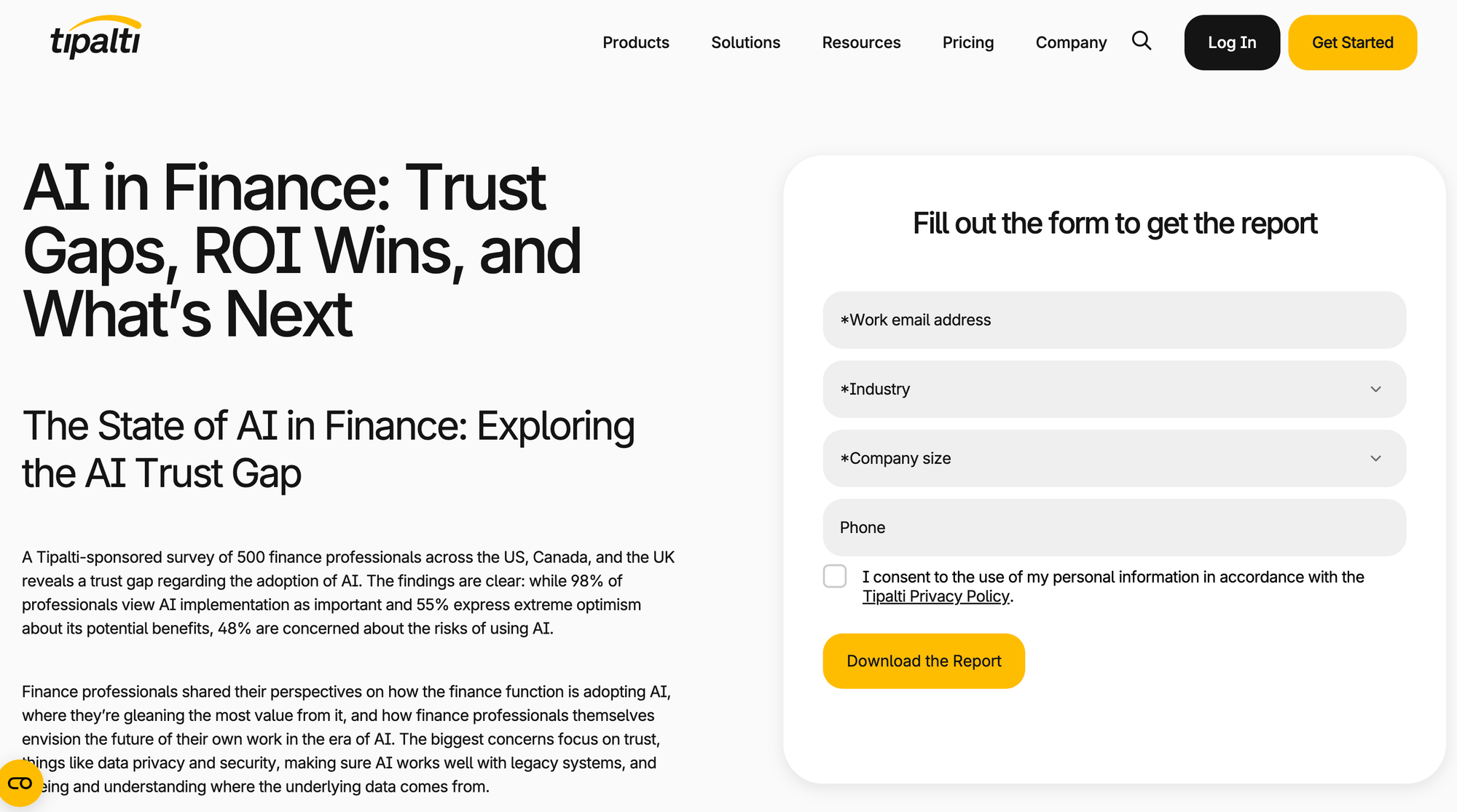
Note: Rob and the team have produced this rather useful AI in Finance report based on a survey of 500 finance professionals.