Stiven Muccioli, Founder and CEO, BKN301
Stiven Muccioli discusses how BKN301 is helping banks and fintechs modernise legacy systems, the role of AI in banking infrastructure, and why regulation should enable speed rather than constrain it.
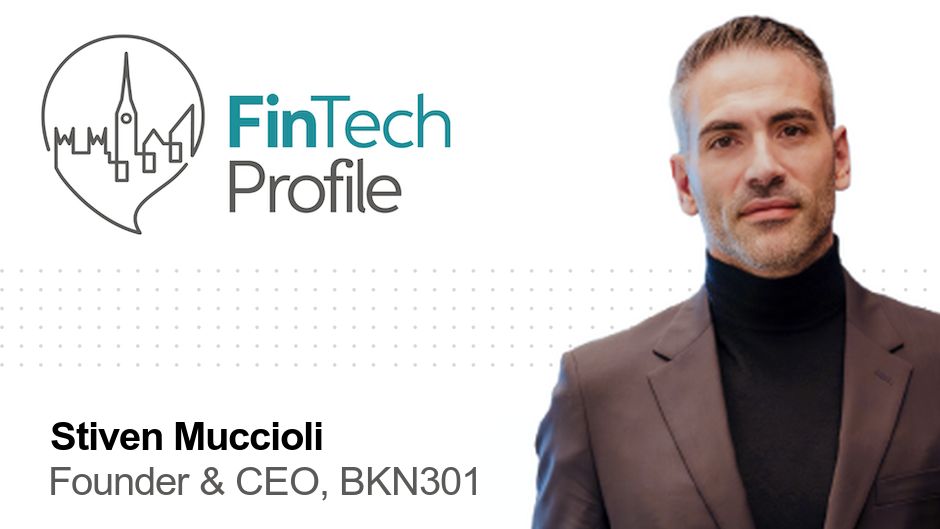
Today we're delighted to speak with Stiven, Founder and CEO of BKN301 and SM Capital. As a serial technology entrepreneur who previously built and exited Ventis (acquired by Iccrea Banca Group) and founded Tippest, one of Italy's leading e-commerce platforms, Stiven brings a unique perspective on financial infrastructure modernisation.
In this interview, he shares his vision for eliminating the false trade-off between speed and regulation, and explains how AI is becoming decisive when embedded into operating models rather than exposed as features.
My questions are in bold - over to you Stiven:
Who are you and what's your background?
I'm a technology entrepreneur and investor. Over the years, I've built, scaled, and exited companies across e-commerce and financial services. This includes Ventis, which was later acquired by Iccrea Banca Group. I am also the founder of Tippest, one of Italy's leading e-commerce platforms.
Today, I lead BKN301 and SM Capital, focusing on financial infrastructure, data, and AI-driven platforms. Alongside this, I serve as Special Envoy for Innovation & Economic Development for the Republic of San Marino, working where institutions, technology innovation, and global markets intersect.
What is your job title, and what are your general responsibilities?
I'm the Founder and CEO of BKN301 and SM Capital. I provide the overall vision for the company and lead its strategic development across all key areas. This includes driving fundraising efforts and managing relationships with investors, developing commercial strategy with major clients, and overseeing the company's growth, execution, and operational delivery. I also define long-term platform direction and build partnerships that support sustainable global expansion.
Can you give us an overview of your business?
BKN301 is a fintech architecture provider focused on one core problem: complexity that slows execution.
Banks and fintechs are under constant pressure to innovate and comply with regulation, but most are constrained by fragmented systems built over decades. We help institutions and newcomers modernise without breaking what already works, so they can launch faster, adapt to regulation more easily, and scale without adding disproportionate cost.
We work as long-term partners across EMEA. We're not interested in one-off projects. The value is in enabling institutions to execute repeatedly. That mindset comes directly from how I think as an entrepreneur and an investor: sustainable advantage is built into the architecture.
Alongside the platform, we actively grow an ecosystem through targeted investments and acquisitions, especially around data and AI, to keep that execution advantage over time and scale exponentially in the medium term.
Tell us how you are funded?
BKN301 is backed by a group of institutional and strategic investors publicly disclosed through official company announcements and media coverage. These include BlackRock, Prosus Group, CDP Venture Capital, Azimut, and SIMEST, including a mix of equity and debt facilities. This funding supports BKN301's long-term strategy of platform evolution, international expansion across EMEA, and selective acquisitions, while maintaining a disciplined and sustainable growth approach.
What's the origin story? Why did you start the company?
BKN301 came from a pattern I kept seeing as both a founder and an investor. Banks were being asked to innovate, but they were doing it on top of architectures that had become unmanageable over time. Years of patches and integrations had created what people in the industry call a "spaghetti situation."
The issue wasn't access to technology. It was structural complexity. Every new product, regulatory change, or market expansion became a long, risky project and that destroys value.
We started BKN301 to simplify that complexity. Not by replacing everything, but by allowing progressive modernisation. Preserve what works, remove bottlenecks, and improve time to market. That same principle guides how I build companies and how I invest.
Who are your target customers? What's your revenue model?
Our customers are banks and fintech companies operating in regulated environments that need to move faster without increasing risk. We also work with non-bank players embedding financial services into broader products.
We focus on long-term partnerships. Revenue comes from multi-year platform agreements, usage-based pricing, and services that scale with client activity. The model is aligned by design: if clients reduce complexity and execute better, the business grows with them.
If you had a magic wand, what one thing would you change in banking or fintech?
I would eliminate the false trade-off between speed and regulation.
Regulation isn't the real constraint; architecture is. When systems are tightly coupled and data is fragmented, compliance becomes manual and slow, and every regulatory change kills time to market.
If compliance is embedded structurally through clean data, decoupled systems, and built-in controls, institutions can move faster and safer at the same time. That's how regulation stops being a brake and becomes part of execution.
What is your message for larger financial institutions?
Technology debt compounds just like financial debt. At scale, it becomes a strategic risk. Many large institutions underestimate how much legacy architecture limits what they can launch, where they can expand, and how quickly they can react. The winners will be those who invest early in flexible foundations instead of stacking short-term fixes on fragile systems.
Modernisation is not about ripping everything out. It's about enabling change without disruption.
Where do you get your fintech and financial services news from?
I follow specialist fintech and technology publications, but I don't rely on them alone. I stay informed through ongoing conversations with founders, investors, regulators, and banking executives across different markets.
Conferences, briefings, and direct exchanges with people building and regulating systems give context that headlines alone can't provide.
What FinTech services or apps do you personally use?
Given my background, I'm a strong believer in innovative fintech and its role in shaping the future of finance. I use a combination of digital banking and tokenisation apps, which helps me stay closely connected to how financial products are being reimagined.
What's the best new FinTech product or service you've seen recently?
One notable example is Nubank's "AI-first" strategy, which is already shaping how banking innovation is practised. As an investor in Nubank, I've observed firsthand how the company has been explicit about making AI a core part of its operations, not for gimmicks, but to drive real product development and efficiency in a regulated context. In recent months, the company has described how it uses AI to improve both customer experience and internal workflows.
For customers, AI is being applied to personalise app interactions, improve financial recommendations, and help navigate complex journeys more intuitively, especially for users who are new to financial products. On the operations side, AI accelerates feature delivery: tasks that once took months to build can now be completed in a matter of weeks with model-driven insights and automation. These capabilities support better product decisions, enhanced risk and fraud management, and faster responses to changing market and regulatory conditions.
These developments make Nubank an instructive case of how AI can be integrated into regulated financial services in a way that tangibly improves speed, compliance, and customer value, not just as a front-end novelty, but as a tool that changes how products are developed and delivered.
Finally, let's talk predictions. What trends do you think are going to define the next few years in the FinTech sector?
The next phase of fintech will be defined by how fast institutions can execute under regulation, not by how many features they launch.
AI will become decisive when it is embedded into operating models, not exposed as a feature. The real shift will be banks using AI to compress product development cycles, automate decisions, and scale operations without adding complexity or cost. When AI shortens time-to-market and improves control at the same time, it changes the economics of banking.
At the same time, digital assets will move from experimentation into infrastructure. Their value will be in making settlement, reconciliation, and cross-border flows more efficient within regulated systems, not in speculation.
Overall, the winners will be institutions that rethink architecture, data, and intelligence together, turning regulation and scale into an execution advantage rather than a constraint.
We'd like to thank Stiven for taking the time to share his insights with us. You can learn more about BKN301 at their website, and connect with Stiven directly on LinkedIn.