Simon Bocca, CEO & Founder, PayCaptain
Simon Bocca discusses building PayCaptain to transform payroll from a compliance function into a financial wellbeing platform that helps UK employees manage their money better.
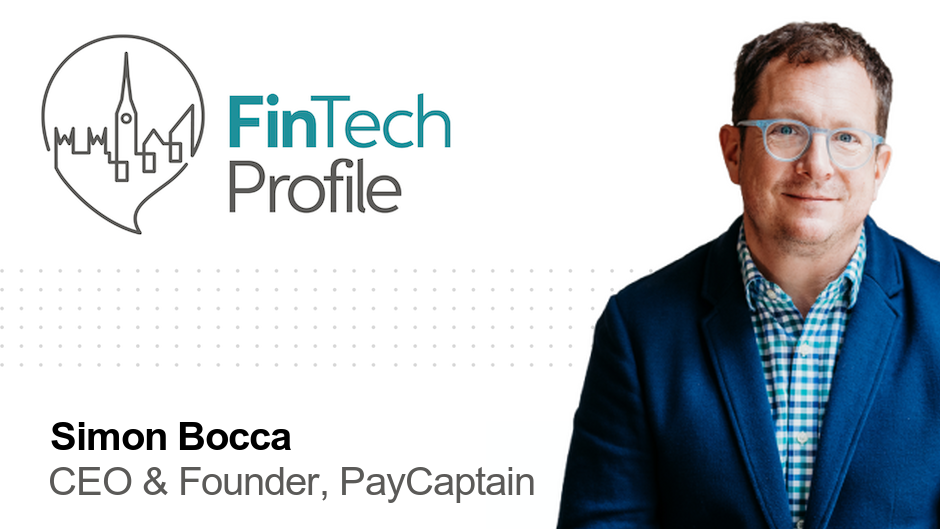
Today we're delighted to speak with Simon Bocca, CEO and Founder of PayCaptain, a cloud-based payroll and employee financial wellbeing platform built for UK businesses. With a unique background that combines hospitality service excellence and HR technology, Simon shares his vision for making payroll genuinely helpful rather than just compliant, and explains why earned wage access and AI-powered financial guidance will define the next era of fintech.
My questions are in bold - over to you, Simon:
Who are you and what's your background?
My career started with a five-year management training programme at The Savoy Group — one of the most demanding and rewarding ways to learn how a complex, people-driven business actually works. I cycled through every department, and somewhat unexpectedly ended up in the IT department, where I discovered a passion for using technology to solve operational problems. That combination of hospitality, a sector absolutely obsessed with service and the human experience, and technology has shaped everything I've done since.
Over the following 24 years I worked across hospitality and HR technology, increasingly focused on the challenge of making complex back-office processes work better for the people they're supposed to serve. Payroll kept coming up as a function that was fundamentally broken, not technically, but in terms of its relationship with employees. That realisation eventually led me to found PayCaptain.
What is your job title and what are your general responsibilities?
I'm CEO and Founder, which in a growing SaaS business means wearing quite a few hats. Strategically, I spend my time on product direction, commercial development, and making sure we stay true to our core mission as we scale. Day-to-day, I'm involved in customer relationships, partnerships, and working with the team on the harder problems, whether that's a regulatory change, a new product feature, or figuring out how to explain to a 5,000-person business why their payroll experience should feel as good as their best consumer app.
I also spend a meaningful amount of time talking to employees, not just HR and payroll teams, but the people actually receiving their pay, because that's where we find the insight that drives real product improvement.
Can you give us an overview of your business?
PayCaptain is a cloud-based payroll and employee financial wellbeing platform built for UK businesses. We handle everything from complex payroll processing and statutory compliance to employee-facing tools that actually help people understand, manage, and feel good about their money.
What makes us different is that we've built the system from two directions simultaneously: from the employer side, we've created a highly automated, accurate, and compliant payroll engine that saves HR and finance teams serious time. From the employee side, we've built an app experience that gives people real visibility into their pay, access to earned wages, financial education tools, and personalised support. Most payroll systems treat the employee as an output, we treat them as a customer.
We operate on a SaaS subscription model, and the market reaction has been strong, particularly from mid-market employers who've outgrown their legacy system and want something that reflects how modern workplaces think about employee experience. We're award-winning, and our NPS scores reflect what happens when payroll stops being a source of frustration.
Tell us how you are funded?
PayCaptain is self-funded. That was a deliberate choice, not a default one. When you're building something that sits at the intersection of people's pay and their financial wellbeing, the incentives of the business matter enormously. Taking on external investment often means taking on pressure to grow at a pace that can compromise the quality of what you're building and the trust of your customers.
Building lean has forced discipline and genuine focus on what customers actually value. We've grown by solving real problems really well, and by reinvesting in the product. It's not the fastest route, but it's the one most consistent with the kind of company we want to be.
What's the origin story? Why did you start the company?
The honest origin story is frustration. After years in HR technology, I kept seeing the same problem: payroll was treated as a utility, something that had to happen, that ideally nobody noticed, and that certainly wasn't expected to do anything positive for employees. The technology reflected that thinking. Most payroll systems are essentially databases with a compliance layer on top, designed for the people running them, not the people paid by them.
At the same time, I was watching the consumer fintech world transform how people interacted with money. Apps like Monzo and Starling were showing that financial products could be intuitive, transparent, and actually enjoyable to use. I couldn't understand why that thinking hadn't reached payroll, which, for most people, is the most important financial transaction in their lives, happening every month.
PayCaptain was built to close that gap. To make payroll genuinely helpful, not just accurate and compliant, but a positive touchpoint in the employee experience. The response from customers has confirmed that the market was ready for something better.
Who are your target customers? What's your revenue model?
Our sweet spot is UK mid-market employers, typically 200 to 5,000 employees, who have complex payroll needs (shift workers, multiple pay groups, variable pay) and who genuinely care about their employee experience. We work across sectors, but we've found particular resonance in hospitality, retail, care, and professional service industries where the workforce is the business, and where payroll stress has a direct impact on retention and engagement.
Customers include Roadchef, Charlie Bigham's, Monica Vinader, and Leaders Romans Group. What they have in common is a belief that looking after employees properly is good business, and an appetite for technology that reflects that.
Our revenue model is subscription-based SaaS, priced per employee per month. It's clean, predictable, and aligns our success with our customers' success, when their headcount grows because they're doing well, we grow with them. We also offer managed payroll services for clients who want us to run the whole process end-to-end.
If you had a magic wand, what one thing would you change in FinTech?
I'd make financial data genuinely portable and accessible in real time. The infrastructure underpinning payroll, banking, and personal finance in the UK, is still remarkably fragmented. Employees often can't get a real-time view of what they've earned, what they owe, what they're saving, or how their cost of living compares to their pay; not because the data doesn't exist, but because it sits in siloed systems that don't talk to each other.
Open Banking was a step in the right direction, but it's still largely confined to current account data. If we could extend that philosophy to payroll and earned income data, with proper consent and privacy protections, the positive impact on financial wellbeing for millions of workers would be enormous. That's the infrastructure shift I'd make happen overnight.
What is your message for the larger players in Financial Services?
Stop treating the people at the bottom of the income scale as a compliance obligation and start treating them as customers worth designing for. The most financially vulnerable people in the UK often have the worst financial products, the least transparency, and the fewest tools to improve their situation. That's not an accident; it's a design choice.
The technology now exists to do this better. The data exists. The regulatory environment is more supportive than it's ever been. What's missing is the genuine will to prioritise people over product margins. The companies that get this right, that build trust with workers who feel underserved by traditional finance, will have an enormous customer base that is deeply loyal. That's not just the ethical case; it's the commercial case.
Where do you get your FinTech industry news from?
Finextra is my regular read for UK-focused fintech news and analysis, it's always done a good job of covering the market without excessive hype. Wider tech-media such as Sifted, does well covering the major fintech industry news. For broader context on the intersection of technology, work, and money, I find the Financial Times' work on employment and wages genuinely useful, it keeps me grounded in what's actually happening to workers, which is ultimately what PayCaptain exists to improve.
Can you list 3 people you rate from FinTech/Financial Services that we should follow on LinkedIn?
- Emma Hagan – CEO, Clear.Bank. Really impressive vision for what could be at for the future of financial services and payroll.
- Russell Webb – Payroll & Reward Influencer fun read of Payroll & Pastries.
- Michelle Sutton – Head of Reward & Pensions at SUEZ – ahead of the curve on Financial Wellbeing and a ray of sunshine.
What FinTech services (and/or apps) do you personally use?
Monzo my personal and business banking partner.
PayCaptain 😊
What's the best new FinTech product or service you've seen recently?
TipJar smart way to do what it's says on the Jar – Tip. Which we appreciate as it works very well for our hospitality clients.
Max. The future of Scheduling more to come!
Finally — what trends are going to define the next few years in FinTech?
Three things stand out to me. First, earned wage access will go mainstream. The idea that employees should wait 30 days to access money they've already earned is an anachronism, and the combination of real-time payroll data and Open Banking infrastructure is making it increasingly easy to fix. Employers who offer it will have a meaningful retention advantage.
Second, AI will finally make financial guidance accessible to everyone, not just the wealthy. Personalised financial coaching has historically been a privilege of high earners. AI-powered tools embedded in payroll and banking apps will change that, helping ordinary workers make better decisions about savings, debt, and planning in ways that are contextual and actionable, not generic.
Third, employee financial wellbeing will become a board-level metric. We're already seeing leading employers track financial stress as seriously as they track physical or mental health. As the evidence base continues to grow, financial anxiety directly impacts productivity, absence, and retention, this will shift from an HR initiative to a business performance issue. Payroll sits right at the heart of that shift.
Many thanks to Simon for taking the time to share his insights with us. You can connect with him on LinkedIn and learn more about PayCaptain on their website.