Ravi Ranjan, Co-Founder & CEO, Finexer
Ravi Ranjan discusses building regulated Open Banking infrastructure for mid-market platforms, closing the access gap in financial services, and the future of account-to-account payments.
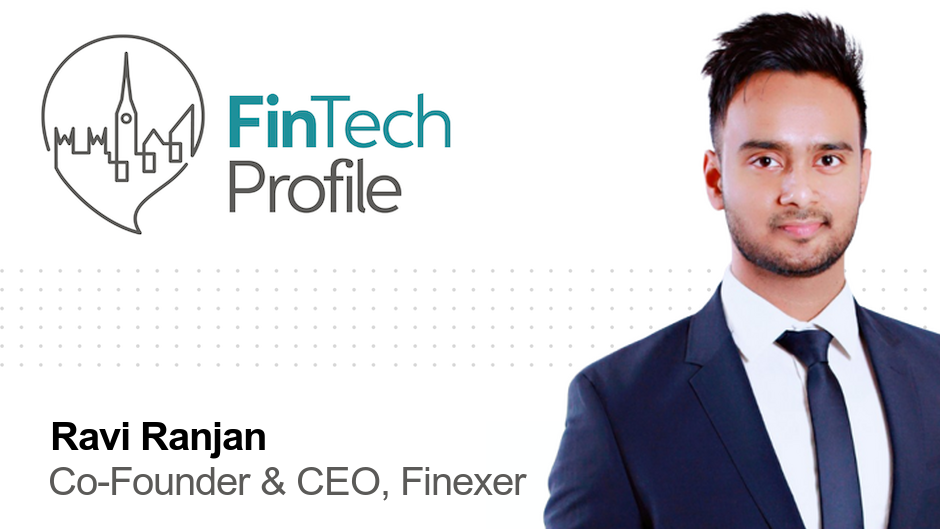
Today we're delighted to speak with Ravi, Co-Founder and CEO of Finexer, an FCA-authorised Open Banking infrastructure platform. With the UK Open Banking ecosystem now processing over 33 million payments monthly, Ravi shares his perspective on closing the infrastructure access gap for mid-market platforms, the structural shift towards account-to-account payments, and why 2026 represents a genuinely pivotal moment for open finance.
My questions are in bold - over to you Ravi:
Who are you and what's your background?
I've spent the past decade building and scaling technology ventures at the intersection of financial services and product innovation. My experience has consistently centred on one theme: simplifying complex financial systems so businesses can move faster, operate more efficiently, and unlock growth.
My background sits at the intersection of technology, business strategy, and financial services — which I think is exactly the right vantage point for someone building infrastructure in this space. I studied Computer Science Engineering before completing an MBA from Aston Business School, which gave me a foundation that is both technically rigorous and commercially grounded. Over time, I became increasingly convinced that Open Banking would redefine how financial services operate - not just at a consumer level, but deep within business infrastructure. The opportunity was not simply to build another fintech product, but to contribute to the foundational layer of how companies connect to banks, move money, and access financial data securely.
Open Banking, in my view, represents a structural shift in financial architecture. It moves us from closed, bank-centric ecosystems to programmable financial infrastructure. That shift requires not just innovation, but regulatory discipline, long-term thinking, and infrastructure-grade reliability. That is the journey I am committed to leading.
What is your job title and what are your general responsibilities?
As Co-Founder and CEO of Finexer, my role is to define and execute our long-term infrastructure vision while ensuring regulatory excellence and disciplined growth. My job is to ensure that an exceptional team is pointed in the right direction and that Finexer is building the right things for the right reasons.
On a daily basis, that means balancing three core pillars: strategy, regulation, and market adoption. Strategically, I focus on positioning Finexer as the Open Banking infrastructure layer for mid-market platforms across accounting, ERP, lending, payroll, and vertical fintech sectors. From a regulatory perspective, operating as an FCA-authorised AISP and PISP requires ongoing governance, compliance discipline, and proactive engagement with regulatory developments such as Variable Recurring Payments and Open Finance frameworks.
Commercially, I work closely with customers and partners to ensure that our platform does not merely provide APIs, but becomes embedded financial infrastructure within their core workflows.
Can you give us an overview of your business?
Finexer is a regulated Open Banking infrastructure provider built specifically for B2B platforms.
We provide two core capabilities:
- Account Information Services (AIS) – real-time transactional data, balance information, reconciliation support, affordability checks, and identity verification.
- Payment Initiation Services (PIS) – instant account-to-account payments, bulk payouts, and pay-by-bank capabilities.
What differentiates us is structural positioning. The Open Banking ecosystem historically evolved around large enterprise providers, leaving a significant infrastructure gap for mid-market platforms, scaleups, & innovate startups. These companies understand the value of Open Banking, but often face slow integrations and complex compliance burdens.
We address that gap.
Finexer offers direct bank integrations covering 99% of UK banks, full FCA authorisation, and deployment timelines measured in weeks rather than months. We are not a point solution. We are infrastructure, data and payments combined, built with compliance at the core.
Tell us how you are funded?
We initially invested founder capital to secure our FCA authorisation and to lay the foundations for the platform.
Following early traction and customer validation, we raised a pre-seed investment from SFC Capital & British Business Bank, leading early-stage startup backers. SFC Capital is the UK's most active seed-stage investor, with notable investments in firms like Onfido, Fintech Circle, Cognism, and ethical fintech platform Algbra.
We are currently in our growth round, scaling towards profitability and preparing for broader European expansion.
Our focus has always been sustainable infrastructure growth with a hyper-growth mindset. Strong unit economics, long-term partnership, and expanding customer usage underpin our model.
What's the origin story? Why did you start the company? To solve what problems?
The origin of Finexer lies in a structural inefficiency we observed repeatedly: businesses struggling with fragmented bank connectivity, delayed financial data, and expensive card-based payment rails.
Open Banking was launched in the UK in 2018 with a genuinely transformative regulatory mandate: give consumers and businesses control over their financial data, enable account-to-account payments, and create the conditions for real competition in financial services. Eight years on, the ecosystem has delivered something remarkable — over 33 million Open Banking payments in November 2025 alone, 50% year-on-year payment growth, 16.5 million monthly active users. The market is not withering. It is accelerating.
But the gap between the ecosystem's potential and what mid-market businesses can actually access has remained stubbornly wide. The providers who educated the market, the large well-funded Open Banking platforms, built for enterprise. Their product complexity, pricing models, and sales cycles are calibrated for large financial institutions, not for the innovative startups and scaleups that need to embed affordability checks into its lending workflow, or the accounting software company that wants to replace manual bank imports with a live data feed. Those companies have needed Open Banking infrastructure for years. They simply haven't been able to access it affordably, quickly, or with the regulatory coverage they require. The industry moved from "education" to "adoption," but infrastructure for the mid-market lagged behind.
We saw Open Banking reaching an inflection point, particularly with regulatory catalysts such as Making Tax Digital (MTD) and Variable Recurring Payments (VRP). The question shifted from "What is Open Banking?" to "How efficiently can we integrate it?" The traction we have achieved in a relatively short period, driven almost entirely by inbound demand from businesses actively searching for what we offer, validates that thesis in the most meaningful way possible.
Finexer was founded to close that structural gap.
Who are your target customers? What's your revenue model?
Finexer is built for digital-first B2B platforms that need regulated Open Banking infrastructure but do not want to build it themselves. Our core customers sit in sectors such as accounting, ERP, lending, payroll, PropTech, and embedded finance platforms. These are typically mid-market technology companies that serve thousands of end users and require real-time bank connectivity and pay-by-bank capabilities as part of their product experience.
The common thread across them is this: they understand the value of Open Banking, but they need it delivered in a way that is compliant, fast to integrate, commercially accessible, and scalable.
A few examples illustrate this clearly:
- Boshhh Fintech uses Finexer to power real-time financial data connectivity within their financial management platform.
- With VirtualSignature-ID (VSID), the focus was operational efficiency and trust. By leveraging Finexer's Account Information Services for onboarding and Pay-by-Bank infrastructure for payments, VSID reduced administrative burden and accelerated settlement times. As their CEO noted:
"Our clients in the legal and accountancy sectors expect the highest standards of efficiency and security, and Finexer's solutions help us deliver on those expectations every day."
Similarly, our partnership with Sysynkt ERP demonstrates the power of infrastructure over point solutions. By integrating Finexer's Open Banking capabilities into their ERP ecosystem, Sysynkt enabled consent-driven data flows and automated financial processes without adding compliance overhead. As highlighted in our partnership spotlight, the collaboration was about building long-term, scalable infrastructure rather than simply integrating an API."Finexer is more than a provider—they're a partner who aligns with our mission to deliver world-class services" Penny Phillips, Chief Commercial Officer .
Another strong example is Committee App, which is building financial inclusion solutions through Open Banking.
Across all of these customers, the pattern is consistent: once embedded, Finexer becomes part of their core operating layer, not an optional add-on.
Our revenue model is intentionally simple and aligned with long-term infrastructure usage: a recurring monthly platform access fee covering API access, maintenance, and regulatory infrastructure, with variable pricing based on API calls and transaction volumes as customers scale.
This model provides predictable recurring revenue while naturally expanding as customer usage grows. It also aligns incentives; when our customers grow, we grow with them.
If you had a magic wand, what one thing would you change in the banking and/or FinTech sector?
I would close the access gap in Open Banking infrastructure, not just in principle, but in practice. The UK has built something genuinely world-class over the past eight years. The regulatory framework, adoption numbers, and ecosystem diversity, these are achievements that most countries are still trying to replicate. But the value of that infrastructure is not evenly distributed. A large enterprise can access everything Open Banking offers. Mid-market, scaleups, and innovative startups built on that ecosystem still face a set of barriers — entry barriers, complexity, and deployment time that are functionally equivalent to exclusion.
The emergence of commercial Variable Recurring Payments and the incorporation of UKPI as the UK's first new payment scheme since Faster Payments in 2008 are exactly the right kind of structural changes. The FCA and PSR's joint clarity on cVRP pricing in early 2026 was one of the most practically important interventions in the Open Banking space in years; it gives infrastructure players the certainty they need to build on that foundation. But the pace of these frameworks still lags the pace of commercial demand, and the transition from mandated Open Banking to a sustainable commercial open finance model is the critical challenge of the next three to five years.
If I had a magic wand, Accessibility & fairness. I would ensure that every regulatory and commercial framework governing smart data, cVRP, and the Data Use and Access Act is implemented with the real operating conditions of mid-market and startup participants in mind, not just the enterprise and big players. The opportunity to make the UK a genuinely inclusive open finance ecosystem is right in front of us. Whether we take it depends on whether the infrastructure is made accessible to everyone who needs it, not just those with the resources to navigate its current complexity.
What is your message for the larger players in the Financial Services marketplace?
Open Banking is no longer experimental. It is infrastructure. The UK model has demonstrated that industry-led collaboration works. The creation of initiatives such as the UK Payments Initiative and structured commercial VRP frameworks signals maturity.
For larger institutions, the opportunity is not defensive, it is expansive. By enabling trusted infrastructure providers and fintech partners, banks can extend their ecosystem reach, reduce operational inefficiencies, and compete globally.
The banks and institutions that are genuinely embracing Open Banking as a commercial opportunity, rather than simply managing it as a compliance obligation are the ones that will retain relevance in the embedded finance era.
The Data Use and Access Act has passed. The FCA's smart data roadmap is in motion. UKPI is incorporated and moving toward delivery.
These are not burdens to be managed. They are a structural restructuring of how financial services are distributed, and the institutions that position themselves as willing infrastructure partners to the new generation of platform builders will find themselves embedded in far more customer journeys than legacy distribution models could ever reach.
The future of banking is programmable. Institutions that embrace infrastructure partnerships will lead that future.
Where do you get your Financial Services/FinTech industry news from?
For regulatory and ecosystem intelligence, the Open Banking Limited publications are essential — their Impact Reports are methodologically grounded in actual CMA9 data and give a more honest picture of adoption than the speculative commentary that tends to dominate trade press. The FCA's policy statements, particularly on cVRP, the National Payments Vision, and the smart data roadmap, are required reading for anyone building in the payments and data infrastructure space.
For broader market intelligence, I follow Fintech Global & Open Banking Excellence closely for regulatory depth and European coverage, and I find the commentary from practitioners on LinkedIn increasingly more valuable than traditional trade media, particularly from people with direct experience of how regulatory and commercial frameworks intersect in practice. The Startup Coalition's work on the economic contribution of the Open Banking ecosystem to the UK economy is also worth reading, particularly their analysis of the £4bn value the sector generates. I also make a point of reading the perspectives of payment system operators and regulators directly, rather than relying entirely on intermediated summaries, the signal-to-noise ratio is considerably better.
Can you list 3 people you rate from the FinTech and/or Financial Services sector that we should be following on LinkedIn, and why?
- Marion King — Chair and Trustee of Open Banking Limited. Marion's perspective on the evolution of Open Banking from its CMA origins to the emerging open finance landscape is as informed as anyone in the UK. Her framing of the transition from mandated infrastructure to sustainable commercial ecosystem is exactly the kind of long-view strategic thinking the sector needs more of. If you want to understand where Open Banking is going, and why 2026 is genuinely pivotal.
- Henk Van Hulle — CEO of Open Banking Limited. Henk provides data-grounded, honest assessments of where adoption actually is, as opposed to where the narrative says it should be. In a space that sometimes runs ahead of the evidence, that rigour is valuable. His forewords in the OBL Impact Reports are among the most credible analyses of ecosystem progress you will find.
- Clare Pearson — Panel Member of the Payment Systems Regulator. Clare brings something genuinely rare: Deep commercial experience across the largest payment institutions in the world, combined with an active role in shaping the regulatory frameworks that govern how payments evolve in the UK. Her perspective on where Open Banking intersects with payment policy and commercial viability is something I find consistently valuable, and I'm fortunate to work with her directly.
What FinTech services (and/or apps) do you personally use?
- Revolut sets the benchmark for modern finance. Its real-time FX, multi-currency accounts and instant notifications have normalised the expectation of "instant everything" — a shift that directly drives adoption of Open Banking infrastructure.
- Cleo demonstrates the power of AI-native finance. By combining transaction data with conversational insights, it shows what becomes possible when products are built on clean, real-time financial data.
- Emma is a strong example of Open Banking delivering practical value — aggregating accounts, identifying subscription waste and improving financial visibility through simple design.
- I also use Comma, which automates tax categorisation for freelancers using live bank data, a great example of how niche Open Banking applications can deliver meaningful impact.
These platforms reflect what becomes possible when real-time financial infrastructure is done properly.
What's the best new FinTech product or service you've seen recently?
The joint FCA and PSR statement on commercial VRP pricing, published in early 2026, is not a product in the conventional sense, but it functions like one. It provides the commercial certainty that the UK's embedded finance market needed to move from theoretical VRP capability to real deployment. For infrastructure providers, that clarity is the precondition for building anything meaningful on top of it.
In terms of a specific product, I have been paying close attention to how account-to-account payment experiences are being designed at the consumer level, particularly the work being done to make Pay-by-Bank as seamless as card payment at checkout. The OBL's case study highlighting Ordo and Eviden's FlexiPay solution is a strong example of what this looks like when it is done well: a simple, consumer-facing payment experience built on Open Banking rails that people choose not because they understand the technology, but because it is demonstrably better than the alternative. That is the standard the whole ecosystem needs to be building toward, and it is encouraging to see it materialising.
Finally, let's talk predictions. What trends do you think are going to define the next few years in the FinTech sector?
We are at a structural inflection point, not a product cycle, but a fundamental rewiring of how money moves and who gets to participate in the global financial system.
Open Finance goes global. Open Banking was the proof of concept. The UK demonstrated it works, 33 million payments in a single month, 50% year-on-year growth, over 2 billion API calls and accelerating.
Now the model is scaling worldwide across 60+ countries. What is emerging is a global financial data layer spanning banking, insurance, mortgages, and investments.
The internet democratised information. Open Finance will democratise financial opportunity.
Account-to-account payments displace cards. Card networks have dominated payments for half a century on infrastructure that is increasingly indefensible, nearly £20 billion in annual UK card processing fees, high failure rates, multi-day settlement.
Variable Recurring Payments, Pay-by-Bank, and UKPI as the UK's first new payment scheme since Faster Payments represent a systematic displacement of that model. Within five years, account-to-account payments will be the default at checkout, in subscription billing, and in B2B invoicing.
AI turns financial data from a record of the past into a tool for the future. Real-time Open Banking connectivity combined with AI is the most underappreciated dynamic in financial services today.
Live, consented transaction data replaces months-old credit scores and PDF bank statements enabling real-time underwriting, predictive cash flow, and transaction-level fraud detection in seconds rather than days.
Embedded finance becomes invisible and ubiquitous. The biggest distribution shift in financial services will not happen inside a bank. It will happen inside accounting platforms, ERP systems, and vertical SaaS applications with global embedded finance transaction volume projected to exceed $7 trillion by 2030.
The next few years will be defined by who builds the infrastructure that powers all of this, and on what terms.
That is precisely what Finexer exists to answer.
Many thanks to Ravi for taking the time to speak with us. You can connect with Ravi on LinkedIn and learn more about Finexer at finexer.com.