
Nick New, CEO, Optalysys
Nick New discusses how Optalysys is using silicon photonics to revolutionise secure computing for finance, enabling banks to compute on encrypted data without compromising performance.
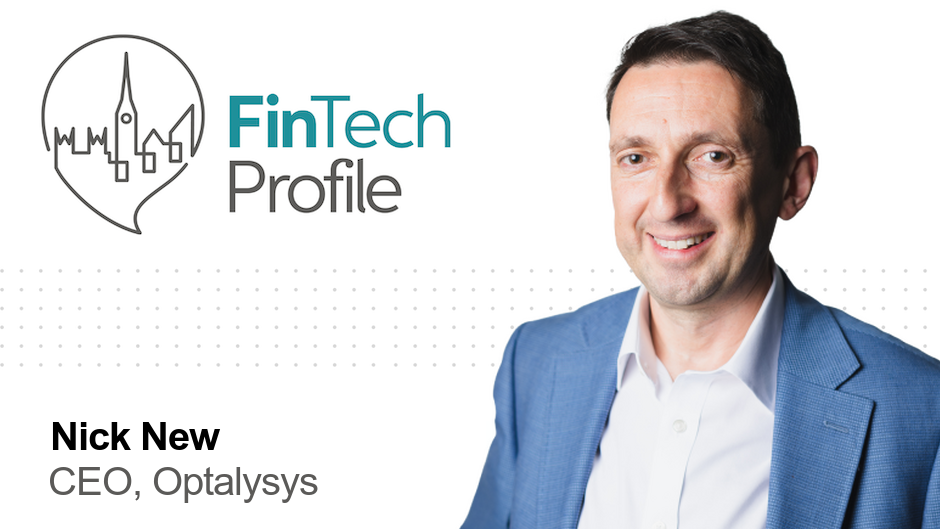
Today we're delighted to speak with Nick New, CEO of Optalysys, a photonic computing company that's tackling one of finance's biggest challenges: how to process sensitive data securely without sacrificing performance. With over £40 million in VC backing and the world's first dedicated hardware solution for encrypted blockchain applications, Nick shares his vision for privacy-preserving computing and why confidential execution should become standard across banking infrastructure.
As always, my questions are in bold - over to you Nick:
Who are you and what's your background?
I'm Nick New, CEO of Optalysys. My background is in optical computing, and I have spent decades turning photonics from research into real systems. During my PhD at the University of Cambridge in the late 1990s, I worked on optical pattern recognition and high-throughput analysis of large image and video data using light-based techniques. That work became my first company and later evolved into Optalysys, which I co-founded with our CTO, Robert Todd. Today, we apply those same photonics principles to a new challenge: making secure computing fast enough and efficient enough to use in production, which will greatly transcend the future of finance and the internet.
What is your job title and what are your general responsibilities?
As co-founder and the CEO of Optalysys, my day-to-day responsibility is to make sure we translate breakthrough photonics into a commercially deployable secure computing platform. That means setting direction, prioritising the product roadmap, supporting delivery of LightLocker Node™, and spending time with customers, partners and investors. I'm also deeply involved in building the ecosystem around us, including partnerships with big tech and expanding innovation communities. As we scale, I lead hiring and operational growth across a distributed team, from Leeds and Bristol to colleagues in India, Sweden, France and the US. This year, our priority is expanding into new markets and accelerating commercial deployments, particularly as we establish a stronger presence in the US.
Can you give us an overview of your business?
Optalysys is a photonic computing company that uses silicon photonics (light-powered chips) to move and process data more efficiently and securely, whilst consuming less energy. Our unique approach integrates data movement and processing on a single chip, combining silicon photonics with cutting-edge digital technologies to deliver the immense computational power required for today's workloads and next-generation cloud infrastructure, whilst reducing the carbon footprint of today's energy-intensive digital methods.
Early forms of FHE technology are being used in digital form in Optalysys' LightLocker™ Node servers launched last year — the world's first dedicated hardware solution designed for encrypted blockchain applications.
Tell us how you are funded?
We are VC-backed and have raised over £40 million to date. Our investors include Northern Gritstone, Lingotto Horizon, Verve Ventures, imec.xpand, and the UK government's National Security Strategic Investment Fund (NSSIF), all of whom recognise the strategic importance of silicon photonics in overcoming the performance and energy constraints of encrypted computing.
What's the origin story? Why did you start the company? To solve what problems?
Optalysys builds photonic computing systems that use light to move and process data far more efficiently than traditional electronic systems. At the core is silicon photonics: light powered chips that can handle data movement and computation together, reducing the bottlenecks and energy cost that increasingly limit modern infrastructure.
We started from a simple reality. AI and cloud workloads are scaling faster than conventional compute can support sustainably. Power, heat, and data movement are now the constraints, not just raw processing. Our approach is to create a programmable, high-density photonic layer that accelerates compute-intensive workloads, including GenAI and post-quantum algorithms, and makes that performance practical inside real cloud and enterprise environments.
A key focus is privacy-preserving computing. We enable organisations to run analytics, AI, and sensitive workflows without exposing the underlying data, even across teams or third parties. Our LightLocker™ Node platform is designed to make confidential execution practical for secure blockchain and regulated applications, delivering performance, confidentiality, and auditability together rather than forcing tradeoffs.
Who are your target customers? What's your revenue model?
Our customers include organisations that handle highly sensitive data and operate under strict regulatory or confidentiality constraints. This includes financial institutions, fintechs, blockchain infrastructure providers, cloud platforms, and regulated enterprises. For example, banks and financial institutions looking to securely share data across internal teams or with third parties and even competitors, in order to detect fraudulent activity.
Our revenue model is based on enterprise hardware deployments, complemented by software, integration, and partnership-led go-to-market models. As photonic computing becomes a core part of digital infrastructure, we see long-term demand across both on-premise and cloud-adjacent environments.
If you had a magic wand, what one thing would you change in the banking and/or FinTech sector?
I'd remove the biggest blocker holding the sector back: the assumption that sensitive data has to be exposed in order to be useful. If I had a magic wand, I would make confidential execution a standard capability across banking rails and tokenised networks, so institutions can run payments logic, smart contracts, analytics, and AI directly on protected data without revealing balances, positions, identities, or the underlying datasets.
That would upgrade the plumbing in practical, measurable ways. Banks could collaborate on fraud and AML detection using shared signals without sharing raw customer information. Market surveillance and risk controls could run in real time across institutions and venues while keeping transaction details private. Tokenised deposits and assets could carry privacy, compliance, and auditability by design, reducing today's reliance on exceptions, reconciliation, and manual controls. When that becomes normal, tokenised infrastructure stops being experimental and becomes trusted, institution-grade rails for regulated finance.
What is your message for the larger players in the Financial Services Marketplace?
Stop treating confidentiality and performance as a trade-off. The next era of financial infrastructure will be defined by systems that can compute on protected data at production speed, across organisations, without creating new risk. The institutions that invest early in privacy-first execution, verifiable outcomes, and interoperable digital rails will set the standards everyone else ends up following.
Where do you get your Financial Services/FinTech industry news from?
I closely follow CNBC for comprehensive market coverage and global economic developments. This gives me insight into the landscape and helps me pinpoint emerging trends and anticipate how the sector is evolving.
Can you list 3 people you rate from the FinTech and/or Financial Services sector that we should be following on LinkedIn, and why?
- Tom Zschach, Chief Innovation Officer at Swift
- Naveen Mallela, Global Co-Head of Kinexys, a division within J.P. Morgan focused on digital assets and digital currencies
- Kara Kennedy, Co-Head of Kinexys
What's the best new FinTech product or service you've seen recently?
The most interesting progress I have seen lately is not a single consumer app. It is the bank led infrastructure that makes tokenised value and always-on settlement operationally real. JP Morgan's Kinexys is a strong example, especially its direction toward programmable 24/7 settlement and its integration with JP Morgan FX Services to enable FX settlement on chain, initially in USD and EUR. In parallel, Swift's Sibos announcement that it will add a blockchain-based shared ledger to its infrastructure stack is a meaningful signal, because it ties digital rails to the global network banks already run on, with an initial focus on real-time 24/7 cross-border payments.
Finally, let's talk predictions. What trends do you think are going to define the next few years in the FinTech sector?
Privacy-enhancing technologies will move from a nice-to-have to operationally critical. Instead of choosing between operational continuity and data protection, organisations can now have both and regulators and customers alike will start to expect this level of protection as standard. Regulations such as DORA make it explicitly clear that organisations will be measured on operational resilience, not just preventive controls.
Many thanks to Nick for sharing his insights with us. You can connect with Nick on LinkedIn and learn more about Optalysys at optalysys.com.