My Advice to Banks on AI: Samantha McBride of ani.tech
Former hedge fund manager turned AI founder Samantha McBride shares why banks need to stop waiting for perfect data and start deploying agentic AI now.
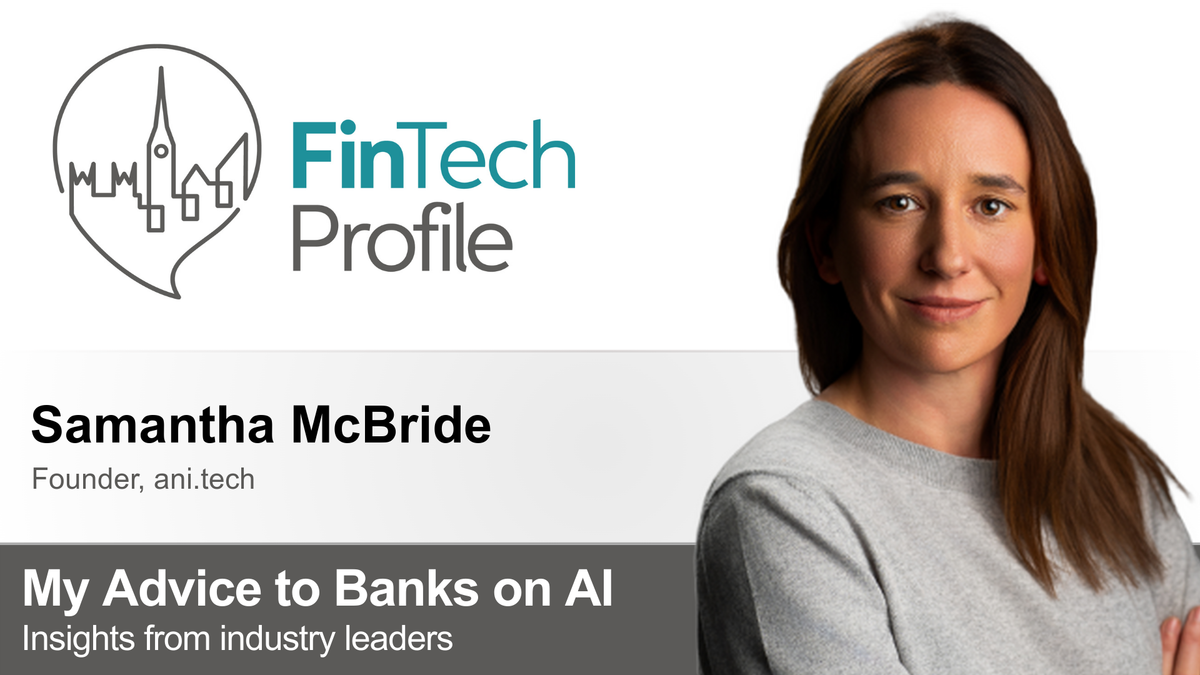
I spoke with Samantha McBride, Founder of ani.tech, a company building AI workforces for financial services. A former hedge fund manager who taught herself to code, Samantha brings both deep financial services expertise and hands-on technical knowledge to the conversation about how banks should approach AI transformation. She shares practical advice for bank executives on why waiting for perfect data is backwards thinking, and why 2026 is the year that will separate AI leaders from those left behind.
Over to you Samantha - my questions are in bold:
Can you give us an introduction to you and an overview of your organisation?
I'm a former hedge fund manager turned AI founder. I took a coding course as a New Year's Resolution along with my Mum and Aunt. I fell in love with it, quit my job and decided to build a tech startup.
Having worked in Wealth and Asset Management, I deeply understand the problems facing financial services and understand the vocabulary, opportunities and pressures of the industry. But I'm also heavily involved in the technical and product side of things.
Ani Tech builds AI workforces for financial institutions. We aren't creating chatbots or single-offering tools. We deploy intelligent teams of agents that work autonomously inside a firm's existing workflows.
We are already in production, delivering a 75% reduction in manual effort across investment management, financial advice and operations.
Our bigger vision is to cover all use cases across financial services.
If you were advising a bank CEO today, what would you say is the single biggest mistake they're making with data and AI?
Too many banks are plugging AI into old infrastructure and expecting it to magically work.
You can't just bolt true AI agents onto legacy systems or think of it as a feature that you can suddenly start using.
Say you know you have a culture problem at your company. If you hire a new Chief People Officer but keep them shut away in an office and refuse to change anything about how your business operates, that culture problem won't go away.
This is what happens when CEOs buy point solutions instead of thinking about the whole operational layer. They know they should be using AI so they buy a few tools.
To deliver real change, and realise its full potential, you need to think of AI as a whole new workforce that you are onboarding.
On a more tactical level, the most common mistake I see is banks trying to clean up their data before touching AI. That's backwards thinking. AI is the thing that helps you sort your data problem, not the reward you get after you solve it.
What's one AI or data capability banks should prioritise in the next 12–18 months, and why?
Banks should prioritise getting agentic AI into their operations now.
Waiting until your data is 'ready' means waiting forever. The most innovative banks are already using AI to surface, clean and structure their data and use it in new, more efficient ways. The 12-18 month window is about getting agents into real workflows and learning fast.
The difference between these two ways of thinking is going to have a stark and material impact. Some banks will be leveraging the extraordinary benefits of AI whilst others will spend the next two years in a data transformation programme that gives them no tangible benefits.
By the time the latter group of banks finish their data cleanup operations, it will be too late for them to catch up with their AI-enabled competitors.
Where do you see banks overestimating AI, and where are they underestimating it?
Banks overestimate the impact of specific AI tools and aren't thinking big enough. Adopting chatbots isn't a transformation strategy - it's a productivity tweak.
I'd say almost every bank is underestimating the full capabilities of AI. Most bank executives still think full automation is five years away. It isn't. Financial services firms are deploying AI right now that is transforming the way they operate.
Too many banks underestimate the compliance and quality risk of doing nothing. You can always find a sensible reason to maintain the status quo and do nothing. But the speed of innovation in AI right now means that standing still is no longer a neutral choice - it means you're going backwards.
What does "good" actually look like when AI and data are working well inside a bank?
Good looks like humans no longer touching routine work. Humans should be supervising outcomes and managing client relationships.
Systems should detect what needs doing, build a plan and then execute against it. All of this should be happening before anyone has to ask. Humans can then review the data and accompanying outcomes.
The net result is a significant increase in the quality of service clients receive, because nothing falls through the cracks and every output is checked.
What's the hardest AI or data decision bank executives are avoiding right now, and why?
The decision they're avoiding is committing to genuine agentic architecture. Many are adding AI tools on top of what they have, but that's not enough. They need to be actively rebuilding how work gets done in their organisation.
Most executives know deep down that their current setup won't support real AI agents, but the rebuild feels too big and disruptive so they keep deferring it.
The irony is that the longer they wait, the bigger the gap gets. And the firms that made the call early will be operating at a completely different level.
Every time I speak to a CEO I try and convey this sense of urgency. 2026 is a year when AI will become mainstream in financial services, but also the year that lots of companies get left behind. You have to act now to stay competitive.
Thank you Samantha! You can connect with Samantha on her LinkedIn Profile and find out more about the company at ani.tech.