My Advice to Banks on AI: Rob Rooney of Hyperlayer
Hyperlayer CEO Rob Rooney on helping banks innovate at fintech speed while maintaining resilience, moving from AI insight to safe action, and why governance is the hardest conversation executives avoid.
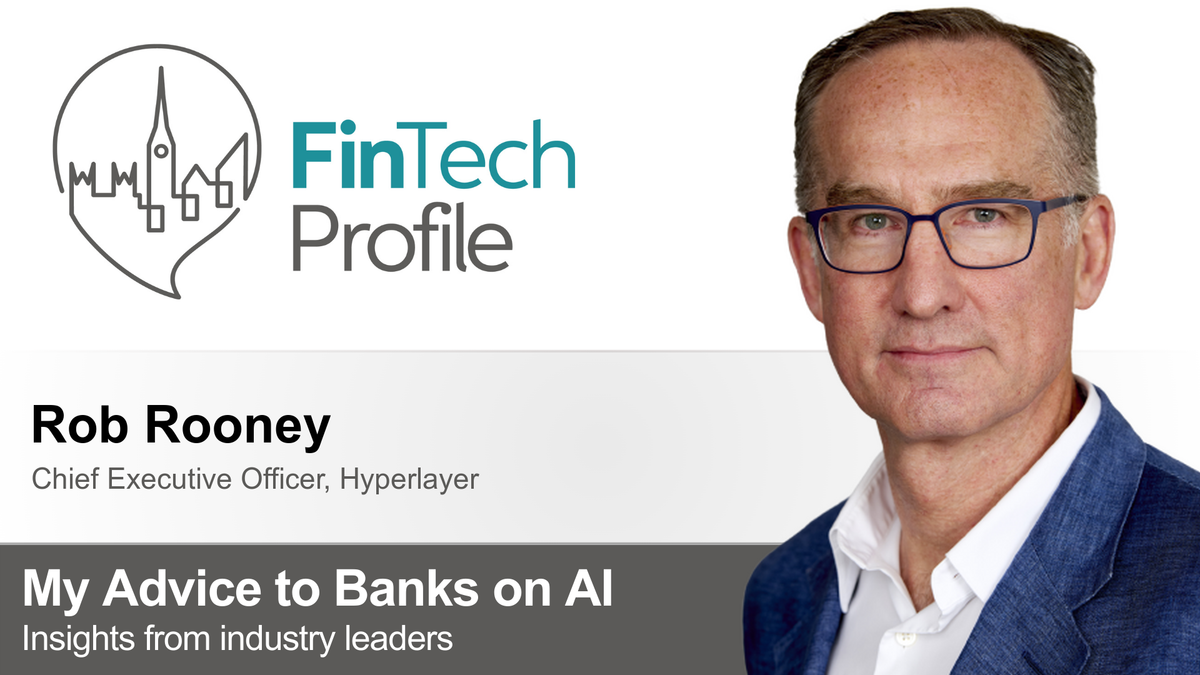
Today we're delighted to speak with Rob, Chief Executive Officer of Hyperlayer, an innovation layer for modern banking that enables banks to launch intelligent financial products in weeks without replacing their core systems. As AI reshapes customer expectations and the banking experience itself, Rob shares his perspectives on moving from insight to safe action, why governance matters more than autonomy, and the architectural decisions that will define banking's agentic era.
My questions are in bold - over to you Rob:
Can you give us an introduction to you and an overview of your organisation?
I founded Hyperlayer after many years in financial services, where I saw how difficult it can be for banks to innovate quickly without putting the core systems that safeguard trust at risk. Those systems exist for a reason - protecting customers' money, ensuring compliance, keeping financial services running safely and reliably - but they weren't designed for the kind of continuous product change, personalisation, and intelligent interaction customers increasingly expect.
Hyperlayer provides an orchestration layer that sits alongside existing banking infrastructure, enabling institutions to build, personalise, and deliver financial products at speed without replacing their core platforms. In simple terms, we separate the logic that must remain stable from the logic that needs to continuously evolve, so banks can innovate safely rather than forcing change into systems built primarily for certainty.
We also focus strongly on transparency. We take a white box approach to AI – it needs to be explainable, governed, and designed for regulated environments - so banks can adopt new capabilities confidently rather than treating AI as a black box risk.
Our goal is to help banks thrive in the agentic era, innovating at fintech speed while maintaining bank-grade resilience. Our focus is on helping banks deliver better customer outcomes without compromising the trust those institutions are built on.
If you were advising a bank CEO today, what would you say is the single biggest mistake they're making with data and AI?
No bank will get it right from day one and it's important to test and learn and make sure it scales. This is an industry in transition. What's changing rapidly is the interaction layer between customers and financial services, and there are really two shifts happening.
Increasingly, AI systems are embedded in apps, marketplaces, and digital assistants, helping customers compare financial options and make decisions. That's changing how banks are discovered and selected and which have primacy, as products are surfaced through AI-driven recommendations rather than traditional channels.
More importantly, AI is beginning to entirely reshape the banking experience itself. Customers don't just want recommendations; they want outcomes: saving more effectively, managing spending automatically, or reaching financial goals with less friction. AI can advise, but banks still need a safe, governed way to turn that advice into trusted financial actions.
What's one AI or data capability banks should prioritise in the next 12–18 months, and why?
The priority should be moving from insight to action safely. AI is already very good at generating financial insights - budgeting advice, savings recommendations, risk alerts. But the real value comes when those insights can translate into secure, controlled financial actions.
For example, if AI suggests setting aside £20 a month for Christmas spending, the next step shouldn't be more manual steps in an app. It should be a simple question:
"Would you like me to create a Christmas savings pot and move £20 into it automatically each payday?"
That shift from advice to safe execution is where real customer value emerges. In our conversations with banks, I put it this way: AI can advise, Hyperlayer makes it safe to act. Honestly, smarter AI isn't the hard part anymore; it's whether the underlying architecture allows the action without increasing the risk.
Where do you see banks overestimating AI, and where are they underestimating it?
I think a lot of people overestimate how autonomous AI can be in regulated financial environments. Even as models improve, institutions remain responsible for outcomes, so governance, explainability, and human oversight remain critical.
AI will amplify whatever architecture banks already have, good or bad. If the underlying systems support safe, adaptable change, AI can accelerate innovation. If they don't, it can amplify complexity and risk.
And it's easy to underestimate how AI will reshape customer expectations. As intelligent assistants help consumers manage money more proactively, the emphasis shifts from individual products toward overall financial outcomes. That makes adaptability, and the architecture that supports it, increasingly important.
What does "good" actually look like when AI and data are working well inside a bank?
Good banking should feel effortless. Customers shouldn't need to navigate complex interfaces or constantly monitor their finances. AI should help surface insights, anticipate needs, and enable secure action in a way that feels intuitive rather than intrusive. It should replace the hundreds of financial micro-decisions taking up room in our brains currently with intuitive, helpful, safe support. What we all want is better outcomes without more effort.
For banks, that means combining strong governance, explainable AI, and an architecture that allows innovation without destabilising core systems and within risk appetites. When those pieces align, you can deliver better customer outcomes without increasing operational risk.
What's the hardest AI or data decision bank executives are avoiding right now, and why?
The toughest conversations in this space are about governance, responsibility, and trust.
AI creates enormous opportunity, but it also raises questions about explainability, consent, liability, and customer confidence. Banks are understandably cautious because they operate in highly regulated environments where mistakes carry real consequences.
The challenge isn't whether to adopt AI, because that's already happening. It's how to do it in a way that uses and protects customer data responsibly, that maintains transparency, accountability, and long-term trust while delivering genuinely better customer experiences. That's as much an architectural question as it is a policy one.
We'd like to thank Rob for taking the time to share his insights with us.
You can connect with Rob on LinkedIn or learn more about Hyperlayer on their website.