Mike Stawchansky from Finastra: 5 Tech Trends Reshaping Financial Services in 2026
Cloud migration, AI implementation, and component-based modernization are transforming how financial institutions compete in an increasingly digital marketplace.
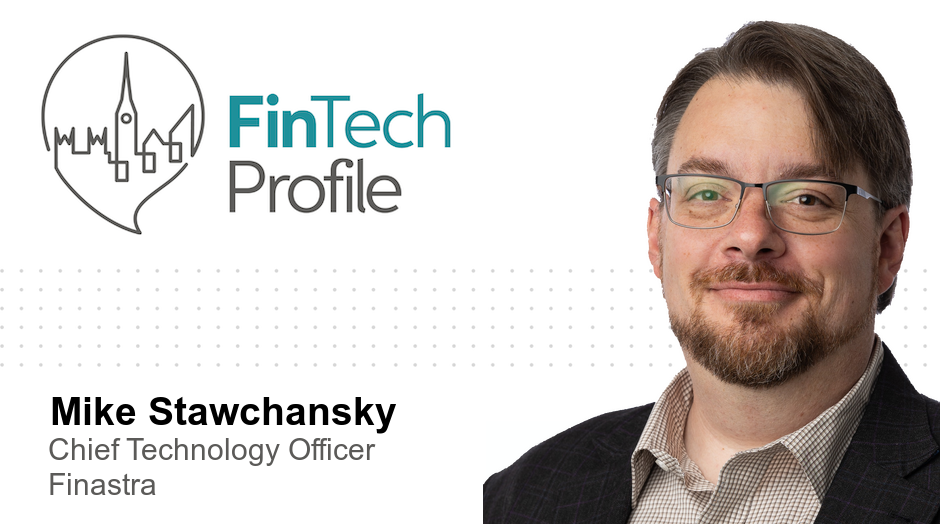
Regular readers have been really enjoying the '2026 Predictions Series' that we've been running across this month, so I'm delighted to feature the following Technology Trends piece from Mike Stawchansky, Chief Technology Officer of Finastra.
Over to you Mike:
Five pivotal technology trends are creating opportunities and challenges for financial institutions in the year ahead. Cloud computing, component-based modernization, artificial intelligence and advanced cybersecurity are reshaping the delivery of financial services with advances in quantum computing also on the horizon.
Accelerating cloud migration
Cloud computing is fast becoming a foundation of modern banking infrastructure, transforming how financial institutions operate and compete in an increasingly digital marketplace. Estimates from CoinLaw show that as of 2025, circa 60% of banks globally will have shifted at least 30% of their critical workloads to the cloud, suggesting there’s still some way to go in the year ahead. Cloud computing supports the need for increased flexibility, scalability, and speed – enabling banks to integrate value-added services through secure APIs and to be more agile in innovating to meet customer needs.
As cloud uptake accelerates, and in the wake of recent industry infrastructure outages, financial institutions will increasingly prioritize risk mitigation through diversified cloud strategies to ensure maximum resilience for mission-critical services. As more reliance is built on the cloud, fintech vendors that have built cloud-agnostic software will have a definitive advantage supporting hybrid and multi-cloud deployments.
Delivering modernization through a component-based approach
While the replacement of legacy core banking systems is notoriously difficult, failure to modernize is no longer an option in today’s fast-changing landscape. Breaking down complex systems into self-contained modules that can be upgraded, scaled, and managed independently, fast-tracks innovation in key areas that align with business objectives.
An approach based on 'symbiosis' is key: building out modern microservices that can be integrated into legacy core banking solutions while ensuring seamless access to the latest features via a frictionless upgrade path. Underpinned by APIs, modularization and product decomposition is a key strategy for overcoming legacy component by component.
Realizing the promise of AI
AI adoption has grown dramatically. OpenAI reports that ChatGPT now serves more than 800 million users every week, while Google Gemini continues to rapidly expand its user base. While AI is already accelerating individual productivity, the pressure is on in 2026 to deliver tangible benefits and return on investment for enterprise-level AI deployments.
The shift from experimental AI to strategic implementation demands measurable outcomes aligned with specific business objectives. Equally essential is a full understanding of the potential and limits of data integration within the organization. If data across the enterprise is not discoverable or in a usable state and the AI knowledge and experience of teams is subpar, then investments and AI projects will falter. Success hinges on ensuring data is well governed and securely accessible to the tools selected. Trusted providers that understand and ensure data access with proper compliance guardrails will be instrumental in offering key insights without causing additional risk.
For financial services leaders, the path to AI success requires a dual focus on technological infrastructure and human capital. Modernizing legacy systems to support advanced AI applications while simultaneously upskilling staff to leverage these tools effectively creates a foundation for competitive advantage.
Combatting growing cybersecurity threats
With AI fueling the emergence of advanced cyber security threats, such as sophisticated phishing attacks, deepfakes and social engineering, financial services organizations must continually adapt to address emerging attack vectors. Just as the threat actors get faster and more sophisticated utilizing tools that can work across large data sets autonomously so security professionals must deploy their own agentic AI tools designed to detect and neutralize threats before they can compromise sensitive financial systems.
Investing in cloud security solutions, such as SECaaS, and ensuring the behavior of all employees – together with all members of the extended supply chain – supports a robust security posture, is essential.
In this heightened threat environment, proactive security testing becomes non-negotiable. Financial institutions must regularly conduct simulated attacks that stress-test all aspects of their organizational defenses, enabling them to identify vulnerabilities before malicious actors can exploit them. A continuous cycle of simulation, refinement and strengthening creates a dynamic security posture capable of adapting to a rapidly evolving threat landscape in the year ahead.
Ensuring readiness for quantum computing
Experts are predicting that 2026 will be the year we start to see ‘quantum advantage’, where quantum computers are able to demonstrably outpace classical machines for certain tasks. The IBM Institute for Business Value places banking joint fourth out of 14 in its Quantum Readiness Index, with the industry investing circa 12% of R&D budgets in such initiatives. Critical factors for success in this area include organizational readiness, alongside tech maturity, as well as using investment in quantum and AI to amplify each other’s impact and maximize value.
Overall, financial institutions cannot afford a piecemeal approach to technological transformation. An appetite to embrace continuous innovation and develop the organizational agility to pivot rapidly is key. Those already allocating resources strategically, building technical capabilities incrementally, and fostering partnerships with specialized partners that can accelerate their transformation journey will be best positioned for success.
Thank you Mike. Connect with Mike on LinkedIn and read more about Finastra at finastra.com.