Mark Dorman, CEO, Elite
Mark Dorman discusses how Elite's AI-enabled SaaS platform is transforming legal financial operations, delivering 40% faster collections and setting new standards for the industry.
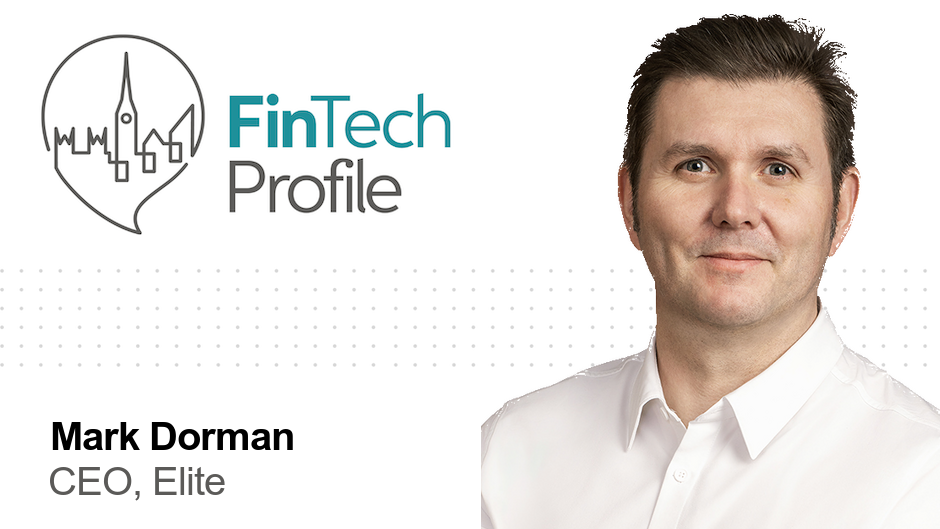
Today we're delighted to speak with Mark, CEO of Elite, the leading AI-enabled SaaS platform purpose-built for the legal industry. From his background as a British Army officer to leading digital transformation in complex industries, Mark brings a unique perspective on how law firms can harness cloud and AI to drive meaningful change. In this conversation, he shares how Elite is delivering measurable results for over 2,000 firms and why unified platforms will define the future of financial services.
My questions are in bold - over to you Mark
Who are you and what's your background?
I'm Mark Dorman, CEO of Elite, the leading AI-enabled SaaS platform purpose-built for the legal industry. My career has been shaped by leading organisations through periods of disruption and transition. I'm a former British Army officer turned tech CEO. My experience has shaped how I think about leadership under pressure, building trust, and decision-making with imperfect information, which mirrors the reality law firm leaders face every day. Originally from Scotland, I now reside in New York and have called the US home for more than two decades.
Across my career, every company and industry I have worked in has been in the midst of digital transformation. What I've learned is that organisations often embrace the digital part but resist the transformation that must come with it. That's where the real value is found.
At Elite, I'm focused on guiding law firms through what I believe is the most impactful digital transformation of the legal profession. This is not about chasing technology. It's about using cloud and AI to remove friction, strengthen core value, and help firms operate with greater clarity and confidence.
Harnessing advanced technology, like AI and cloud, is no longer optional. The opportunity, however, lies in applying it thoughtfully to drive meaningful, lasting change.
What is your job title and what are your general responsibilities?
As CEO, my role is to set the vision and strategy for Elite and ensure we deliver solutions that help our clients to operate with greater agility, accuracy, and profitability.
Day-to-day, that means many different activities. It includes working closely with our product and client delivery teams to drive meaningful innovation with tangible value. Currently we're focused on embedding AI across the law firms' work-to-cash cycle to fully realise the value of automation—accelerating billing cycles, giving firms real-time visibility into performance and risk, and helping them to make smarter decisions and future-proof their businesses.
I also meet regularly with our customers to understand their needs and ensure that Elite remains at the heart of the world's most successful law firms.
And, as we build the world's only AI-enabled SaaS platform for automating legal operations, it means digging into how Elite operates as a business to maximise customer value.
Can you give us an overview of your business?
Elite is at the heart of the world's most successful law firms. Our customer base comprises around 2,000 firms, including more than three quarters of the top-ranked law firms in the US.
Our SaaS platform brings the entire financial lifecycle (billing, time, payments, compliance, and analytics) into a single unified system of action. Unlike fragmented systems, Elite provides continuous innovation and value through cloud-first technology, delivering speed, accuracy, and seamless automation. Our platform powers billions of dollars' worth of invoices, drives measurable performance gains, and proves that innovation paired with trust can move the legal industry forward.
Elite is setting a new standard for financial operations in the legal industry. The results speak for themselves: our customers are reporting 40% faster collections, 50% fewer write-offs, with near real-time data visibility. This year we also surpassed 100 cloud go-lives and supported more than $72 billion in annual transactions. One customer told us that month-end close dropped from days to hours after moving to Elite's SaaS platform, a game-changer for their revenue cycle.
What we hear consistently from managing partners is that trust matters as much as innovation. They need confidence that the systems running their firm are as resilient and predictable as the legal advice they provide clients.
Tell us how you are funded?
Elite is backed by Francisco Partners, a leading global investment firm with deep experience scaling tech businesses in complex industries.
Their support enables us to build on our momentum and accelerate our strategy of innovation and growth. We're able to scale faster and invest more deeply in cloud and AI.
Private equity often gets criticised, but my experience has been the opposite. The right partner brings discipline, clarity, and focus. Francisco Partners understands software-led transformation and the realities of the legal market, which positions Elite for long-term growth and durable value creation.
What's the origin story? Why did you start the company? To solve what problems?
I joined Elite as CEO in 2023, but we have a long history of bringing cutting-edge technology to the legal industry.
We were founded in 1947 with the mission of transforming law firms with the latest innovations central to their success. At that point, we were working with the latest legal technology innovation of the era, dictation machines. As the tech evolved, so did our business model.
What's most compelling about our history is that Elite has successfully navigated every major technology platform shift the legal industry has faced. Each shift changes how work gets done, and the firms that benefit are the ones that adopt the platform, not just the individual tools.
It's the difference between digitising a paper map versus using modern navigation built on real-time data and automation.
Law firms are in the middle of that type of shift today. Fragmented, manual systems create delayed cash-flow, frustrated partners and clients, and limited confidence in firm-wide data. Elite exists to remove that friction by unifying and automating financial and business operations on one connected cloud platform.
Because we deeply understand how law firms operate financially, we're able to apply cloud and AI in practical ways that deliver real outcomes. That's why Elite is so well positioned for this moment.
Who are your target customers? What's your revenue model?
Our customers include the world's biggest and most successful law firms. We operate on a SaaS subscription model, delivering continuous innovation. Major firms including Clyde & Co, Paul Hastings, and Osborne Clarke trust Elite to streamline billing, accelerate collections, and provide real-time insights.
If you had a magic wand, what one thing would you change in the banking and/or FinTech sector?
I'd eliminate reliance on fragmented systems. Every major efficiency gain in legal and financial services over the next decade will come from unification – embedding capabilities, not integrating. Firms that stay on siloed platforms will see the gap continue to widen.
What is your message for the larger players in the Financial Services marketplace?
Technology strategy is leadership strategy. Delegating it entirely is no longer viable, because technology transformation is no longer optional. If your peers are collecting on their invoices 40% faster, that's not a tech advantage, it's a competitive advantage. The firms that win will be those that embrace real-time visibility, automation, and cloud-first infrastructure.
Where do you get your Financial Services/FinTech industry news from?
For breaking news and market context, I rely on the Financial Times, Bloomberg, The Wall Street Journal, and Reuters. LinkedIn is also helpful to track the latest news and thought leadership. I also listen to podcasts like Fintech Insider and ALM's Legal Speak when I can. They give me a pulse on innovation and what's resonating with practitioners.
Can you list 3 people you rate from the FinTech and/or Financial Services sector that we should be following on LinkedIn, and why?
If you want to learn more about the intersection of fintech and legal tech, and delve a bit further into my world, then I recommend following:
- Daniel Katz, Professor of Law at Illinois Tech. He's putting some interesting stuff out about bridging AI, law, and finance disciplines. He offers early indicators of where legal technology is heading and approaches AI from both an academic and practical application standpoint.
- Bob Ambrogi – Host of LawNext Podcast and runs the LawSites blog. He is recognised as a top voice in the legal tech space.
- Nikki Shaver - CEO & CoFounder of Legal Tech Hub, widely acknowledged for helping build the legal tech ecosystem, and a leading voice on sector trends.
On the digital payments side, there's:
- Karen Webster, founder of PYMNTS.com, widely recognised for her expert analysis and fire-side chat-style interview series with up-and-coming names in the digital payments space.
- Spiros Margaris – Global fintech and AI influencer who was one of the early voices on AI's impact in financial services.
What FinTech services (and/or apps) do you personally use?
I was an early adopter of a few fintech apps, but over time, most of those capabilities have been absorbed into major banks.
Today, the only standalone app I regularly use is Venmo. Everything else, from FX to transfers to trading is handled within my primary banking platform, with services like Zelle embedded directly into the bank experience.
That shift reinforces a broader lesson I have seen play out repeatedly. Standalone tools can lead innovation, but over time the platform usually wins out. Customers value simplicity, trust, and a single place where everything comes together, and long-term relationships tend to outlast point solutions.
What's the best new FinTech product or service you've seen recently?
What has stood out to me most recently are the newer trading platforms that bring traditional and non-traditional assets together in one place. Apps like Robinhood continue to blur the lines between investing, trading, and financial services, particularly for non-institutional investors.
What's interesting is less the individual features and more the convergence. These platforms simplify access to assets that were once fragmented across different systems and experiences.
Whether that's ultimately a good thing is up for debate, but it reinforces a broader trend — the market continues to move toward unified platforms, giving users more choice, more immediacy, and fewer barriers between intent and action.
Finally, let's talk predictions. What trends do you think are going to define the next few years in the FinTech sector?
Law firms that will stay ahead will be those adopting unified solutions and capabilities that can be embedded within their workflows, resulting in real financial returns.
Using the legal industry as a case study, businesses that have already embraced cloud technology will outpace those who are yet to make the leap. Tech providers should be capitalising on that. Legacy servers can't keep up with the needs and challenges facing businesses in the coming years, specifically around scalability, efficiency, and security.
A long-awaited AI reality check is also on the horizon, as business leaders will stop entertaining vague assurances about the potential of AI and demand results and return on their investments. AI that can't be audited simply won't survive and vendors who can't deliver on their claims will fall out of the conversation completely. What will survive, however, will be AI that integrates seamlessly into daily workflows and produces transparent, replicable outcomes. The winners will not be the loudest voices in AI, but the most accountable ones.
We'd like to thank Mark for taking the time to speak with us. You can learn more about Elite on their website at elite.com.