Lyall Cresswell, Founder & CEO, SmartPay
Lyall Cresswell discusses how TEG's SmartPay platform is transforming logistics finance by settling payments in under 60 minutes and integrating digital identity verification into B2B workflows.
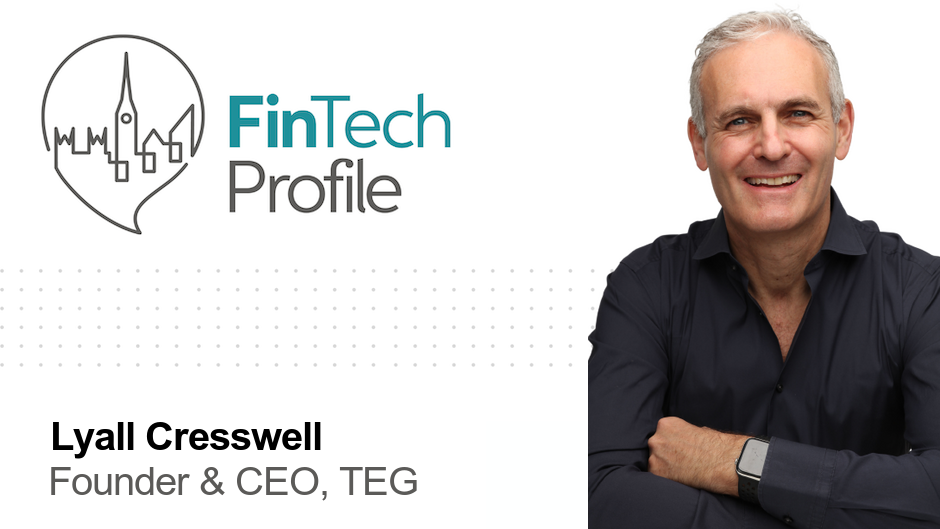
Today we're delighted to speak with Lyall, Founder & CEO of TEG (Transport Exchange Group). With 25 years of experience building neutral infrastructure for the UK freight and logistics sector, Lyall has recently launched SmartPay, a fintech platform that's fundamentally reshaping how the industry handles payments and working capital. We explore his journey from architecture to logistics, the genesis of SmartPay, and his thoughts on where integrated payment networks are taking B2B fintech.
My questions are in bold - over to you Lyall:
Who are you and what's your background?
I studied architecture at university before moving into logistics. In my mid-twenties I founded and later sold a specialist freight forwarding company that handled international movements in the antiques and fine art world.
At the turn of the millennium, there was growing interest in the potential for online B2B marketplaces to transform industries. The dotcom boom was in full swing. Despite a tidal wave of investment, most were failing due to lack of liquidity. The road freight transport industry was one exception, largely due to the fragmentation within this large and important sector. That led me to start TEG 25 years ago.
We've remained profitable and self-funded throughout, reinvesting around 30% of revenue into R&D every year. That independence has allowed us to focus on solving real industry problems rather than chasing growth metrics for investors.
What is your job title and what are your general responsibilities?
I'm CEO and Founder of TEG. Day to day, I'm focused on product strategy and ensuring we're building technology that genuinely solves the problems our members face. That means staying close to the market, understanding how payment friction and compliance burdens impact operators, and directing our teams to address those challenges.
Increasingly, that means focusing on our fintech development. We launched SmartPay in 2024 to address the payment and cashflow dysfunction in logistics. It's been transformational for the business, and we're continuing to expand what's possible when you integrate payments, compliance, and logistics execution into a single platform.
Can you give us an overview of your business?
TEG operates as neutral infrastructure for the UK freight and logistics sector. We connect over 10,000 transport businesses through our marketplace platform, processing 3+ million bookings annually with £600 million in gross transaction value, which is growing year on year. We serve everyone from SME owner operators to blue chip enterprises like Dachser, Kinaxia, and Ziegler.
For many years, TEG focused on building capacity and liquidity to maximise digital freight matching and order execution. But we kept seeing the same pattern: operators could find freight easily enough, but then waited weeks to get paid. That cashflow dysfunction was limiting growth across the network. SmartPay addresses that directly by fundamentally changing how the industry handles payments and working capital.
Traditionally, logistics operators waited 30 to 60 days to get paid, which created massive cashflow pressure, especially for smaller businesses. SmartPay and our associated Invoice Finance programme settles transactions in under 60 minutes and provides access to on-demand financing, turning what was essentially a transactional marketplace into integrated financial infrastructure.
What makes this work is Trustd, our UK Government certified digital identity platform. Trustd unlocks SmartPay. When you can instantly verify a carrier's insurance, certifications, and credentials through a reusable digital identity, you remove the compliance friction that traditionally slows down payment settlement. The two capabilities together, identity verification and instant payments, create what we call an integrated payment network rather than just embedded finance.
The business model combines subscription revenue with transaction-based income from payment processing and early payment services. What matters most is the impact: we've seen an 18% reduction in payment issues reported by operators, 16.6% improvement in SME member retention, and we've enabled Enterprise-level member businesses to onboard 1,500+ new suppliers instantly, something that would have taken months using legacy systems and processes.
Tell us how you are funded?
We're entirely self-funded and have been profitable throughout our 25-year history. That's unusual in fintech, but it's been fundamental to how we operate. We consistently reinvest a significant proportion of revenue into R&D, and over the last seven years we've invested £21 million into building a true end-to-end integrated platform, including SmartPay and Trustd developments alongside significant enhancements right across the platform.
The bootstrap approach means we move deliberately rather than chasing hypergrowth, and we only build products when we're confident they solve real problems. SmartPay is a good example: we spent years observing payment dysfunction in logistics before committing to building the solution. Now we're projecting full cost recovery by 2028 through subscription growth, transaction fees, and early payment services.
Being independent also means we can operate as genuine neutral infrastructure. We don't have investors pushing us to favour certain members or extract maximum value in the short term. Our incentive is to make the entire network more efficient, which drives long-term value for everyone.
What's the origin story? Why did you start the company? To solve what problems?
The timing was interesting. The late 1990s saw massive investment flowing into B2B marketplaces, but most were fundamentally flawed. They were trying to create liquidity in sectors that had neither the fragmentation nor transaction volumes to support digital platforms. We watched those businesses burn through capital and fail.
Road freight was the exception. The sector is massively fragmented, with thousands of operators with underutilised capacity, complex supply chains requiring multiple handoffs, and constant coordination challenges. A digital platform could genuinely solve real problems by connecting that distributed capacity efficiently.
But the deeper issue, which took us longer to fully appreciate, was payments. Logistics operates on razor-thin margins. Operators need to pay drivers, fuel, and maintenance costs immediately while waiting 30 to 60 days to receive payment from customers. That cashflow pressure stops capable businesses from growing and forces others out entirely.
Traditional banking wasn't helping. Banks assess risk based on balance sheets and credit history, which disadvantages SME logistics operators even when they have strong operational track records and solid customer relationships. The system was excluding precisely the businesses that needed working capital most.
SmartPay and the associated Invoice Finance programme emerged from 25 years of watching those dynamics play out. We had unique visibility into transaction patterns, delivery performance, and network behaviour. That data showed us we could assess creditworthiness far more accurately than traditional metrics. Combined with instant settlement infrastructure, we could finally address the fundamental cashflow constraint that's been holding the sector back.
The result is that operators can now take on larger contracts, invest in equipment, expand fleets, and hire staff, things they simply couldn't do under the old 30 to 60-day payment model. That's what makes SmartPay transformational rather than just convenient.
Who are your target customers? What's your revenue model?
Our member businesses span the full freight transport and logistics ecosystem. On the SME side, we serve owner operators and small fleets who need access to freight opportunities and working capital. On the Enterprise side, we're a strategic technology partner that helps logistics leaders deliver growth without having to build and manage their own platforms.
Logistics companies make binding service commitments to customers but need flexible access to thousands of independent carriers to fulfil them. TEG provides the shared infrastructure that makes this workable in practice, bringing verified carriers, standard workflows, and reliable payment into one system so multiple parties can operate with confidence. We work with major operators like Dachser, Kinaxia, Ziegler and TVS.
One Enterprise member onboarded over 1,500 new suppliers within a couple of months of joining the platform, something that would have been impossible with manual processes and traditional payment terms. That scalability is what makes SmartPay valuable to larger businesses.
The revenue model has evolved since SmartPay's launch. We have subscription fees that reflect the platform's enhanced value proposition. It's now financial infrastructure rather than just a transactional marketplace. We also generate transaction-based income from payment processing and early payment services. Uptake of financing services already exceeds industry benchmarks, which validates both demand and the business case.
The impact is measurable: payment issues reported by operators fell 18% in the period January to July 2025 compared with 2023, and SME retention improved 16.6% in the first half of 2025 versus the previous year. Those improvements translate directly into higher recurring revenue and lower acquisition costs.
If you had a magic wand, what one thing would you change in the banking and/or FinTech sector?
I'd eliminate the assumption that credit history is the only way to assess risk in B2B contexts. Traditional banking treats logistics SMEs as high risk because they don't have pristine balance sheets, but that completely misses operational capability, transaction history, and network reputation.
We've demonstrated that you can assess creditworthiness using transaction data, delivery performance, and ecosystem behaviour. That approach is far more relevant for sectors where success depends on execution rather than capital endowment. If mainstream financial services adopted similar models, you'd unlock growth for thousands of capable businesses currently excluded from working capital.
The broader issue is that embedded finance still isn't properly integrated into B2B workflows. Consumer fintech figured this out years ago. Payments happen seamlessly within the transaction. B2B is still dominated by invoices, bank transfers, and 30 to 60-day terms. That friction costs businesses billions in lost productivity and growth.
What is your message for the larger players in the Financial Services marketplace?
Neo-banks are gaining ground because they're not trying to be everything to everyone. They've figured out that generic payment rails and credit products don't solve actual business problems. Traditional banks have the resources to do better, but the window is closing.
Vertical-specific fintech infrastructure is where real value gets created in B2B. Generic payment rails and credit products don't solve the actual problems businesses face because they're not designed around industry workflows.
In freight transport and logistics, the challenge isn't just moving money. It's coordinating multiple suppliers, verifying compliance, managing risk across complex networks, and providing working capital at the point of transaction. You need payments, identity verification, and financing integrated into the operational platform. That integrated payment network, not just embedded finance in isolation, is what delivers real value. That's what SmartPay does, and it's why we're seeing adoption that exceeds industry benchmarks.
For banks and larger financial services players, the opportunity is partnering with platforms that already have network effects and domain expertise rather than trying to build everything in-house. We've spent 25 years understanding logistics workflows. A bank trying to replicate that from scratch would take a decade and still miss crucial nuances.
The other message is that bootstrap fintech can scale sustainably. We're projecting full recovery of our SmartPay investment by 2028 through organic revenue growth. Profitability and long-term value creation aren't mutually exclusive. You just need to focus on solving real problems rather than chasing valuation metrics.
Where do you get your Financial Services/FinTech industry news from?
LinkedIn and industry conferences are my primary source. The payments space moves quickly, and LinkedIn gives you direct access to what people are actually implementing and thinking about in real time. I also make a point of attending London conferences when I can.
Can you list 3 people you rate from the FinTech and/or Financial Services sector that we should be following on LinkedIn, and why?
- Jamie Smith is a thought leader in the world of digital wallets and personal AI—this is a cutting edge area which is going to impact everyone in the near future.
- David Birch was the author of 'Identity is the new money' some ten years ago, but it is still a very relevant read even today.
- Jamie Dimon, JP Morgan. Amazing longevity as the leader of a major bank.
What FinTech services (and/or apps) do you personally use?
I'll give an unashamedly biased answer: SmartPay. Watching invoice reconciliation, vendor management and bulk payments compress from hours into minutes is satisfying every time. Even more so knowing it's processing hundreds of transactions daily across the network. It's one thing to build something, quite another to see it perform at scale.
Externally, Happy Robot is doing something genuinely interesting in the freight brokerage space. They've built AI agents that handle carrier negotiations via voice, and the discipline is remarkable. These agents won't deviate from their pricing parameters regardless of how the negotiation unfolds.
That level of consistency at scale addresses a real problem in brokerage operations, where human negotiators naturally want to close deals and move on. The AI simply waits for the right price, making thousands of calls without fatigue or emotional investment. It's a practical application of AI that actually changes unit economics rather than just automating existing processes.
What's the best new FinTech product or service you've seen recently?
I've been impressed by what Yoti is doing with digital identity verification. Their approach to privacy-preserving identity, particularly facial age estimation and reusable individual digital ID, tackles one of the most fundamental challenges in financial services: knowing who you're dealing with before money moves.
As someone who built Trustd to solve the problem of business and organisational identity in freight transport and logistics, I find their work compelling because it demonstrates that digital identity isn't just a compliance exercise. It's core financial infrastructure. When you can verify a counterparty instantly and with confidence, you remove the friction that slows down payments, increases risk, and limits access to working capital. That's what makes identity verification a fintech story, not just a regtech one.
Finally, let's talk predictions. What trends do you think are going to define the next few years in the FinTech sector?
Digital identity infrastructure is THE disruptor for the next few years. Having a reusable and portable digital identity is a massive win-win for everyone. When you can connect to a verifiable profile rather than spending time and money getting to know every new counterparty, the economics of collaboration completely change. You can verify insurance, check certifications, confirm right to work, all through a trusted profile. That's what unlocks flexible, multi-party operations at scale.
Integrated payment networks are where real value gets created, particularly in B2B. It's not just embedded finance on its own. It's combining verification, settlement, and finance into a single system where working capital gets delivered at the exact moment a business needs it, within workflows they're already using. When identity verification and instant payments work together, you fundamentally change how companies can operate and grow.
Beyond infrastructure, AI will reshape how these systems operate. Right now, practical applications delivering measurable results matter most: AI handling track and trace queries at 2am, negotiating freight rates at scale without emotional investment, identifying patterns in logistics data that humans miss. The question is how quickly mainstream adoption happens once businesses see accurate, cost-effective results.
Looking further ahead, personal AI becomes more significant. We're still clicking through the same purchase flows we've used for years, but that's changing. AI that understands your preferences well enough to handle routine purchasing decisions autonomously sounds futuristic now, but the technology is moving fast. The shift from us actively managing every transaction to AI handling repeat purchases and surprising us with better options is closer than most people think.
Stablecoins deserve attention too. The efficiency gains are significant, but the really interesting part is watching how regulators adapt. That tension between innovation and regulatory frameworks will shape how quickly stablecoins move from interesting technology to standard infrastructure.
Thank you to Lyall Cresswell for taking the time to speak with us. To learn more about TEG and SmartPay, visit transportexchangegroup.com.