Luke Trayfoot, Global Head of Strategic Partnerships, YouLend
Luke Trayfoot discusses embedded finance, SME capital access, and why funding should move at the speed of modern business.
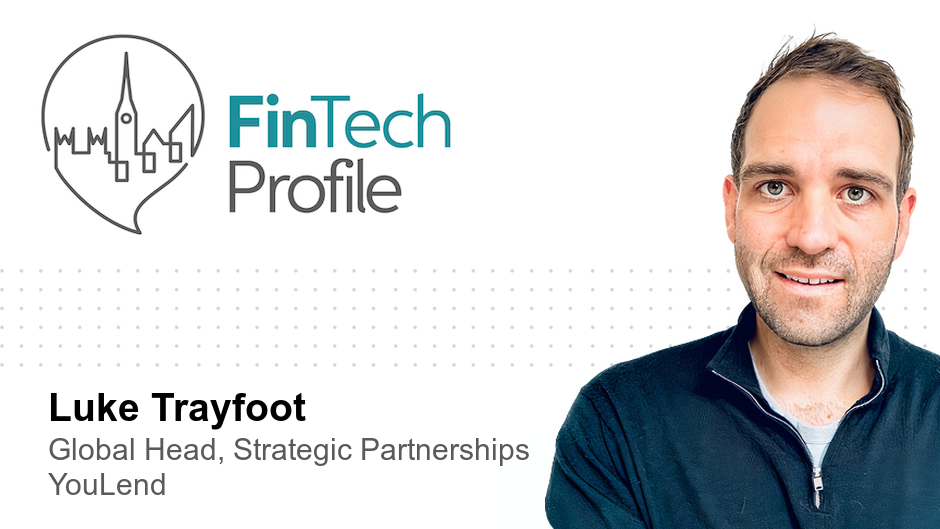
Today we're delighted to speak with Luke, Global Head of Strategic Partnerships at YouLend. With over a decade of experience across PayPal, World First, and other leading fintech platforms, Luke shares his insights on embedded finance, the challenges facing SME funding, and why real-time data is transforming access to capital.
My questions are in bold - over to you Luke:
Who are you and what's your background?
I'm Luke Trayfoot, Global Head of Strategic Partnerships at YouLend. My path into fintech wasn't a straight line, but it has always been driven by a curiosity about how money moves through digital ecosystems and how technology has continued to reshape how businesses operate and grow.
I studied at the University of Nottingham and later, after graduating, I completed a Master of Law at the University of Westminster, focusing on intellectual property and the commercial frameworks behind digital platforms. That foundation gave me an early appreciation for how innovation is built and governed, which has proven invaluable in fintech.
Before joining YouLend, I spent more than a decade working across fintech businesses, including PayPal, World First, Hyperwallet and Mangopay. Working closely with digital platforms as they scaled globally, I saw firsthand how quickly digital commerce was evolving. At the same time, access to better payments, cash flow settlements and working capital for SMEs remained slow and overly traditional.
That gap is what led me to embedded finance and ultimately to YouLend. I was drawn to the opportunity to remove friction from SME funding by embedding capital directly into the platforms where businesses already operate. For me, fintech is about building infrastructure that unlocks growth, and that is exactly what we're doing at YouLend.
What is your job title and what are your general responsibilities?
As Global Head of Strategic Partnerships at YouLend, I'm responsible for building and leading the partnerships that allow our embedded finance solutions to reach SMEs at scale. Partnerships are our sole route to market, so this function is central to the company's growth and long-term strategy.
On a daily basis, I work closely with payment providers, software platforms, marketplaces, banks and broader fintechs to understand their commercial and strategic priorities to identify where capital can genuinely support their merchants' growth and business objectives. A significant part of my role is making sure YouLend's capabilities are utilised effectively through a partner's existing ecosystem, so a capital offering is a seamless extension of their current business offering rather than an add-on.
I also spend time analysing various trends in SME financing and fintech platform strategies across the UK, EU and US markets to ensure we're helping new and existing partners offer funding solutions that are relevant and fit well with their merchants needs. Ultimately, my role sits at the intersection of strategy and execution. It's about building long-term partnerships that create meaningful value for platforms while giving SMEs fast, accessible capital through the channels they already trust.
Who are your target customers? What's your revenue model?
We partner with large organisations that have an engaged and scaled base of SME customers who have payments or financial services within their offering. These are typically payment providers, integrated software vendors, digital marketplaces and both challenger banks and traditional banks. Today YouLend partners with the likes of Dojo, Teya, QuickBooks, eBay, Tide, ABN AMRO and many more. They use our infrastructure to extend their financial services proposition by adding capital into their existing ecosystem.
Alongside our partners, we ultimately serve SMEs with financing. SMEs can access capital directly through their platforms they already use, to secure fast, flexible funding without the friction of traditional lending processes. Decisions are powered by real-time trading data, enabling a more responsive and accessible approach to finance.
Our revenue model is 100% partnership-led and performance-based. We provide the capital sources, technology stack, servicing, collections, risk and underwriting modules, which is typically delivered as an embedded service within the partner's environment, often under their brand. When a merchant takes funding, revenue is generated through a fixed fee, and economics are shared with the partner.
It's a shared-value model designed to help large institutions deepen SME customer engagement, increase retention rates and drive monetisation either directly from capital or indirectly with increased GMV growth filtering into existing product line revenue.
If you had a magic wand, what one thing would you change in the banking and/or FinTech sector?
One of the biggest challenges in the sector is that the majority of access to funding still doesn't move at the same speed as the SMEs it's meant to support. Many small businesses now run their entire operations through digital platforms, yet securing capital can still feel slow, manual and disconnected from their day-to-day performance.
There is a real opportunity to change that. As more institutional capital flows through fintech infrastructure, funding can be delivered directly within the environments where SMEs already manage sales, payments and operations. That shift removes friction, offline processes and aligns finance with how modern businesses actually function.
The industry is heading in the right direction. Embedded finance is becoming a core part of platform strategies, and real-time performance data is helping expand access in a responsible way. If we continue to prioritise speed, transparency and smart underwriting, we can ensure SMEs receive the capital they need at the moment it matters most.
Finally, let's talk predictions. What trends do you think are going to define the next few years in the FinTech sector?
Over the next few years, the platforms serving SMEs will become an even more important channel to meet their financing needs. Commerce, payments and SaaS platforms are already treating embedded capital as a core part of their proposition, and that shift will accelerate as businesses increasingly expect funding to be available directly within the tools they use every day.
We'll also see real-time data play a much bigger role in expanding access and widening eligibility. With the addition of real time proprietary platform data, lenders gain a more accurate and dynamic view of performance than just using traditional credit models, enabling strong businesses with limited public credit files to access capital.
As embedded finance matures, funding will be expected to sit natively within platforms, delivered in a way that is fast, transparent and aligned with everyday workflows. In a few years' time, accessing capital through your platform of choice won't be considered innovative, it will simply be the standard.
We'd like to thank Luke for sharing his insights with us today. To learn more about YouLend's embedded finance solutions, visit youlend.com.