Greg Watson, CEO, Napier AI
Greg Watson discusses his journey from HSBC compliance to leading Napier AI, the RegTech transforming financial crime compliance with AI-powered solutions.
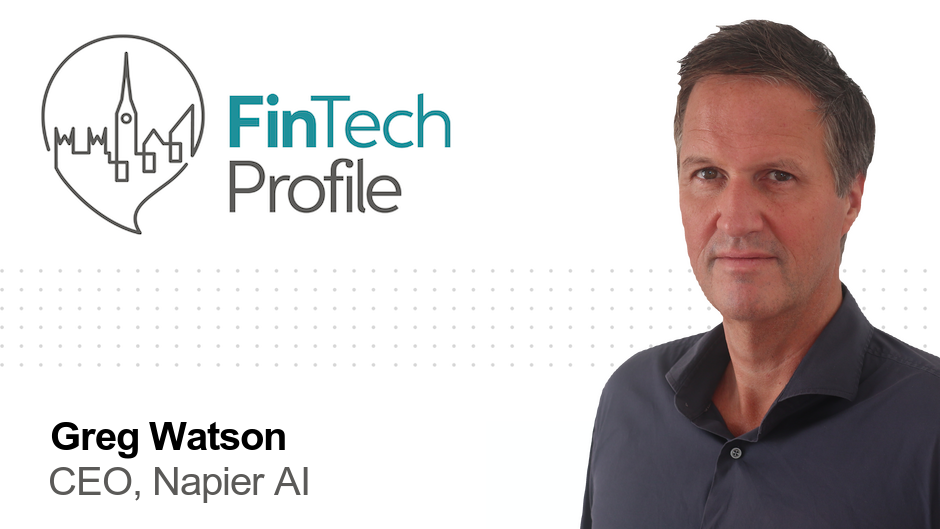
Today I'm delighted to speak with Greg, CEO of Napier AI, a RegTech delivering anti-money laundering and financial crime compliance software to financial institutions worldwide.
With 15 years in financial crime compliance, including seven years leading large-scale programmes at HSBC, Greg brings a practitioner's perspective to building technology that solves real operational challenges. In this interview, he shares insights on the evolution of compliance technology, the practical application of AI, and why legacy systems shouldn't define what's possible.
Who are you and what's your background?
I'm Greg Watson, CEO of Napier AI, I've been with the business for five years. I originally moved to the UK from New Zealand about 20 years ago and have spent the last 15 years working in financial crime compliance. Before joining Napier AI, I was a practitioner at HSBC for seven years, where I led a series of large-scale compliance programmes during a particularly challenging regulatory period. That experience gave me a very grounded understanding of the operational realities organisations face, which still shapes how I think about technology and change today.
What is your job title and what are your general responsibilities?
Like most CEOs, the responsibility ultimately sits with me to ensure we're delivering the right outcomes for customers while building a business that people genuinely want to be part of. A lot of my time is spent balancing long-term direction with day-to-day realities, making sure we stay focused on our strategy without losing sight of the practical challenges teams and clients face. Because we're a global business, culture also plays a big role, particularly ensuring that smaller teams across different regions still feel connected to a shared mission.
Can you give us an overview of your business?
Napier AI provides financial crime compliance software, with a primary focus on anti-money laundering. We work with organisations that tend to have complex requirements across banking, insurance, wealth and asset management, corporates and gaming often operating across multiple jurisdictions. At its core, the technology is about helping firms manage risk more effectively while reducing the operational burden that often comes with legacy systems.
Tell us how you are funded?
Napier AI is a little over 10 years old and was initially supported by its founders before receiving backing from a family office. A couple of years ago, we raised £45 million from Crestline, which gave us the runway to focus on longer-term growth. That was followed by a majority investment from Marlin Equity Partners earlier this year. Their involvement is about supporting the next phase of growth.
What's the origin story? Why did you start the company? To solve what problems?
The company was founded by Julian Dixon, who came from a banking background and saw how financial crime compliance was becoming increasingly complex, expensive and operationally heavy. At the same time, there were early signs that technology particularly automation and AI could be applied more effectively. Napier AI was set up to address that gap, replacing labour-intensive processes and outdated systems with technology that improves outcomes rather than simply adding more cost and complexity.
Who are your target customers? What's your revenue model?
We tend to work with financial services organisations that have complex operating models from traditional banks and neobanks to insurers, asset managers, corporates and gaming firms. Our customers are spread globally across Europe, Asia-Pacific, the Middle East and increasingly North America. Engagements are typically based on multi-year software licensing, with flexibility around deployment whether that's private cloud or SaaS, depending on the client's needs. We also conduct research into industry-specific issues, most recently publishing the AML Index, which analyses global money laundering losses and the role of AI in enhancing anti-money laundering effectiveness.
If you had a magic wand, what one thing would you change in the banking and/or FinTech sector?
I'd like to see faster adoption of technologies that have already proven they can materially improve outcomes, particularly around risk detection. Too often, organisations fall back on manual processes because they don't fully trust their systems. AI, when applied properly, can significantly improve detection rates while also reducing operational effort but it requires a willingness to move beyond established ways of working.
What is your message for the larger players in the Financial Services marketplace?
I'd encourage them not to let legacy systems define what's possible going forward. Historically, change has been expensive, risky and slow, which has made organisations understandably cautious. But newer technologies reduce much of that friction, allowing firms to improve outcomes while lowering overall cost. The return on that change is often achievable far more quickly than people expect.
Where do you get your Financial Services/FinTech industry news from?
Bloomberg is probably my main source. It covers not just financial markets but also technology and broader business trends, which is useful given how closely those areas now overlap. I'll occasionally dip into CNBC as well, but Bloomberg is the daily constant.
Can you list 3 people you rate from the FinTech and/or Financial Services sector that we should be following on LinkedIn, and why?
- Guillaume Pousaz - CEO, Checkout.com
- William Hockey - co-founder of Plaid and Column Bank
- Jamie Dimon - masterclass on Financial Services leadership
What FinTech services (and/or apps) do you personally use?
I tend to gravitate towards products that remove friction and create a sense of value beyond their core function. Examples like Whoop or Peloton stand out because they've built strong communities around data and experience, rather than simply selling a product. That sense of connection and engagement is something many technology businesses underestimate.
What's the best new FinTech product or service you've seen recently?
GoHenry is a good example of a product that identified a very specific need and executed it well. It makes it easier for parents to manage and monitor their children's finances while also giving younger users a sense of independence. It's a relatively simple idea, but it's been delivered in a way that feels intuitive and well thought through.
Finally, let's talk predictions. What trends do you think are going to define the next few years in the FinTech sector?
One of the biggest shifts will be the move away from AI hype towards practical, measurable value. There's been a lot of noise around AI, and some of that will inevitably wash through. What will remain are the organisations using AI to solve real problems improving detection, reducing cost and driving operational efficiency. That distinction between promise and reality will become much clearer over the next few years.
Many thanks to Greg for taking the time to speak with us. You can learn more about Napier AI on their website.