
Geoffrey de Mowbray, CEO and Founder, Via.trade & Dints International
Geoffrey de Mowbray discusses building trade finance solutions for emerging markets, the challenges facing SME exporters, and why fintech needs founders from outside the finance bubble.
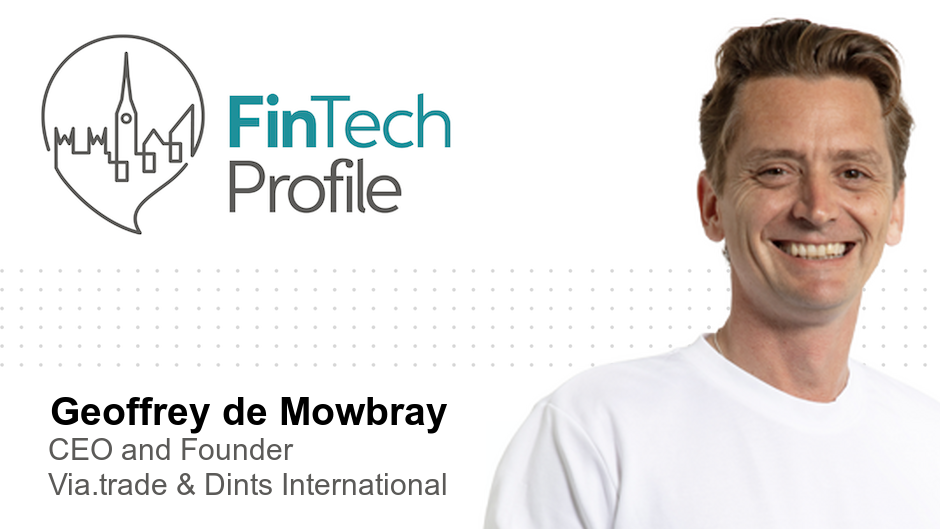
Today we're delighted to speak with Geoffrey, CEO and Founder of Via.trade & Dints International, and Chairman of the British Exporters Association. From starting out exporting computers in Cameroon at 18 to building a trade finance platform serving 33 countries, Geoffrey shares his unconventional journey and vision for using trade to empower SMEs in underserved markets across Africa, LATAM and the Middle East.
My questions are in bold - over to you Geoffrey:
Who are you and what's your background?
I never attended university, deciding to go the entrepreneurial route instead. At 18 I moved to Cameroon - where my mum was working for the United Nations - and started a business exporting computers from the UK, fixing them up and selling them to schools. While living in Cameroon, I saw first hand how trade could drive development, but was being stalled by an unequal access to business relationships.
While living in Cameroon, I witnessed how many international development projects failed to have long-term impact or cost-effectiveness in driving sustainable development. Many lacked local ownership or financial continuity. That's when I thought: there must be a better way. My goal became to use trade to empower SMEs and local communities both home and abroad. If you give someone access to tools to buy, sell, finance, and move goods, they can succeed on their own. I moved into importing machine parts for construction companies – and that was the beginning of Dints International.
The next logical step was to create a digital marketplace platform that provides financing and logistics solutions, which led me to found Via.trade - the fintech spinout of Dints International - in 2023. Via.trade is designed to streamline the complex and fragmented financing process, which has long been a significant barrier to entry for SMEs looking to export.
What is your job title and what are your general responsibilities?
I am the founder and CEO of Dints and Via.trade, where I lead my team to act as facilitators between UK financial providers and businesses looking to export equipment and parts, as well as the businesses in underserved markets like Africa, Middle East and LATAM that are in need of this equipment. We also work closely with UK Export Finance, the UK Government's export credit agency.
I am also Chairman of the British Exporters Association (BExA), where I am focused on advancing opportunities for UK exporters across all goods and services sectors, including financial services. BExA brings together around 130 member organisations, including Barclays, Natwest, Santander, and Rolls-Royce, to identify and remove barriers to businesses looking to export internationally, particularly in the case of smaller transactions under £30M.
Can you give us an overview of your business?
Dints facilitates international trade by connecting businesses around the world with UK suppliers of industrial equipment and goods. We support customers across 33 countries and multiple industries. This includes mining, construction, infrastructure, agriculture, renewable energy, marine and healthcare. Our mission is to help simplify the process of exporting abroad for SMEs by mediating between different partners involved.
Via.trade operates as a digital marketplace which brings all the elements of importing together onto one platform. This allows businesses to rapidly order and finance the equipment and parts needed to complete crucial projects.
Tell us how you are funded?
Both Dints and Via.trade are self-funded. I began with a small family loan with interest charged, and have been lucky enough to keep the businesses self-funded through retained profits. While this perhaps meant that we have not been able to move as fast as we like, in hindsight it has been instrumental in driving discipline and aligning ourselves with the evolution of the market. We will raise funding in the future and anticipate doing so in the next 12-24 months.
What's the origin story? Why did you start the company? To solve what problems?
SMEs are the backbone of the British economy, accounting for 99% of businesses and half of the output from the private sector, yet so few of them trade abroad.
The idea of expanding internationally is daunting, and many companies are held back by fear: from the outside, exporting can look like a highly complex, slow-moving, or even risky process. The opportunity in trading beyond Europe with emerging economies is huge, yet language barriers, lack of digitalisation and fear of corruption mean many business owners lack the confidence to get started.
What we've found is that once a business begins exporting and knows what to expect, they're much more likely to continue exporting. Often the biggest hurdle is just completing the first successful export process.
Who are your target customers? What's your revenue model?
Our key customers are companies in the UK and overseas who manufacture industrial equipment and parts. In particular, we work with businesses who are interested in trading abroad but are unsure of how the financing and logistics work and are looking for a partner to streamline the process and mediate between them and their customers overseas.
If you had a magic wand, what one thing would you change in the banking and/or FinTech sector?
I would encourage fintechs to build purposeful profit into their offerings. Fintech can, and should, embed social impact and sustainable growth into their business models without compromising on profit. This could be achieved by targeting smaller businesses, not just unicorns. SMEs make up nearly two-thirds of all jobs in the UK, but are often overlooked by fintechs. Financial services tailored to help SMEs expand could unlock economic growth on a national scale.
I would also love to see more fintech founders coming from outside the finance or banking sectors. It's crucial that fintech companies - especially those built for emerging markets - truly know and understand the market they are operating in and the people they are aiming to serve. They need to 'get' trade itself, not just from a risk perspective but also from a customer experience one.
What is your message for the larger players in the Financial Services marketplace?
I would like to see more financial services created for those in emerging markets like Africa and LATAM. Here, many are unbanked, which makes the path to entrepreneurship very difficult and limits how far businesses can scale. This is a fundamental barrier to development and collaboration with other countries. We need more platforms that meet the practical, on-the-ground needs of businesses in high-growth but underserved regions, as well as products and services which can help overcome language and cultural barriers.
The opportunity that exists within markets like Africa and LATAM also comes from the fact they are essentially a blank canvas - because there aren't a great deal of established fintech systems, there's not really a sense of 'this is how it's always been done', and there's much more openness to innovation.
Where do you get your Financial Services/FinTech industry news from?
Sifted is my go to, as well as the obvious: Financial Times.
Can you list 3 people you rate from the FinTech and/or Financial Services sector that we should be following on LinkedIn?
- Charles Delingpole, founder and Executive Chairman at ComplyAdvantage
- Olugbenga Agboola, Founder & CEO at Flutterwave
- Jack Zhang, Co-Founder & CEO at Airwallex
What's the best new FinTech product or service you've seen recently?
From our vantage point working across Africa, LATAM and other emerging markets, there are some exciting things happening in the fintech scene in Africa. Wave is one - a Senegal-founded mobile money platform helping people send, receive, and store money across West Africa. This kind of app will help bring unbanked users into the digital economy, and crucially it's authentically local and designed for local needs, rather than a copy of a Western model.
Finally, let's talk predictions. What trends do you think are going to define the next few years in the FinTech sector?
It's not so much a prediction as it is an aspiration for the industry: I hope that over the next five years, we'll begin to see more fintech founders from outside the finance bubble. Fintech is fast becoming an echo chamber which pushes the same generic products, and new perspectives and insights are desperately needed. Founders with real-world industry experience are much more efficient at identifying overlooked problems in their sectors which can be addressed by fintech solutions.
I hope that we will also see an increase in truly integrated solutions, particularly in international trade. There are already some good initiatives, but there are still lots of digital islands - the next step will be bringing these all together.
Many thanks to Geoffrey for taking the time to share his insights with us.
You can connect with him on LinkedIn and learn more about Via trade at www.via.trade and Dints International at www.dints.com.