Gareth Kobrin, Co-founder & CEO, Yonda Tax
Gareth Kobrin discusses building tax infrastructure for global eCommerce and fintech companies, and why operational reality matters more than product promises.
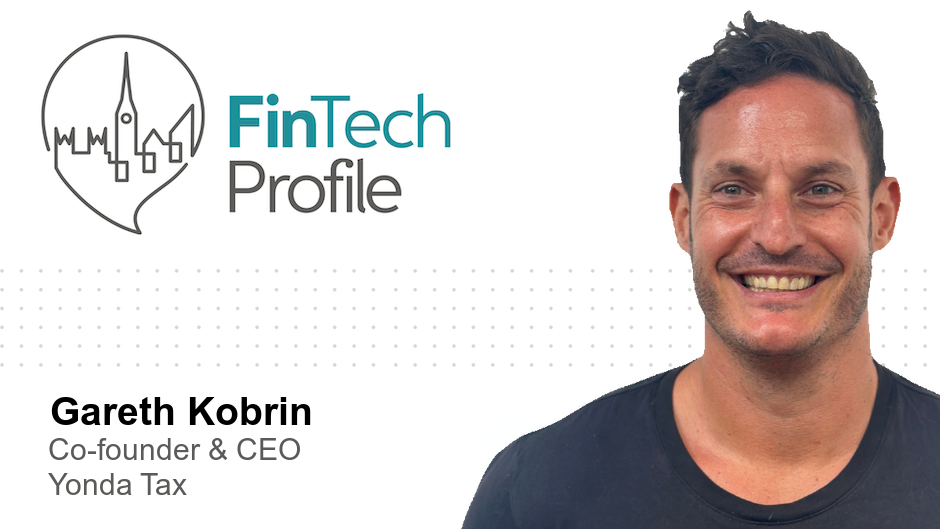
Today we're delighted to speak with Gareth, Co-founder and CEO of Yonda Tax. With 15 years across tax, technology, and financial infrastructure, Gareth is building scalable compliance solutions for eCommerce, fintech, and SaaS companies navigating the complex world of indirect tax across multiple jurisdictions.
My questions are in bold - over to you Gareth:
Who are you and what's your background?
I'm Gareth Kobrin, founder of Yonda. I have a Master's degree in Economics from the University of Cape Town, followed by a professional qualification in management accounting. My early career was about as far from startups as you can get – I began at Merrill Lynch, which gave me a solid grounding in financial markets, discipline, and how large institutions actually make decisions (and sometimes don't).
I've now spent around 15 years working across tax, technology, and financial infrastructure. That journey took me from traditional finance into what most people would politely call "the messy end of compliance" – indirect tax. It's complex, unglamorous, constantly changing, and mission-critical for businesses trying to scale internationally. Which, as it turns out, makes it a very interesting place to build technology.
Outside of work, I'm an avid writer and publish regularly on Substack. Also, a personal fact that tends to surprise people – my wife is a quadruplet, which has permanently recalibrated my understanding of both logistics and patience.
What is your job title, and what are your general responsibilities?
Co-founder and CEO. In practice, that means spending time across product direction, partnerships, and making sure we stay focused on solving the right problems. I work closely with our leadership team on strategy, commercial relationships, and how we build scalable tax infrastructure without losing sight of real-world complexity.
I still enjoy talking to clients to understand their needs and the market trends, so I'll join sales calls regularly and often catch up with the customers I know personally – I find this very rewarding. I still spend more time than I'd like to admit in spreadsheets. MS Excel remains, in my view, one of the greatest inventions of all time.
Can you give us an overview of your business?
Yonda is a tax technology company focused on indirect tax compliance – primarily VAT and US sales tax. We provide the technology, data-processing infrastructure, and operational backbone businesses need to register, calculate, file, and stay compliant across multiple jurisdictions. Our customers include e-commerce sellers, fintech, SaaS and AI companies, as well as professional services firms that use our platform to offer indirect tax services to their own clients.
What differentiates us is that we've built our platform around filing and operational execution rather than just tax calculation. Indirect tax doesn't fail because rates are wrong – it fails because data is messy, filings break, edge cases pile up, and no one knows where things went wrong. We've designed Yonda to handle that reality at scale. Market reaction has been strong, particularly from businesses that have outgrown DIY solutions or point tools and need something more robust behind the scenes.
Tell us how you are funded?
We were bootstrapped through friends and family for our first two years, which forced a very strong focus on revenue, delivery, and capital discipline.
In 2025, we took our first institutional investment. Today, we describe ourselves as capital-efficient and revenue-funded, which reflects how we continue to build – carefully, deliberately, and with a clear path to long-term sustainability.
What's the origin story? Why did you start the company? To solve what problems?
Yonda started with a simple observation – indirect tax compliance was becoming more complex every year, but the tools businesses relied on weren't keeping up. E-commerce, fintech and AI companies were scaling faster than tax infrastructure was designed to handle. Meanwhile, professional services firms wanted to help their clients but were constrained by manual processes and fragmented systems.
I used to speak to hundreds of entrepreneurs and Founders, and the most common theme was early onset tax paranoia! Before the first sale, these guys were stressing about taxes. Once the sales start streaming in – across the world – the anxiety about tax compliance grows exponentially. We realised there wasn't a solution out there that spoke to these business owners simply and practically about their tax obligations.
We started Yonda to sit in the middle of that problem – building technology that could absorb complexity, handle volume, and still work in the real world. The goal wasn't to "disrupt tax" but to make it boring, reliable, and scalable for the people who depend on it.
Who are your target customers? What's your revenue model?
Our core customers are e-commerce sellers, fintech, SaaS, and AI companies operating across borders, and professional services firms seeking to offer indirect tax compliance on modern infrastructure.
We operate on a subscription and usage-based model, aligned to the number of jurisdictions, filings, and level of operational support required. The aim is transparency – customers know what they're paying for, and costs scale in line with their growth.
If you had a magic wand, what one thing would you change in the banking and/or FinTech sector?
I'd reduce the gap between product promises and operational reality. FinTech does a great job at user experience, but too often underestimates what happens after onboarding – reconciliation, compliance, edge cases, and failure modes. If more products were designed with operations in mind from day one, everyone downstream would sleep better.
What is your message for the larger players in the Financial Services marketplace?
Don't underestimate how much value sits in infrastructure that actually works under pressure. Innovation isn't always about new features – sometimes it's about reliability, clarity, and designing systems that cope with complexity rather than pretending it doesn't exist.
Where do you get your Financial Services/FinTech industry news from?
I'm a regular listener of the All-In Podcast and 20VC. They're good at cutting through noise and focusing on how businesses are actually built, scaled, and funded.
Can you list 3 people you rate from the FinTech and/or Financial Services sector that we should be following on LinkedIn, and why?
- Claus Johansen: Seasoned fintech professional and recent addition to Yonda’s board. Deep experience in scaling financial platforms and building durable businesses.
- Harry Stebbings (20VC): Consistently thoughtful on venture, product, and company-building.
- David Rose, CEO at US Expansion Partners: For any non-US entrepreneurs looking to conquer the United States, David will be your guru and guide.
What FinTech services (and/or apps) do you personally use?
Despite running a tax technology company, I'm fairly low-tech by nature. I only moved from a desktop computer to a laptop about a year ago – largely because my colleagues were embarrassed on my behalf. My most-used app is Spotify. I buy my crypto through Coinbase, which is an excellent app. At Yonda, we spend a lot of time working with tools like Lovable. Fyxer AI is brilliant tech and I've heard excellent things about Lendware.
What's the best new FinTech product or service you've seen recently?
Round – an AI-powered finance command system that unifies treasury, payments, FX, and reconciliation in one intelligent platform.
Finally, let's talk predictions. What trends do you think are going to define the next few years in the FinTech sector?
When it comes to predictions, I've been confidently saying since about 2015 that tax compliance will eventually move onto the blockchain. I'm still waiting to be proved right – but I'm optimistic the next three years might finally be my moment.
Beyond that, I'll stick to what I know best: indirect tax.
1. Embedded indirect tax becomes standard infrastructure
Indirect tax will move from after-the-fact reporting into the transaction layer itself. As e-invoicing expands across more countries, fintech platforms will be expected to offer native, real-time tax determination in the same way they already embed fraud and compliance checks.
2. AI-driven tax classification becomes table stakes
AI will become the default way transactions are classified for tax. Rather than manual rules, systems will analyse products, locations, and contractual context to determine tax treatment, identify nexus risk, and flag anomalies automatically.
We'd like to thank Gareth for taking the time to share his insights with us. You can learn more about Yonda Tax on their website.