Brazilian FinTech Insights: Q&A with Daniel Ruhman of Cumbuca
Daniel Ruhman, CEO of Cumbuca, discusses building payment infrastructure for Brazil, navigating regulation, and the future of instant payments and AI commerce.
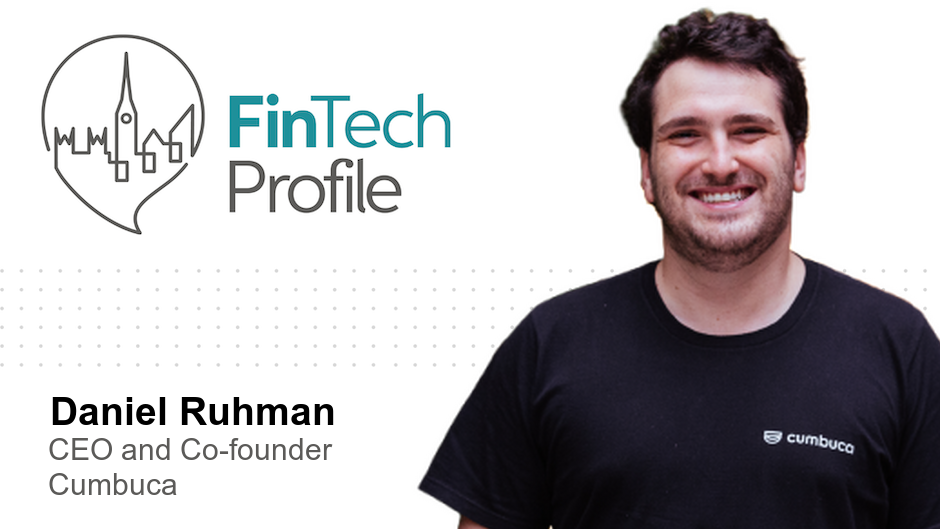
I spoke with Daniel Ruhman, co-founder and CEO of Cumbuca, a company enabling financial services firms to operate in Brazil without waiting years for their own payments licence. Daniel became the youngest controller of a regulated financial entity in Brazil and brings a unique perspective from building consumer fintech products, navigating Central Bank regulation, and working directly with Pix and Open Finance infrastructure.
In this Q&A, he shares insights on Brazil's payment ecosystem, the challenges of market entry, and where he sees fintech heading in the next few years.
Over to you Daniel - my questions are in bold:
Who are you and what's your background?
I'm Daniel Ruhman, co-founder and CEO of Cumbuca. I've been building things on the internet for as long as I can remember. I released my first iPhone app when I was fourteen, and from there I was pretty much hooked on software and, eventually, payments.
I'm a self-taught developer. I started a Computer Engineering degree in Brazil and spent a short time studying Cognitive Sciences at UC Berkeley, but I dropped out at 21 to focus on building companies full-time. Since then, I've co-founded several ventures with the same group of partners.
Those businesses evolved a lot. We started with a marketplace for cleaning professionals, which turned into a community bank for unregulated workers. That company went through Y Combinator and later became a bill-splitting app built on Pix, Brazil's instant payments system. Along the way, I went through the full process of getting a payment institution licence from the Brazilian Central Bank and became the youngest controller of a regulated financial entity in the country.
Everything I've worked on has fed into Cumbuca. We've built consumer products, navigated regulation, worked with BaaS providers, and felt the pain points ourselves. That context is really what defines how we think about the problem today.
What is your job title and what are your general responsibilities?
I'm the CEO and co-founder of Cumbuca. In practice, that means I spend a lot of time thinking about where the company is headed and making sure we're building the right thing for the market. I work closely with our product and engineering teams, especially around how companies integrate with Pix and Open Finance.
A big part of my role is also dedicated to regulatory work. As one of the founders of INIT (Brazil's National Open Finance Association), I stay close to how regulation evolves to ensure we're aligned. More importantly, we participate in workgroups that aim to steer these regulations to benefit the Brazilian population, ensuring the system remains open and competitive rather than just serving the interests of legacy banks.
Finally, I spend a lot of time talking to customers, especially international teams, to help them understand what it actually takes to operate in Brazil and the possibilities available when building with the Pix protocol and Open Finance.
Can you give us an overview of your business?
Cumbuca enables financial services companies to operate in Brazil without having to wait years for their own payments licence or surrendering control to restrictive third-party providers.
We act as the first proxy for Brazil's regulated payments ecosystem. Currently, we provide direct access to Pix payment initiation and Open Finance, allowing companies to use our licence to connect directly to the Brazilian Central Bank's APIs while building and owning their own infrastructure. We take care of the heavy lifting regarding compliance, but everything else; their systems, their data, and their operational decisions, remains in the customer's hands.
This model is particularly valuable for international companies. We've found that convincing global leadership to open a new regulated entity in a foreign country is often an uphill battle due to the massive risk and compliance implications. However, because of their scale and product requirements, these companies still need the operational control and customisation that only a licence delivers. We are uniquely positioned to bridge that gap, giving them the power of a licence without the regulatory burden of starting from scratch.
Tell us how you are funded?
We're a Y Combinator alumni and are supported by Lightspeed Venture Partners, who made their first investment in Brazil with us, along with Supera Capital.
After pivoting the business to focus fully on B2B, we were able to reach profitability quite quickly. That was an important moment for us because it confirmed that there was real demand for an infrastructure-first, compliance-led approach to entering the Brazilian market.
What's the origin story? Why did you start the company? To solve what problems?
The short answer is: Frustration.
When we were running consumer fintech products, we were constantly blocked by our infrastructure providers. Outages we couldn't fix, features we couldn't ship, and incidents where the data we needed wasn't even in our hands. It was a horrible feeling to know our customers were affected by something we didn't control.
At the same time, we had gone through the process of getting a licence ourselves and knew how slow, expensive, and risky that could be, especially for international companies.
So we realised there was a missing option. Companies shouldn't have to choose between waiting years for a licence or giving up operational control to a third party. Cumbuca is that third path. We built the provider we always wished we could use.
Who are your target customers? What's your revenue model?
Our customers are primarily fintechs, payment providers, and financial services companies looking to enter or expand in Brazil; with a particular focus on international teams. We operate on a B2B model where clients pay for access to the regulated ecosystem through our proxy. This allows them to launch in weeks instead of years, which completely changes the business case for a new market entry.
Beyond the licence itself, our customers are investing in the expertise we provide. They receive direct consultancy from our Open Finance market experts, who support them in building their own infrastructure from the ground up.
This ensures that while they enjoy a faster time-to-market and total control over their systems today, they are also building in a future-proof way. Ultimately, we provide a clean path for them to transition to their own licence in the future, once they have the scale to justify it.
If you had a magic wand, what one thing would you change in the banking and/or FinTech sector?
I'd get rid of incentives that reward slowness.
In many payment systems, delays still exist because someone benefits from money being in transit. Pix proved that once settlement becomes instant, everything else improves: trust, adoption, and innovation. The system starts serving users instead of intermediaries.
What is your message for the larger players in the Financial Services marketplace?
Infrastructure matters more than ever. If you're building on layers you don't control, you're taking on hidden risk.
Brazil shows what's possible when regulation, infrastructure, and incentives are aligned. The institutions that succeed will be the ones that embrace direct access, interoperability, and compliance as a foundation, not as an afterthought.
Where do you get your Financial Services/FinTech industry news from?
I mainly rely on a combination of Substack newsletters and direct regulatory filings. For deep dives and high-level analysis, my go-to reads are Fintech Takes by Alex Johnson and Fintech Brainfood by Simon Taylor. They both do an incredible job of moving past the surface-level headlines to explore the actual mechanics of how money and technology intersect.
Beyond that, I spend a lot of time reading the source material; regulatory filings from the Central Bank and policy updates. In a market as dynamic as Brazil, understanding the raw regulation is often more important than reading the news about it, as it allows us to anticipate shifts in Open Finance and Pix before they hit the mainstream.
Can you list 3 people you rate from the FinTech and/or Financial Services sector that we should be following on LinkedIn, and why?
- Nic Marcondes: He helped architect Brazil's no-redirect payment flow and has been deeply involved in Open Finance from the start.
- Gustavo Lino: Former President of INIT and one of the sharpest people in Brazil when it comes to regulation and Open Finance policy.
- Pedro Castilho: CTO and co-founder of Cumbuca. A programmer for over 15 years with experience in Silicon Valley and across four continents, he leads Cumbuca's technology organisation with a focus on delivering world-class innovation and resilience.
What FinTech services (and/or apps) do you personally use?
Pix is easily the one I use most, both personally and professionally. It's become so embedded in daily life in Brazil that you stop thinking of it as "fintech" and just think of it as how money moves. I use it for everything from splitting a bill to paying service providers, and it still stands out as one of the cleanest examples of what happens when payments are built to be instant, interoperable, and free for the end user.
Beyond Pix, I don't spend much time in consumer-facing fintech apps. I spend most of my day much closer to the infrastructure layer. I'm constantly interacting with Central Bank APIs, Open Finance flows, and internal tools that help us test how systems behave under real load; things like failure scenarios, spikes in transaction volume, or edge cases around settlement and reconciliation. Those are the details that really matter in payments, even if users never see them.
I'm generally more interested in tools that prioritise reliability, observability, and scale over surface-level features. In payments, you don't win by looking good in a demo; you win by not breaking when traffic spikes or something goes wrong at 2 am.
What's the best new FinTech product or service you've seen recently?
What I've been most excited about recently are the new AI shopping protocols such as the Universal Commerce Protocol and the Agentic Commerce Protocol, which are starting the foundational infrastructure layer required to truly enable AI commerce at scale. I truly believe AI agents will be responsible for a huge share of transactions over the following years, and these protocols are "payment agnostic" in a way that enables them to support any and all payment rails. I believe that, especially in Brazil, Open Finance Payment Initiation through products such as Biometric Pix and Automatic Pix, will be the default way AI agents will transact in Brazil.
Finally, let's talk predictions. What trends do you think are going to define the next few years in the FinTech sector?
I think we're entering a very different phase of fintech, especially in markets like Brazil. For a long time, innovation was about speed; who could launch fastest, raise the most money, and acquire users first. That era is ending.
In Brazil, regulation is tightening quickly. Capital requirements are much higher than they were even a couple of years ago, and adding new services to an existing licence has become far more complex. The result will be consolidation. Many smaller fintechs won't be able to operate independently anymore; they'll shut down, merge, or build under the licences of larger, more compliant players. That's not necessarily a bad thing; it's a sign the ecosystem is maturing. The next wave of winners won't be the fastest movers, but the most operationally disciplined ones.
At the same time, margins in payments will continue to shrink. Pix already changed the economics of moving money, and features like Pix Automático and Pix Crédito will accelerate that shift. When recurring and credit payments move to Pix, many of the fees and float that card-based systems relied on simply disappear. Payments are becoming a utility: instant, transparent, and almost free. The real value will shift away from the transaction itself and toward what surrounds it: credit, data, FX, and user experience.
I also think we're about to see AI and payments properly collide. AI is moving from assisting users to acting on their behalf, and payments are an obvious next step. Brazil is unusually well prepared for this because Pix is open, programmable, and doesn't rely on cards in the background. You can imagine a near future where you connect your bank account to an AI assistant, set some rules and limits, and let it handle execution. The infrastructure already exists; what's missing is governance.
More broadly, I believe Brazil's financial infrastructure is shifting from being an interesting case study to becoming a global reference point. Other countries are already copying Pix and Open Finance models, and that will only accelerate. Once you've seen instant, interoperable payments work at a national scale, it's very hard to justify slower, more expensive systems elsewhere. Over the next few years, Brazil won't just be innovating for itself; it'll be helping set the global standard for modern financial infrastructure.
Thank you Daniel! You can connect with Daniel on his LinkedIn Profile and find out more about the company at cumbuca.com.