Baran Ozkan, Co-founder and CEO, Flagright
Baran Ozkan discusses building Flagright, an AI-native AML platform helping financial institutions detect financial crime in real-time across 30+ countries.
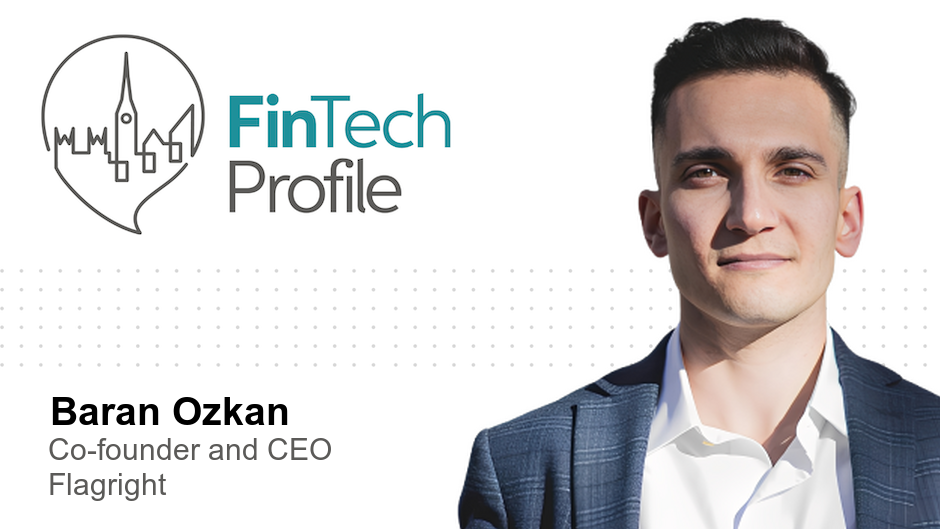
Today we're delighted to speak with Baran, co-founder and CEO of Flagright, an AI-native AML compliance and transaction monitoring platform serving clients across 30+ countries.
Having experienced first-hand the limitations of legacy compliance tooling whilst leading product at a remittance company, Baran built Flagright to give financial crime teams the speed, clarity and usability that modern real-time payments demand.
My questions are in bold - over to you Baran:
Who are you and what's your background?
I am Baran Ozkan, co-founder and CEO of Flagright. I am originally from Turkey and I trained as an engineer. I moved to the United States for my masters and spent several years working as a software engineer in regulated environments, including healthcare insurance. That early experience shaped how I think about building systems that must be reliable, explainable and accountable.
Over time, I worked across multiple industries, including e-commerce, logistics, marketing and finance. Those experiences helped me develop a strong instinct for where technology is genuinely improving outcomes versus where it is just adding complexity.
My route into fintech became very direct when I moved into product leadership roles in payments and remittance. Before Flagright, I was Director of Product at a remittance company. I oversaw user-facing platforms and worked closely with fraud and compliance teams. One of my responsibilities in that role was to find a provider that could deliver a real time, risk-based transaction monitoring solution. That search exposed a clear gap between what the market promised and what teams could actually rely on in production.
What is your job title and what are your general responsibilities?
My job title is co-founder and CEO. In practice, my responsibilities sit in three areas.
First, I set the strategic direction. That includes what clients' problems we prioritise, how we position ourselves in the market and how we measure success beyond revenue.
Second, I drive product vision with our leadership team. In compliance, it is easy to ship features that look good but do not hold up in audits or day to day operations. I care deeply about building a platform that is fast enough for real-time payments but also governed enough for regulated institutions.
Third, I focus on execution. That includes hiring and culture, go-to-market alignment, partnerships and investor communication. I spend a lot of time with clients because the best product decisions usually come from understanding the daily reality of risk and compliance teams.
Can you give us an overview of your business?
Flagright exists to modernise financial crime prevention for fintechs and banks that operate in a real-time world. Most legacy anti-money laundering (AML) tooling was built for slower payment rails, batch processing and heavy manual work. When your product and customer experience moves in seconds, that kind of stack becomes a bottleneck.
Our platform brings together the core building blocks fincrime compliance teams need. Transaction monitoring, watchlist screening, risk scoring, case management, investigation workflows and reporting live in one place. The goal is to reduce fragmentation and help teams move from reactive queue clearing to proactive risk management.
Our biggest differentiators are speed, clarity and usability.
Speed matters because risk decisions are time sensitive. Financial institutions need low latency monitoring and fast ways to configure controls as products evolve.
Clarity matters because compliance decisions must be defensible. Teams need to understand why an alert fired, what data was used, what actions were taken and how controls changed over time.
Usability matters because investigators live inside these tools. If the user experience is painful, teams will create workarounds and the control environment weakens.
From a business model perspective, we are software as a service with usage-aligned pricing. The intention is that a smaller fintech can access strong controls early and larger institutions can scale without paying for features they do not use. We want our pricing to match the value and operational leverage the platform creates.
In terms of market reaction, we have seen strong demand from modern fintechs and payment companies, including banks, that are scaling quickly, expanding into new markets or upgrading their compliance posture ahead of partnerships. We now serve clients across 30+ countries and six continents and one of the most consistent feedback themes we hear is that fincrime teams want tools that respect their time and reduce the operational drag of compliance.
Tell us how you are funded?
We built early and validated demand with real teams before we optimised for fundraising. We were then backed by Y Combinator in its Winter 2022 batch, which gave us early momentum and a strong network.
After that, we raised a 2.8 million dollar pre seed round led by Moonfire Ventures, with participation from Pioneer Fund and other investors. In 2025, we raised a $4.3 million seed round led by Frontline Ventures, with continued support from existing investors including Y Combinator, Pioneer Fund and Moonfire Ventures.
We raised capital for one reason. The problem we are solving requires deep product investment, strong security posture and continuous innovation. We use funding to hire exceptional talent, expand integrations and build capabilities that help our clients stay ahead of evolving fraud and regulatory expectations.
What's the origin story? Why did you start the company? To solve what problems?
Flagright was built because my co-founder Madhu Nadig and I wanted to create something we would want to buy ourselves.
For around a year and a half, I searched for a real-time, risk-based transaction monitoring solution. The experience was frustrating. Many incumbent providers overpromised and underdelivered. The tools were slow to integrate, expensive and not designed for modern product teams. Even the basics, like reliable APIs and clear documentation, were often missing.
At the same time, the world was moving toward instant payments and more complex financial products. Fraud and financial crime were becoming more industrialised, and compliance teams were being asked to do more with limited resources.
So we built Flagright to give fincrime teams a modern platform that can evaluate risk continuously, support investigations efficiently and generate the evidence trail that regulators and partners expect. Madhu brought deep expertise in building scalable, data intensive systems, and together we focused on delivering a product that is both powerful and practical for the teams that use it every day.
Who are your target customers? What's your revenue model?
Our target clients are banks, fintechs and payment companies that need a robust way to monitor transactions, screen customers and counterparties, manage investigations and report suspicious activity.
In practice, we work with small and large enterprise teams alike that are scaling quickly, launching new products, expanding into new geographies or consolidating a fragmented compliance stack. They want to reduce false positives, shorten investigation cycles and improve consistency of decisioning.
Our revenue model is software as a service with pricing aligned to usage. Clients pay based on the capabilities they use and the transaction volume they run through the platform. That structure allows smaller teams to start lean and expand their controls as they grow, while larger institutions can scale efficiently and avoid paying for unused functionality.
In terms of public examples, we have announced working with companies such as Webull, KPay and Fig. The common theme in these deployments is the need for real-time monitoring, configurable controls and faster investigations so risk teams can keep pace with business growth.
If you had a magic wand, what one thing would you change in the banking and/or FinTech sector?
I would change how the industry shares signals about financial crime.
Bad actors collaborate, reuse playbooks and move across financial institutions quickly. Defensive teams are often constrained by data silos, inconsistent standards and uncertainty about what can be shared safely. If we had better privacy preserving collaboration and clearer frameworks for typology sharing, the entire ecosystem would become more resilient. It would also reduce the cost of compliance, because institutions would not be forced to reinvent the same detection work independently.
What is your message for the larger players in the Financial Services marketplace?
My message to the CEO or CCO of a large bank is that modernising financial crime controls is not only a risk project. It is a competitiveness project.
Your customers and partners increasingly expect instant experiences and your institution is judged by how safely you can deliver them. Treat compliance as trust infrastructure, not a back office cost centre. Invest in platforms that are modular, measurable and governed, and create strong feedback loops between monitoring and investigations so controls improve continuously.
Also, stay open to partnering with modern vendors. The best results usually come when large institutions combine their domain depth with tools built for speed and iteration.
Where do you get your Financial Services/FinTech industry news from?
I keep a tight loop around a couple of sources. I regularly read Finextra for industry coverage, and I follow updates from standards and regulatory bodies such as the Financial Action Task Force because shifts in guidance shape what customers need next.
Can you list 3 people you rate from the FinTech and/or Financial Services sector that we should be following on LinkedIn, and why?
- Anne Boden, founder of Starling Bank. I respect how she thinks about building modern banking businesses with strong fundamentals and clear customer value.
- Simon Taylor, founder of Fintech Brainfood. He consistently explains what matters in fintech and why, without hype, and his analysis is useful whether you are a founder, operator or investor.
- Nik Milanovic, founder of This Week in FinTech and GP at The Fintech Fund. He has a strong global view of fintech and shares signal rich perspectives on trends, funding and what is actually changing across markets.
What FinTech services (and/or apps) do you personally use?
On the consumer side, I use Revolut, especially for cross border payments and travel.
What's the best new FinTech product or service you've seen recently?
One product I have been impressed by recently is Dots. They are building payouts infrastructure for marketplaces and online platforms, making it much easier to onboard payees and send payouts globally across multiple payment rails. What I like is the focus on developer-friendly infrastructure for a problem that is operationally complex.
Thank you to Baran for sharing his insights with FinTech Profile. You can learn more about Flagright on their website.