André Neves, CTO & Co-Founder, ZBD
André Neves discusses building ZBD, the payment stack for games and interactive entertainment, enabling real-time transactions and rewards through Bitcoin Lightning and fiat rails.
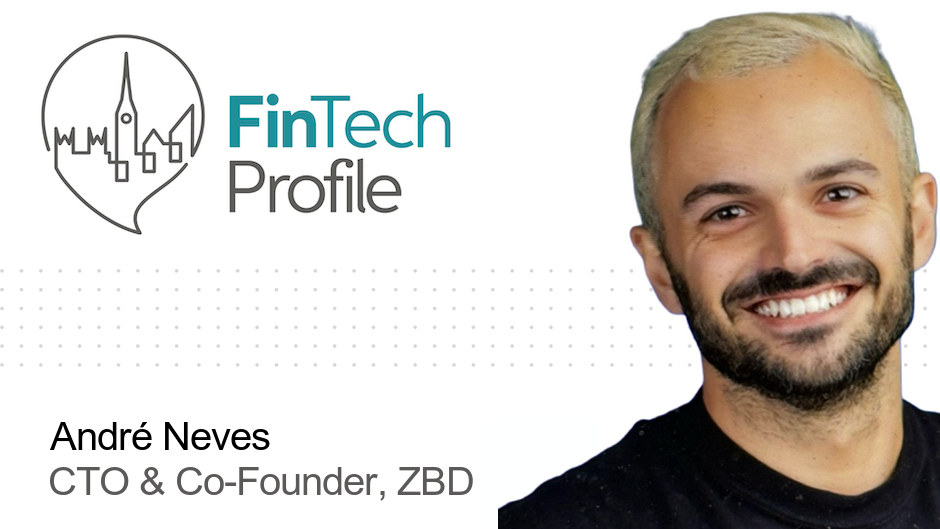
Today we're meeting André, CTO & Co-Founder at ZBD. They specialise in enabling real-time global payments in digital experiences through the Lightning Network.
Over to you André - my questions are in bold:
Who are you and what's your background?
I'm a product builder and software engineer originally from Brazil, currently located in the US. I've tinkered with software and hardware since I was a kid, and was always fascinated by how the internet connects people and ideas. I studied electrical engineering, but found my true calling in software development, especially web and distributed systems.
I led engineering teams at a digital product studio called Big Human in New York. We worked on mobile, web and backend systems for clients like TD Ameritrade, Snapchat and others.
I discovered Bitcoin around 2013 and once I understood its potential, everything clicked. Money should move like data, instantly and globally. In 2018 I did a residency at Chaincode Labs focusing on open-source Bitcoin and Lightning development, and by 2019 I co-founded ZBD to build on that vision.
For the past six years, I've been building ZBD into the only Bitcoin Lightning company to find meaningful commercial success outside of investment or trading. Recently, we've expanded from focusing on Bitcoin to also providing fiat services and merging the utility value of Bitcoin with the broad acceptance of fiat. It's already unlocking a new level of scale for ZBD, which makes this an especially exciting time.
What is your job title and what are your general responsibilities?
I'm the CTO & Co-Founder at ZBD. I'm responsible for the full stack of our technology and product vision: overseeing engineering, platform architecture, core product development, developer tools, and open-source initiatives. I ensure that our platform works and evolves to enable the next generation of digital value flows.
I'm involved on many levels: from low-level protocol decisions to user-facing features and developer tools. As a co-founder, I'm also heavily involved in the high-level strategic side of the company. That ranges across long-term product direction to investment and board-level decisions that shape how we scale.
Can you give us an overview of your business?
ZBD is the payment stack for games and interactive entertainment – anywhere real-time value can enhance engagement. We enable developers to integrate real-time transactions directly into their gameplay or content. We want to move away from bolt-on payment flows to native mechanics that react to what players or audiences do.
We power instant real-money rewards to lift engagement and retention, but the underlying capability goes further. ZBD is the only licensed payment service provider in the games industry that allows experiences to fully embed transactions into their core interactions – paying users or getting paid by them as events happen in real time.
Creators can build dynamic economies where value flows frictionlessly: inside games, while streaming songs or podcasts. Under the hood, our payments stack gives us global reach, low friction and the ability to support genuine microtransactions at scale. The result is a new layer for digital experiences where value behaves as a seamless part of the content, driving deeper interaction and unlocking new models for monetisation and engagement.
Tell us how you are funded?
We've raised around $45M USD across our Series A and Series B. This helped us scale the platform from a promising idea into a global, always-on payments infrastructure. Each round has been about supporting tangible growth: user and revenue numbers climbing, partners shipping successful integrations, and the technology needing to scale to match the opportunity.
Our investors span fintech, gaming, and Bitcoin – groups that understand the technical ambition of what we're building and the scale required to run real-time value flows for hundreds of millions of users. Their backing has allowed us to invest deeply in the architecture, reliability and compliance layers that make ZBD a true payment processor.
Interest from both gaming and broader entertainment is still accelerating, and we're ready for the next phase of growth. There's strong demand from partners and investors who see where this is going, and we're gearing up accordingly.
What's the origin story? Why did you start the company?
The idea for ZBD came at the intersection of three pillars: gaming, money, and tech. My co-founders and I realised that gamers intuitively understand digital value (points, items, rewards) but the systems they operate in were either siloed or proprietary. At the same time, traditional financial rails aren't built for the internet generation: cross-border flows, micropayments, real-time value transfers are still clunky or expensive.
We thought it would be interesting to use Bitcoin and Lightning to power real economies inside digital experiences, where value isn't locked in one game or one platform, but flows seamlessly across - What if earning and spending value became as natural as playing a game or streaming content?
That was the problem we set out to solve: opening up digital money, building interoperable value bridges between platforms and users globally. That's the mission of ZBD.
Who are your target customers? What's your revenue model?
We primarily work with game studios and app publishers who want to improve retention and monetisation by making real-time value part of the user experience. With ZBD Earn and payments APIs, they can embed real-money rewards or microtransactions directly into gameplay or content loops without touching the underlying payments complexity.
Our revenue model relies on a combo of B2B, B2C and B2B2C: Game studios and publishers pay a combo of platform subscription fees (based on MAU) and payment fees (percentage based on each transaction). But on the other hand, we also pay our B2B partners for the valuable users they bring to the ZBD app.
The main B2B use case we serve is games giving out real-money rewards to players, as a retention and engagement tool. Because rewards consistently lift key KPIs like retention and ARPDAU by 2-3x, the economics work in their favour, increasing revenue for games much more than the cost of rewards and our fees.
When users earn rewards in a game, they need to cash those rewards out somewhere. We are constantly working to provide more payouts options (like additional wallet apps), but at the moment, the most common cash out mechanics are gift cards, Cash App or the ZBD app. If users choose to withdraw to the ZBD app (which is both a wallet and a discovery platform for more rewarded games and apps), we are able to monetise them pretty effectively through various forms of affiliate deals.
Essentially users get the ZBD app to claim their rewards from games, then they find more rewarded games and apps inside ZBD, and we make money from sending users to those third party games and apps. So it's a sort of flywheel between our B2B partnerships, app, and affiliate partners. The users don't ever pay anything, they just earn. But because they are creating value for us and our partners, we are able to share some of that revenue back to the user in the form of rewards, as well as to our partners.
In short: publishers get better-performing games and apps, users get real value, and we run the infrastructure that makes it all work. All sides provide value for all sides, and the revenue flows accordingly.
If you had a magic wand, what one thing would you change in the banking and/or FinTech sector?
True interoperability for money across systems and borders. The financial world is still incredibly fragmented: banks, fintechs and platforms each have their closed rails, and users are restricted by geography, platform, currency. I'd change that so that money behaves like data. It should be global, instantaneous, platform-agnostic. With that, new use cases and experiences open up: micropayments, global rewards, seamless value flows.
What is your message for the larger players in the Financial Services marketplace?
I would tell CEOs and CIOs of legacy banks and financial institutions to focus on interoperability. Building proprietary rails, closed systems and regional silos is not sustainable. The future is open, programmable money. They can choose to participate – to integrate Bitcoin, Lightning, open rails, developer-first platforms – or become the infrastructure that others will be desperate to bypass. Embrace the change, partner with the next generation of value flows, and rethink what "payments" means in the digital era.
Where do you get your Financial Services/FinTech industry news from?
I mostly keep up through podcasts and Twitter/X. That's where the fastest conversations around payments, crypto and fintech happen. I also dip into a few of the major fintech newsletters. I prefer staying close to the practitioners and builders who are sharing insights in real time.
Can you list 3 people you rate from the FinTech and/or Financial Services sector that we should be following on LinkedIn, and why?
There are a few people whose thinking consistently pushes the space forward:
- Jack Dorsey, Co-founder of Block (formerly Square) and former CEO of Twitter
- Patrick Collison, Co-founder and CEO of Stripe
- Jesse Powell, Co-founder and former CEO of Kraken
What FinTech services (and/or apps) do you personally use?
I keep my setup pretty simple: Revolut, Cash App and Brex are three big ones.
What's the best new FinTech product or service you've seen recently?
Recently, I've been impressed by the new money-movement flows in Cash App. The way they're integrating Bitcoin/Lightning, dollars and stablecoins into a unified experience is a strong signal for where fintech is heading: fast, flexible and user-driven.
Finally, let's talk predictions. What trends do you think are going to define the next few years in the FinTech sector?
We're moving toward a world where money becomes fully embedded and native to every digital experience. Payments, rewards, and value transfers won't live in separate flows. They'll be part of the product itself.
Underneath that, we'll see the rise of globally interoperable rails that move anything from fiat, stablecoins, Bitcoin, loyalty points instantly and interchangeably. The currency won't matter. The rail won't matter. Users will simply expect value to move as easily as information.
Thank you André. Connect with André on LinkedIn and read more about ZBD at their website.