Alessandro Hatami, Founder & Managing Partner, Pacemakers
Alessandro Hatami discusses bridging the gap between traditional banks and fintech innovation, the future of AI-native financial services, and why genuine interoperability is banking's biggest challenge.
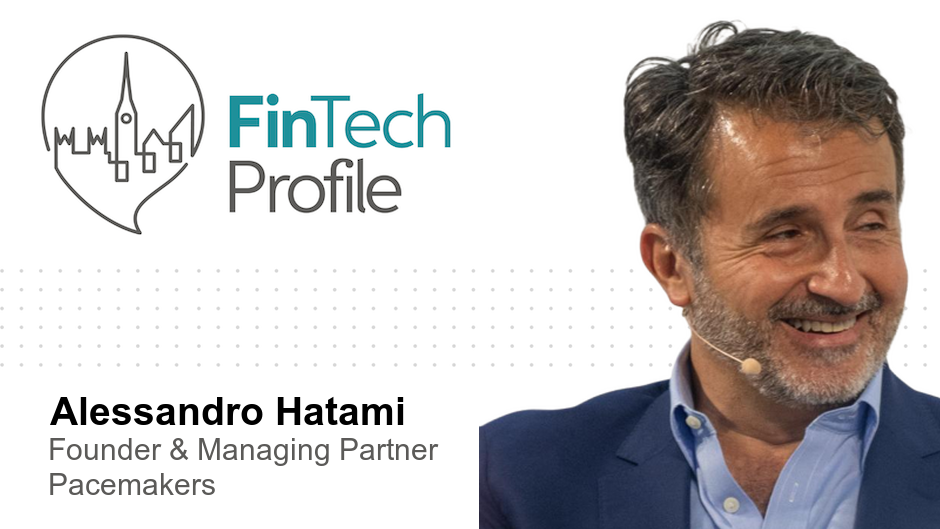
Today we're delighted to speak with Alessandro, Founder & Managing Partner at Pacemakers. With a career spanning PayPal, Lloyds Banking Group, and now advising leading financial institutions across Europe and the US, Alessandro offers unique insights into digital transformation, strategic partnerships, and the future of banking. He's also co-authored two books on reinventing finance and financial inclusion.
My questions are in bold - over to you Alessandro:
Who are you and what's your background?
I'm a fintech strategist, board director and founder with a career spent at the intersection of digital innovation, payments, and banking. My path into fintech wasn't planned - at least not at the beginning. I originally studied civil engineering at Georgia Tech and La Sapienza and was involved in infrastructure projects in West Africa and Central Europe. My career changed after I completed an MBA at INSEAD, a choice that led me into digital financial services just as the sector was beginning to transform.
Over the years I've held senior roles at GE Capital, PayPal, PayPoint and Lloyds Banking Group, where I helped build and scale digital propositions long before "fintech" became a mainstream word. Over a decade ago, I set up my own advisory firm, Pacemakers.io, and today I work globally with banks, fintechs and investors on digital transformation, growth, and strategic partnerships. I also sit on boards as a non-executive director. I have co-authored two books: Reinventing Banking and Finance (2022) and Inclusive Finance (2025) which explores how fintech and innovation can transform financial inclusion.
What is your job title and what are your general responsibilities?
I'm founder & managing partner at Pacemakers and a non-executive director.
At Pacemakers, we help large financial institutions accelerate digital transformation, usually by identifying capabilities they need and then helping them find the right partners - fintechs, technology firms or other industry players - to bring those capabilities to life. That often includes advising on operating models, partnerships, ventures and acquisitions.
In my NED roles, I focus on governance, innovation, remuneration, executive succession and strategy. My job is to support and - sometimes challenge - executive teams so they can innovate responsibly while maintaining operational resilience and regulatory compliance.
Can you give us an overview of your business?
Pacemakers helps financial institutions adapt to a world where technology, regulation and customer expectations evolve faster than traditional banks can. We guide organisations all the way from recognising the need for change to selecting the partners and capabilities that will actually deliver it.
Our work spans:
- Digital strategy and modernisation
- Partner selection, JV and acquisition advisory
- Fintech ecosystem mapping and opportunity assessment
- Operating model design and transformation oversight
Clients include banks, fintechs, global tech players and payment companies across Europe, the US, and the Middle East. We've supported organisations such as Intesa Sanpaolo, Wizink, Soldo, Amdocs, Auchan-Oney and StockX.
Pacemakers' differentiation is simple: we combine the board-level strategic insight of our partners with deep operational experience inside global digital banking environments. We know what needs to happen - and what typically goes wrong - when large institutions try to modernise. We operate as bridges between the present and the future.
Tell us how you are funded.
Pacemakers is self-funded and profitable. I set it up with my own capital because I wanted the freedom to choose clients, build long-term relationships and scale sustainably.
I also invest personally in fintech and digital ventures, including Curve, Kore Labs, Devengo, Adzuna and others.
What's the origin story? Why did you start the company?
After spending years leading digital programmes inside large financial institutions, I saw first-hand how difficult it is for incumbent banks to move at the speed of the market. They know what they need to do, but they're held back by legacy - not just technology (often the easiest part to address), but far more insidious operational and mindset legacies. It's the innovator's dilemma in practice: what works today can keep working, right up until it doesn't.
I founded Pacemakers to bridge that gap. We help banks that have identified their strategic priorities turn them into delivery, by bringing the right innovators to the table and then acting as translators between incumbents and challengers. That means shaping partnerships so they work in the real world: aligning governance with pace, helping teams navigate internal realities, and building buy-in so that change sticks, all without breaking the bank, sometimes literally.
Who are your target customers? What's your revenue model?
Our clients are primarily:
- Large retail and commercial banks
- Digital-first banks and payments companies
- Fintechs scaling through partnerships
- Investors looking to assess opportunities in banking and payments
Our revenue model is project-based advisory with optional extended retainer or board-level support. The work ranges from strategic transformation projects to assistance with partner selection, commercial negotiations and M&A analysis.
A few anonymised examples:
- Advised a large European bank design and launch a digital-only consumer offering by partnering (and investing) in an innovative UK provider.
- Supported a global US based retailer in identifying a payments provider that dramatically reduced their declines in Europe and MEA.
- Helped a US telco servicing conglomerate to identify and engage potential investment targets in financial services.
If you had a magic wand, what one thing would you change in the banking / FinTech sector?
I would make incumbents genuinely interoperable - technologically and culturally. Most of the sector's friction, cost and inefficiency comes from closed, legacy systems and internal silos - these are not only technical but also operational and most damagingly, they are cultural. If banks could access capabilities the way modern fintechs do, innovation would accelerate dramatically, customer outcomes would improve, and the cost to serve would drop.
What is your message for the larger players in the Financial Services marketplace?
You can't buy transformation, and you can't outsource understanding. The most successful banks aren't the ones investing the most money; they're the ones building the capabilities, culture and governance to make change repeatable. They are the ones investing in helping their people think differently.
Consider partnering early on in your transformation journey, but do it wisely - and treat fintechs as strategic assets, not procurement exercises.
Where do you get your Financial Services / FinTech news from?
My daily and weekly mix usually includes:
- Finextra
- The Financial Times (especially FT Banking & Fintech a good way to keep updated on the incumbent)
- The Banker
- Andreessen Horowitz / a16z Fintech essays
- And increasingly: Substack writers specialising in banks, payments and digital strategy.
But mostly by reaching out to experts I trust in the Pacemakers ecosystem.
Can you list 3 people we should follow on LinkedIn, and why?
Here are three voices who consistently add value:
- Linas Beliunas – Insightful takes on innovation and fintech strategy, always practical and grounded.
- Meaghan Johnson – One of our partners and an expert on customer behaviour, financial inclusion and digital product design; great at translating trends into actionable insight.
- Theodora Lau – Long-time commentator on the evolution of banking; sharp analysis on the future of finance and digital transformation.
What FinTech services (and/or apps) do you personally use?
A few that regularly feature in my toolkit:
- Wise – My go-to for fast, transparent cross-border payments.
- Coinbase – A clean, reliable platform for managing my digital assets.
- Curve – Great for consolidating cards and optimising spend across accounts.
What's the best new FinTech product or service you've seen recently?
I've been impressed by Kore Labs and their approach to product governance and compliance automation for financial services. It solves a real and growing problem for regulated firms - managing product lifecycle, documentation, approval workflows and regulatory traceability. It is creating an amazing source for AI to truly help transform some of the most complex financial products.
What trends will define the next few years in FinTech?
1. AI-native financial services - Banks will move from pilots to full-scale redesign, rebuilding credit, risk, fraud and service around AI agents and automated decision engines.
2. Embedded Finance 2.0 - Financial products will be manufactured by banks but distributed through ecosystems - retailers, platforms, and software providers - shifting where customer relationships sit.
3. Identity, data portability and trust - As digital identity matures, onboarding, KYC, cross-border payments and financial inclusion will be redefined. Advantage will shift from balance-sheet strength to the ability to orchestrate trusted, data-driven journeys.
4. Digital assets becoming financial infrastructure - Tokenised assets and blockchain-based settlement will steadily integrate into mainstream rails. Regulators, incumbents and governments know this shift is coming and are working together to set the foundations.
We'd like to thank Alessandro for taking the time to share his insights with us. You can connect with him on LinkedIn or learn more about Pacemakers.